

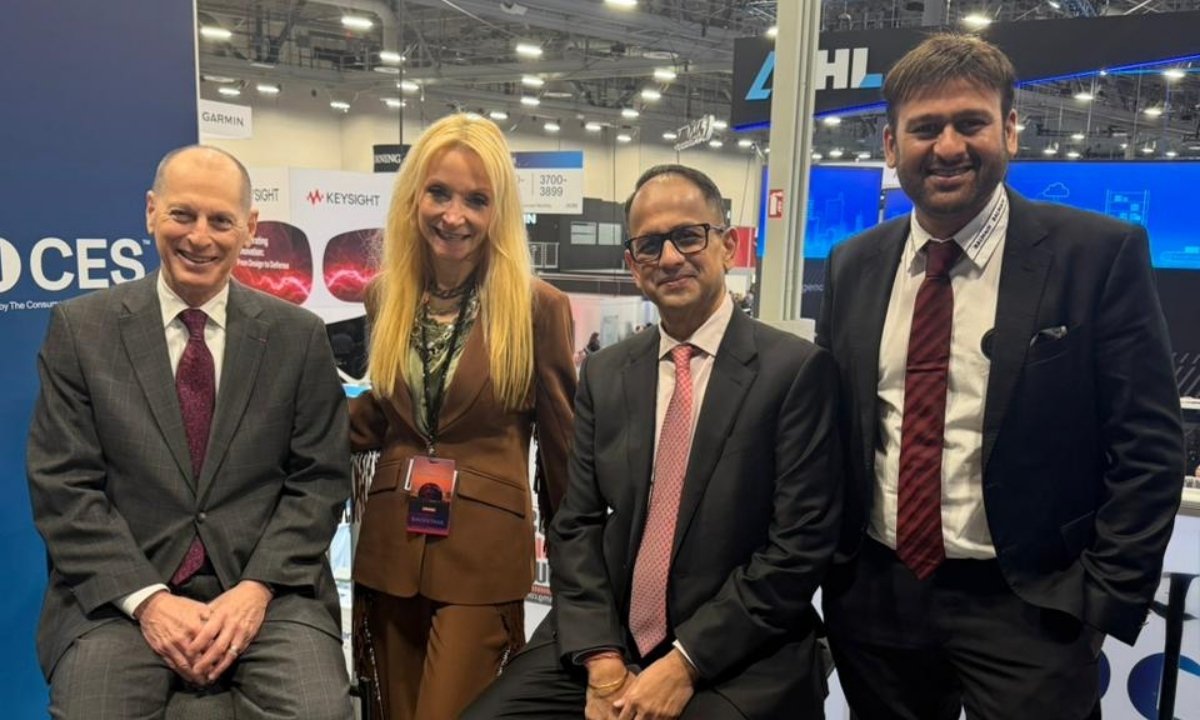
At CES 2026 in Las Vegas, we sat down with two influential voices shaping the future of technology: Gary Shapiro, CEO of the Consumer Technology Association (CTA) and the driving force behind CES, and Kaushal Nevrekar, President and Chief Business Officer of Reliance Retail Electronics Business.
In a wide-ranging conversation, they decode how technology, artificial intelligence, retail transformation, and India’s growing influence are redefining the global tech landscape.
Ramesh Somani: Gary, it’s great to have you back again. CES 2026 is in full swing. How has the show been so far?
Gary Shapiro: It’s been phenomenal. Despite everything happening globally, whether its geopolitics, weather challenges, or tariff uncertainties, CES 2026 has exceeded our expectations across every metric. We have over 4,000 exhibitors, a larger international presence than last year, and more than 2.6 million net square feet of exhibit space. What’s truly exciting is the energy. Every major chip company CEO is here. We’ve had keynotes from AMD, Lenovo, and several others, all reinforcing one central theme: chips and AI are powering the future. The Lenovo launch at Sphere yesterday was absolutely mind-blowing.
Ramesh Somani: CES has always been a roadmap for what’s coming next. What major shift are you seeing in 2026?
Kaushal Nevrekar: The most significant shift is intelligence becoming invisible infrastructure. AI is no longer a feature you advertise; it’s embedded silently into everything we do. Whether you’re shopping online, walking into a physical store, or planning travel, intelligence is working behind the scenes, shaping every interaction.
Ramesh Somani: Gary, have you had time to walk the show floor yet?
Gary Shapiro: I’ve been running from meeting to meeting. What stands out is the scale of investment in booths, the sheer excitement, and the record number of innovation entries, which are up by double digits. The Innovation area is packed, and product launches are happening everywhere. The experience at Sphere takes things to another level. It’s not just visuals, but sound, motion, and even wind. It’s a five-sense experience.
Ramesh Somani: India is one of the world’s largest consumption markets. When will we see stronger Indian representation at CES, especially on keynote stages?
Gary Shapiro: Our keynote criteria are particular: global CEOs with a strong international footprint and meaningful announcements. That said, we have 1,200 speakers across more than 400 sessions this year. India is still under-represented on the show floor, given its talent pool and population. CES is not just about consumer gadgets; it’s deeply B2B as well. We would absolutely love to see more Indian companies exhibiting, speaking, and even keynoting.
Ramesh Somani: Kaushal, how do you see India’s role at CES going forward?
Kaushal Nevrekar: India’s story is impossible to ignore. We are now the fourth-largest economy, adding nearly a trillion dollars every 18 months. Our electronics market will grow from $70 billion to $130 billion in the next three to four years. Beyond consumption, India has been silently powering global electronics through R&D. What’s exciting now is that Made for India products are becoming global products. With 800 million internet users and among the highest per-capita data consumption in the world, India represents both scale and innovation.
Ramesh Somani: AI is everywhere this year. What’s your personal take on where AI is headed?
Gary Shapiro: AI today feels like the internet did two decades ago. It’s a true game-changer. While the internet connects the world, AI helps us solve problems instantly, make decisions faster, and unlock entirely new business models. Personally, I already use AI regularly for decision-making; it’s transformative.
Ramesh Somani: Kaushal, how deeply is AI integrated into modern retail today?
Kaushal Nevrekar: The shift is profound. We’ve moved from transactional intelligence, understanding what you bought, to environmental intelligence, how you shop. AI tracks heat maps in stores, customer movement, dwell time, product interaction, and shelf performance. On the backend, intelligence drives inventory planning, demand forecasting, and supply-chain optimisation. Retail today is entirely dependent on data and intelligent systems.
Ramesh Somani: Are you seeing similar AI adoption among large global retailers?
Gary Shapiro: Absolutely. Many retailers told me that traditional predictive models no longer work. Consumer behaviour is shifting rapidly, often driven by influencers. One viral post can instantly redirect demand, and understanding those spikes and converting intent into actual sales is now part of the AI equation.
Ramesh Somani: We saw products like Motorola’s FIFA Edition Phone or Samsung’s Tri-Fold device trigger massive influencer demand instantly. How do retailers manage this unpredictability?
Kaushal Nevrekar: The handover between online discovery and offline purchase is now seamless. Consumers walk into stores already informed. Retailers must pick up the journey midstream, knowing which variant, colour, or location to stock and how quickly intent turns into purchase. Technology is the only way to manage this complexity.
Ramesh Somani: Finally, what should people watch out for from CES 2026 over the next few years?
Gary Shapiro: We’re in a rapidly changing innovation cycle. Technology is influencing every aspect of life, from homes to mobility, at an unprecedented scale. Consumer choices, buying journeys, and product categories are evolving fast. One thing is clear: we’re finally moving beyond the smartphone-centric era into a much more connected, intelligent world.