


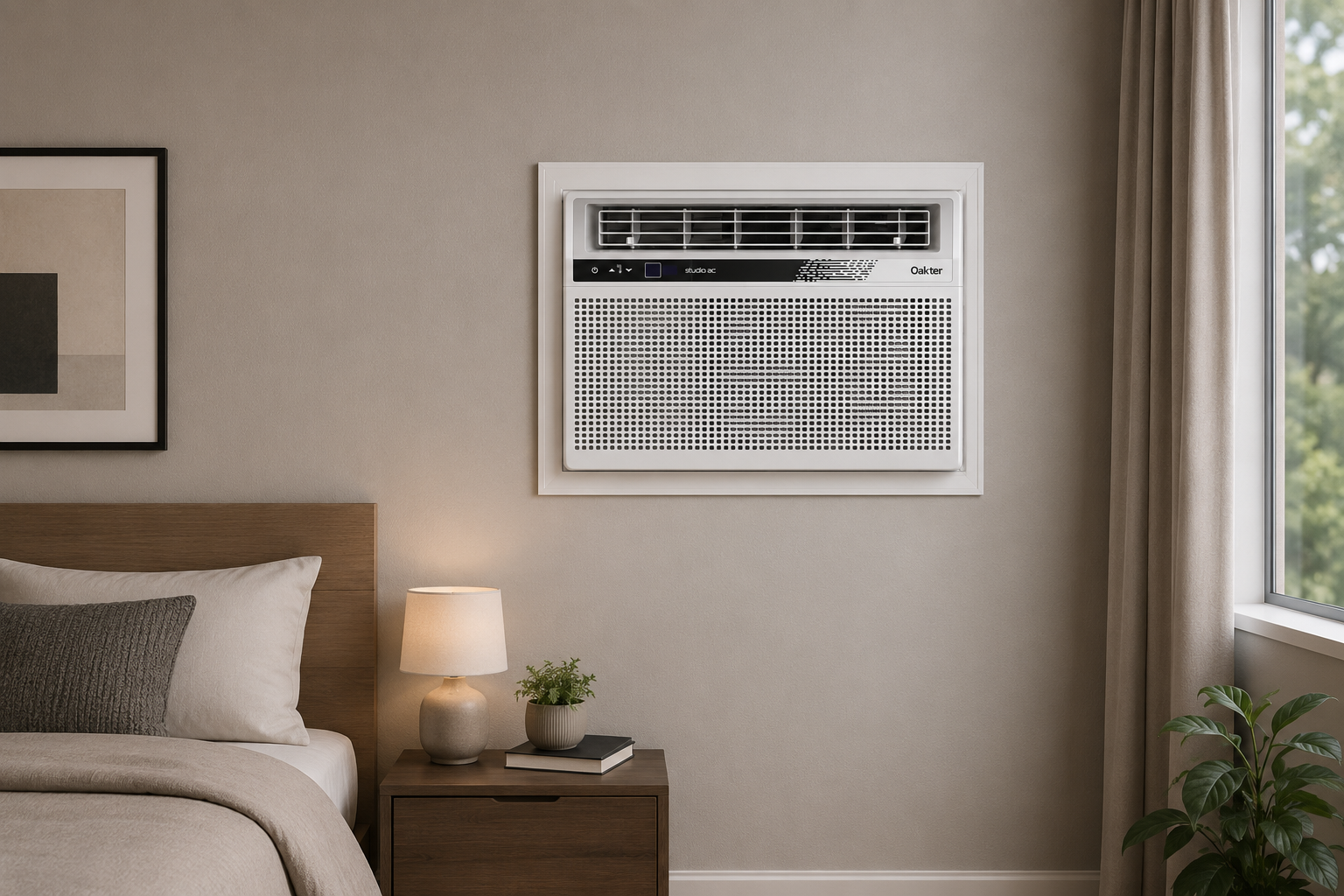
Oakter has refreshed its compact window air conditioner with the Studio AC 5000 2026 Model, a 0.5-ton 3-star inverter unit aimed squarely at studio apartments, study rooms, cabins and workspaces up to about 75 sq. ft. Priced at ₹14,499 + GST and available across major online platforms, quick-commerce channels and the brand’s own website. For urban Indians dealing with rising electricity costs, limited space and older electrical wiring, a lightweight, plug-and-play AC that draws around 500 W and runs on a standard 6 A socket is an appealing proposition. Oakter positions this unit as a practical alternative to bulkier conventional window ACs, claiming up to 60% lower electricity usage, quieter operation, and better humidity handling for Indian summers. But is this the best AC to buy under 20k? Let’s find out.
Design
The Studio AC 5000 2026 Model prioritizes compactness and ease of installation. At roughly 22 kg, it is claimed to be 30 % lighter than conventional window ACs of similar capacity, which makes handling and mounting noticeably less cumbersome. The body has been upgraded for simpler servicing, an important practical consideration given that window units often sit in hard-to-reach positions and require occasional filter cleaning or minor maintenance.
A mounting frame is included in the box, reducing the need for extra hardware or professional help for basic installation. The unit is marketed as the “first true plug-and-play window AC,” compatible with standard 6 A household or office sockets and equipped with built-in surge protection. It can also run on a pure-sine-wave 1200 VA inverter, which is useful during power cuts common in many Indian cities. No electrical rewiring is required, a genuine advantage for renters or older buildings.
Aesthetically, the unit follows a clean, modern window-AC profile rather than a flashy design language. The focus is functional: an anti-dust filter, a refined exterior that is easier to clean, and a super-sleek remote control supplied in the package. The overall form factor suits tight spaces where a bulky outdoor unit or heavy traditional window AC would be impractical.
Features and Cooling
The headline upgrade is the move to inverter technology. Where the previous model used a fixed-speed compressor, the 2026 version varies compressor speed to maintain more consistent temperatures and reduce energy waste. Oakter claims zero-minute compressor delay and optimized performance for Indian summer conditions. The rated power consumption of the unit is approximately 500 watts. According to the company, it consumes about one unit of electricity every two hours, resulting in a running cost of roughly ₹4 per hour based on typical tariffs. We conducted a test of the unit, and our findings aligned with the company’s claims.
Cooling capacity is specified for spaces up to 75 sq. ft., making it suitable for bedrooms in compact apartments, home offices, study nooks or small commercial cabins. We tested it in our small studio room and it took 20 min to fully cool the room. There was less water dripped outside the unit, saving us from the annopyances. as it uses CWRC (Condensate Water Recirculation Cooling) system.
The AC is designed to handle high-humidity conditions common across much of India, delivering powerful cooling without the efficiency drop sometimes seen in fixed-speed units under load. Built-in surge protection and the ability to run on a modest pure-sine inverter further enhance reliability in areas with unstable power.
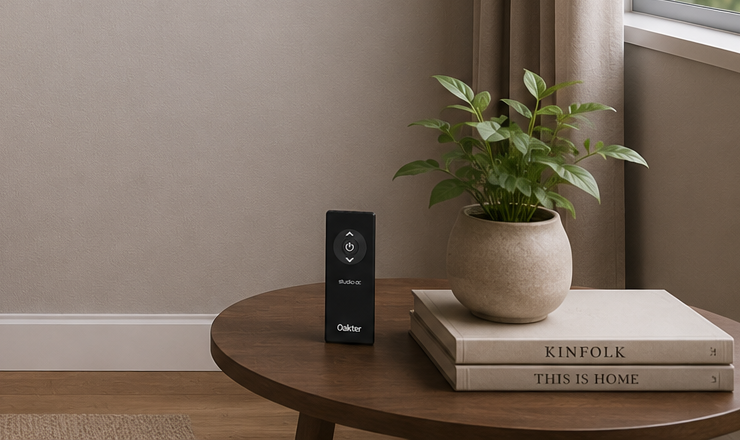
One thing I missed in Oakter Studio AC is the lack of smart features. It doesn’t have smart home connectivity, Wi-Fi, app control, or advanced sensors, which keeps the product focused on core performance and affordability.
Verdict
The Oakter Studio AC 5000 2026 Model is a compact window AC designed for urban Indian buyers, addressing issues like limited space and high electricity bills. With inverter technology, a 3-star energy rating, and a claimed 500 W power draw, this appliance offers a cost-effective solution for ₹14,499 plus GST, making it ideal for studio apartments and small workspaces. Its strengths include a lightweight build, reduced dripping through the CWRC system, and good warranty coverage. However, its modest 0.5-ton capacity may limit suitability for larger rooms, and potential drawbacks include the lack of smart features and a need for real-world performance testing. Overall, it provides a balanced mix of efficiency and value for compact living spaces.