


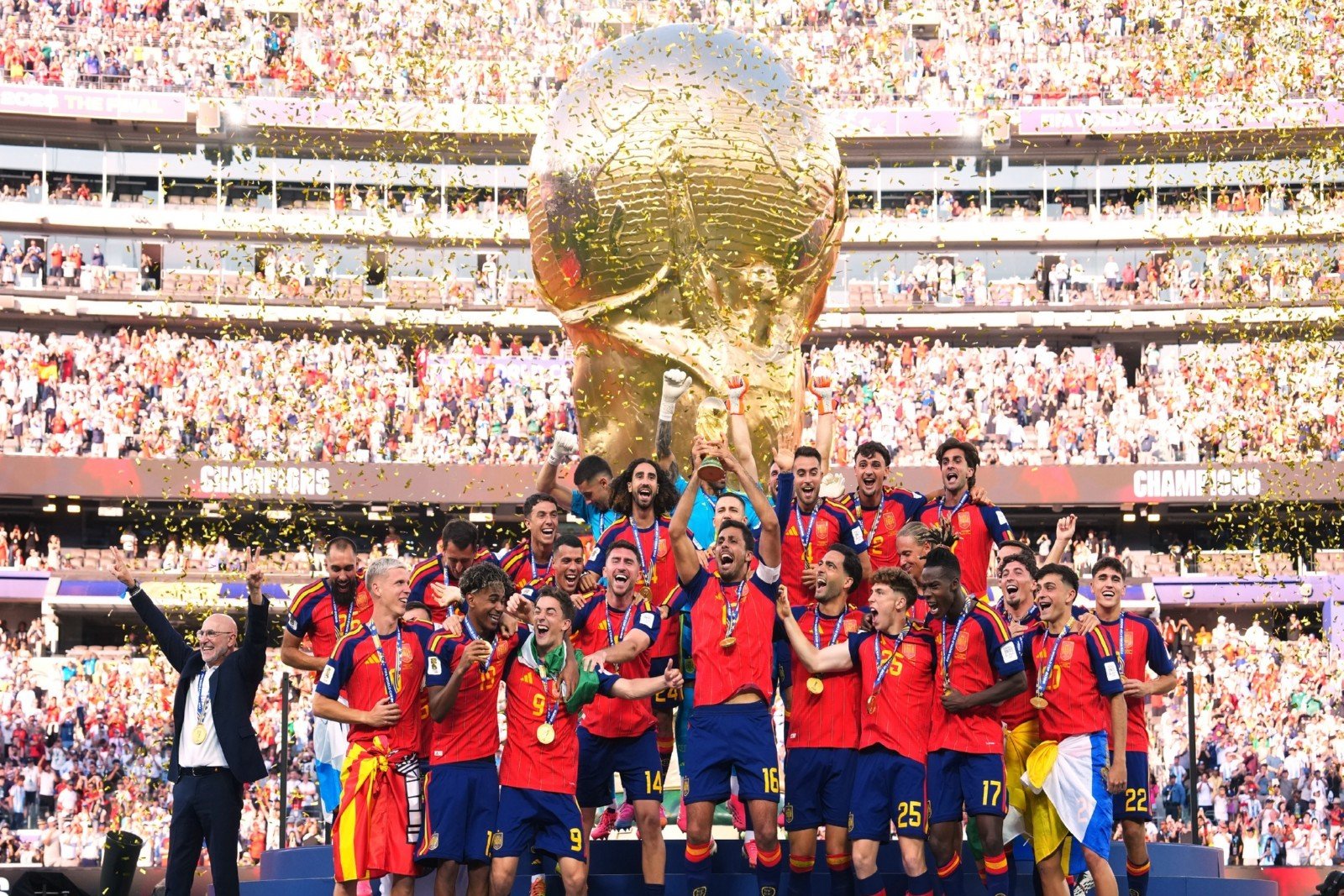
The beautiful game has always been about more than football. It’s about culture, fashion, music, fandom, and the internet deciding what deserves to live forever. The 2026 FIFA World Cup delivered all of that in abundance. While Spain walked away with the trophy, the tournament belonged just as much to Viking chants echoing through Times Square, K-pop royalty sharing the spotlight with football, and one little boy who accidentally became the internet’s newest darling.
Here’s what truly defined football’s biggest month.
Norway’s Viking Army Took Over the World
Norway’s return to the World Cup after decades of absence was reason enough to celebrate, but their fans ensured nobody would forget it.
The now-iconic Viking Row transformed stadiums into living spectacles as thousands of supporters sat shoulder-to-shoulder, rowing in perfect rhythm while chanting in unison. The synchronized display quickly escaped the confines of the stands, popping up in fan zones and city streets across host nations.
Its most surreal appearance came in New York’s Times Square, where a quiet morning yoga session unexpectedly turned into a sea of rowing Vikings. The contrast was pure internet gold, and within hours, the videos had travelled across every major social platform, proving once again that football fans remain the sport’s greatest entertainers.
Football Meets Pop Culture
If the World Cup final is football’s biggest stage, its halftime show embraced global pop culture unlike ever before.n BTS electrified audiences with a specially adapted performance of Dynamite, reworking lyrics to celebrate football while delivering the kind of production only the Korean supergroup could pull off. Then came IShowSpeed. The livestreaming phenomenon was spotted dancing with trademark chaos in the stands before later meeting BTS backstage.
In 2026, football wasn’t just competing for headlines, it was sharing them with creators, musicians and internet icons.
Even the Final Whistle Couldn’t End the Rivalry
Spain’s triumph may have settled the scoreline, but emotions refused to settle on the pitch.
Moments after the final whistle, celebrations turned tense as Argentina’s Leandro Paredes confronted Spain’s Gavi and Eric García inside the Spanish celebration circle. Tempers flared, players rushed in, and officials eventually issued a rare post-match red card before managers restored order.
It was a reminder that football’s greatest rivalries rarely conclude when the clock reaches 120 minutes.
The Yamal Who Broke the Internet
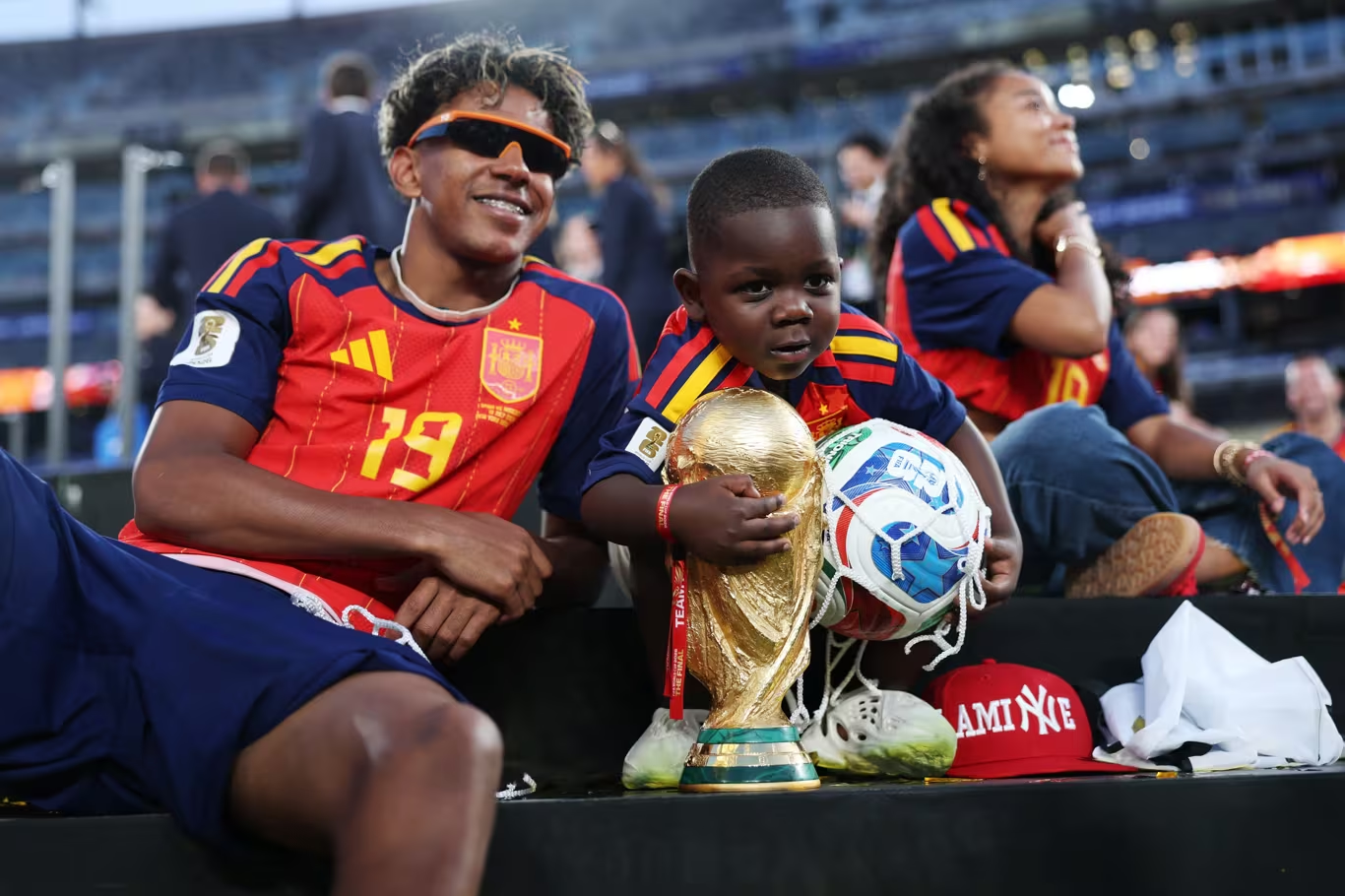
Lamine Yamal may have arrived at the tournament as one of football’s brightest young stars, but another member of the family unexpectedly stole social media’s attention.
His younger brother became one of the celebration’s breakout personalities, effortlessly charming cameras as he danced alongside Spain’s players, interrupted interviews, celebrated with the trophy and embraced every unforgettable moment.
Fans instantly crowned him the tournament’s unofficial mascot. TikTok edits amassed millions of views, memes flooded timelines, and comments jokingly declared that Spain had already found its star for the 2042 World Cup.
Sometimes football creates heroes. Sometimes, it creates internet legends.