

The market recently welcomed a new mid-budget smartphone that closely resembles Xiaomi devices, as both brands operate under the same parent company. This new model boasts an attractive design, a sleek body, a vibrant display, and competitive specifications. With the growing popularity of mid-budget smartphones, many consumers are eager to know if this device stands out as the best option in its category. Is this the best mid-budget smartphone? Let’s find out.
Design & Build
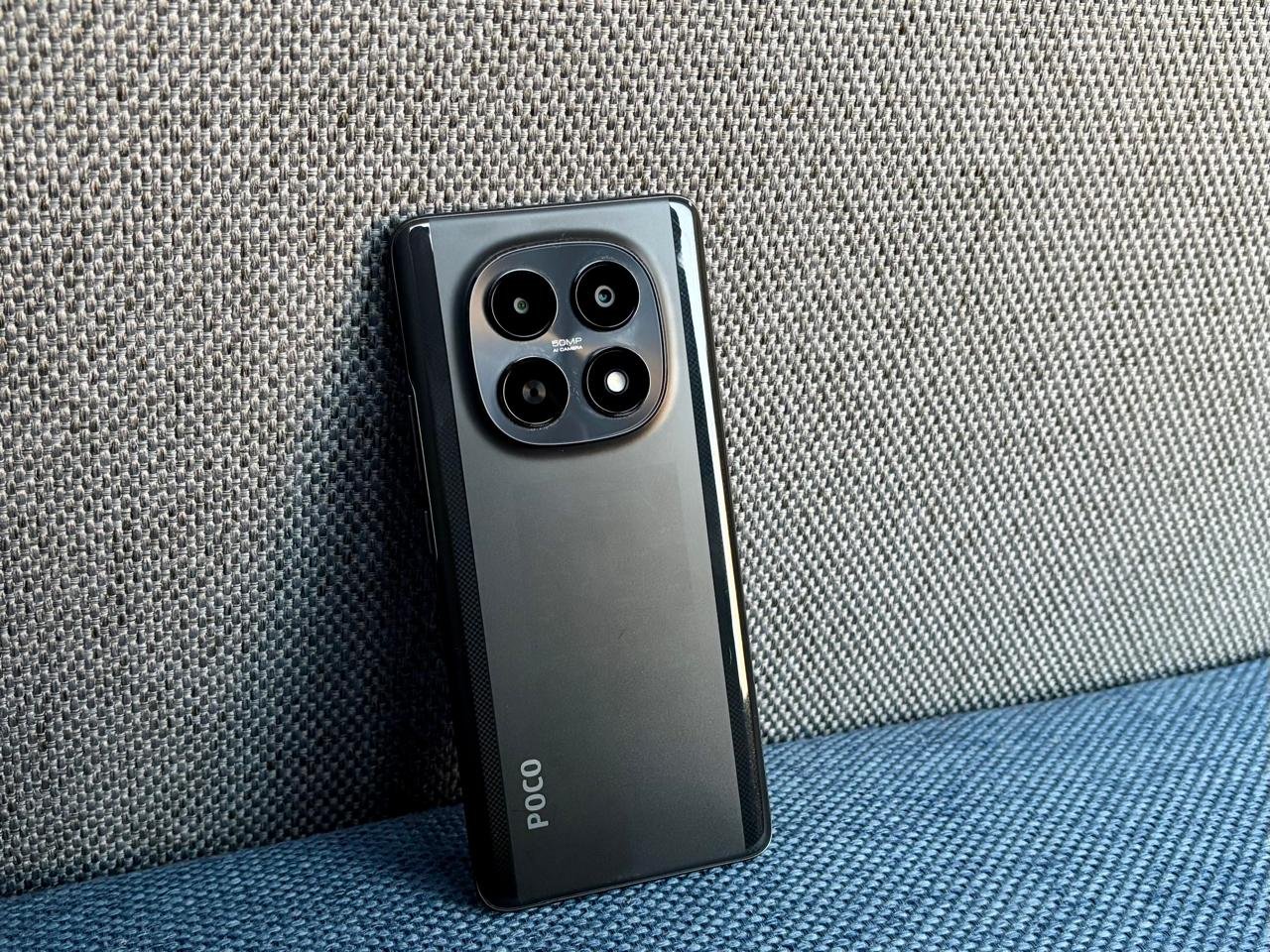
The phone looks similar to the recently launched Xiaomi Redmi Pro 15 and last year’s Redmi Pro 14+. Upon closer inspection, the Poco M8 is essentially a rebranded version of the Redmi Note 15, sharing the same curved aesthetics and oversized camera module that gives it a premium vibe despite its budget positioning. This similarity isn’t surprising, as Poco operates under Xiaomi’s umbrella, allowing for shared designs and components to keep costs down while delivering familiar ergonomics.
At first glance, the Poco M8 stands out with its slim profile, measuring just 7.35mm thick and weighing 178 grams, it’s one of the lightest and thinnest devices in the under-₹20000 segment. The build uses a plastic frame and back, but it doesn’t feel cheap; the curved edges provide a comfortable grip, and the overall balance makes it easy to handle one-handed for an extended duration. The phone is available in colours like Carbon Black, Frost Silver, and Glacier Blue. We have the Carbon Black version, the rear panel features a subtle dual-tone design with a 3D effect created by a dividing line, adding a touch of visual interest without being overly flashy. The squircle-shaped camera island blends seamlessly into the back.
Durability is another highlight. The Poco M8 comes with an IP66 rating for dust and water resistance, meaning it can handle splashes, rain, or even a quick dunk without issues, better than many rivals in this price range. It also boasts MIL-STD-810H certification for drop resistance, so it should survive everyday accidents like slips from a pocket or table. The curved display is protected by high-durability glass, touted as the segment’s most robust, with features such as Wet Touch Technology 2.0 for use in rainy conditions. However, the camera module’s design is a bit misleading; it looks like a triple-camera setup, but one of the cutouts is a dummy element, which feels like an unnecessary gimmick to make it appear more premium.
Performance
Under the hood, the Poco M8 is powered by Qualcomm’s Snapdragon 6 Gen 3 chipset, a 4nm processor paired with up to 8GB of LPDDR4X RAM and 256GB of UFS 2.2 storage (expandable via microSD). This setup delivers solid mid-range performance for everyday tasks like browsing, social media scrolling, streaming videos, and light multitasking, feels smooth with no noticeable lag or stutter. Animations are fluid thanks to the 120Hz refresh rate, and the phone handles apps like Instagram, YouTube, and WhatsApp effortlessly. In benchmarks, it scores around 862,268 on AnTuTu, 1,021 on Geekbench single-core, and 2,982 on multi-core, respectable numbers that put it ahead of its predecessor, the Poco M7, but behind competitors like the Realme P4x with its MediaTek Dimensity 7400 Ultra.
Gaming is where things get mixed. Titles like BGMI and Call of Duty: Mobile run decently at low to medium settings, but frame rates are often capped at 60fps with occasional drops during intense sessions. Heavier games like Genshin Impact experience choppiness, and the phone warms up noticeably after 30 minutes, with temperatures rising by about 11°C. It’s not a gaming beast, but for casual players, it’s serviceable.
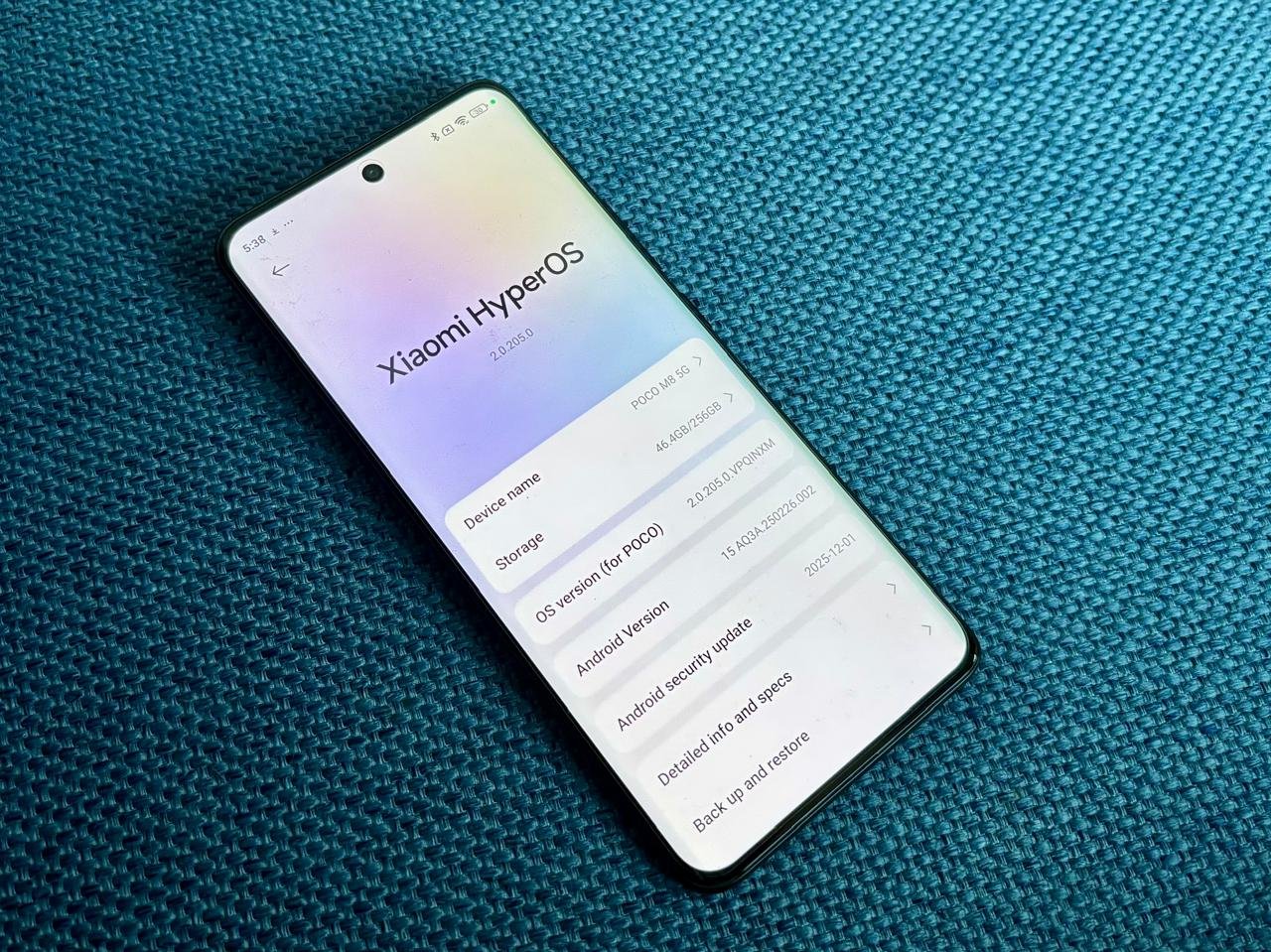
Software-wise, it ships with HyperOS 2 based on Android 15, promising four major OS upgrades and six years of security patches, a strong commitment to longevity. The interface is feature-rich with smooth animations and customization options, but it’s cluttered with pre-installed apps, including bloatware like third-party games and shopping apps (many uninstallable).
Camera
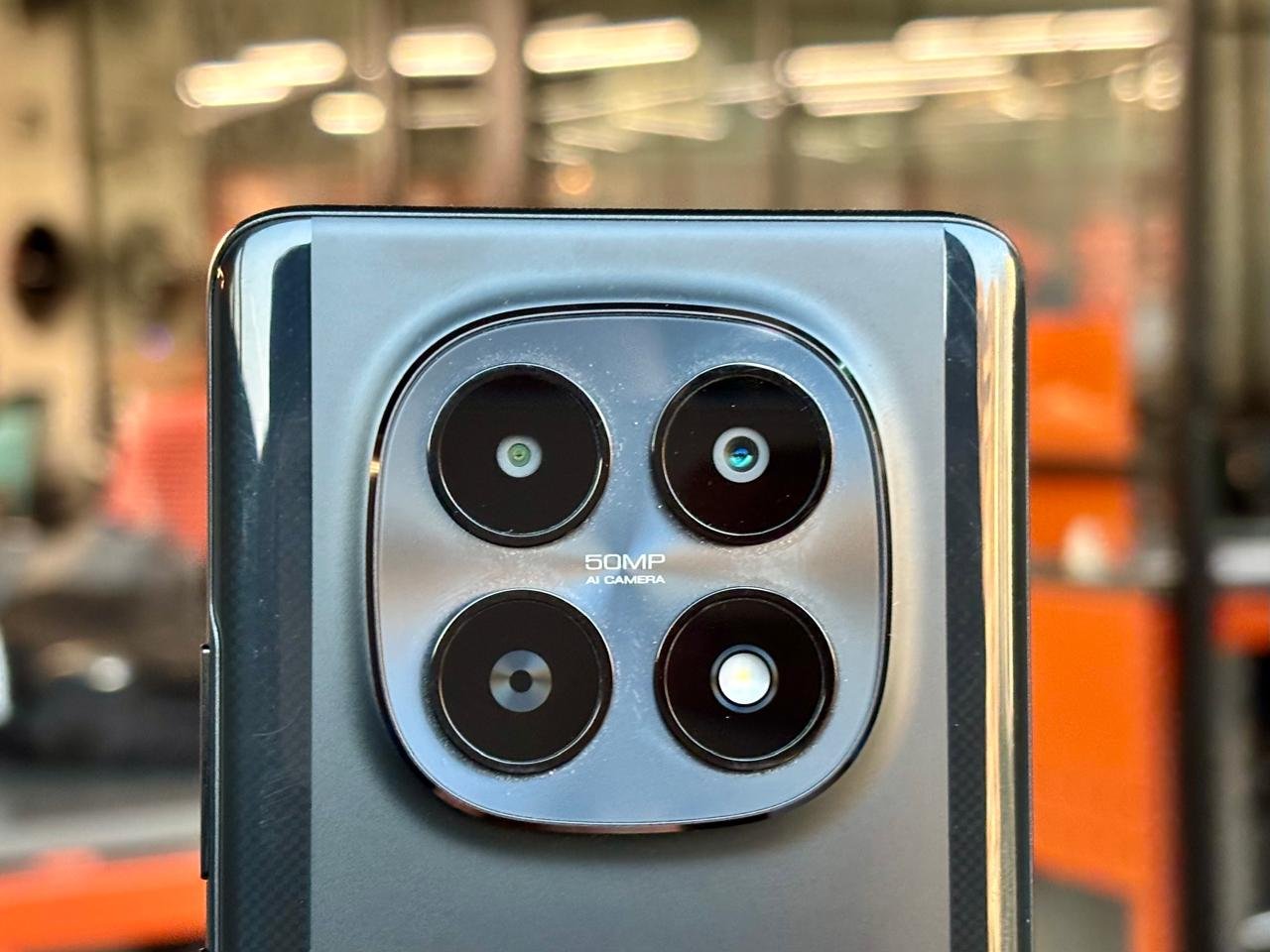
The camera setup on the Poco M8 is straightforward: a 50MP primary sensor paired with a 2MP depth lens on the rear, and a 20MP front camera. It’s capable for point-and-shoot scenarios but falls short in versatility and quality compared to segment leaders.
In daylight, the primary camera captures decent details with good dynamic range and natural colours, though it tends to brighten faces slightly and add softness to subjects. Contrast is punchy, and 2x zoom shots hold up well, but there’s no ultra-wide lens, a big miss when competitors like the CMF Phone 2 Pro offer more options. Portraits benefit from the depth sensor for better edge detection, but results are inconsistent in varying light, with occasional blurring around hair or edges. Low-light performance is average; night mode reduces noise but introduces graininess and poor flare control around lights, often resulting in warmer tones or yellowish tints.
Selfies from the 20MP front camera are usable for social media, with natural skin tones in good light, but struggle with exposure and detail in dim conditions.
Battery
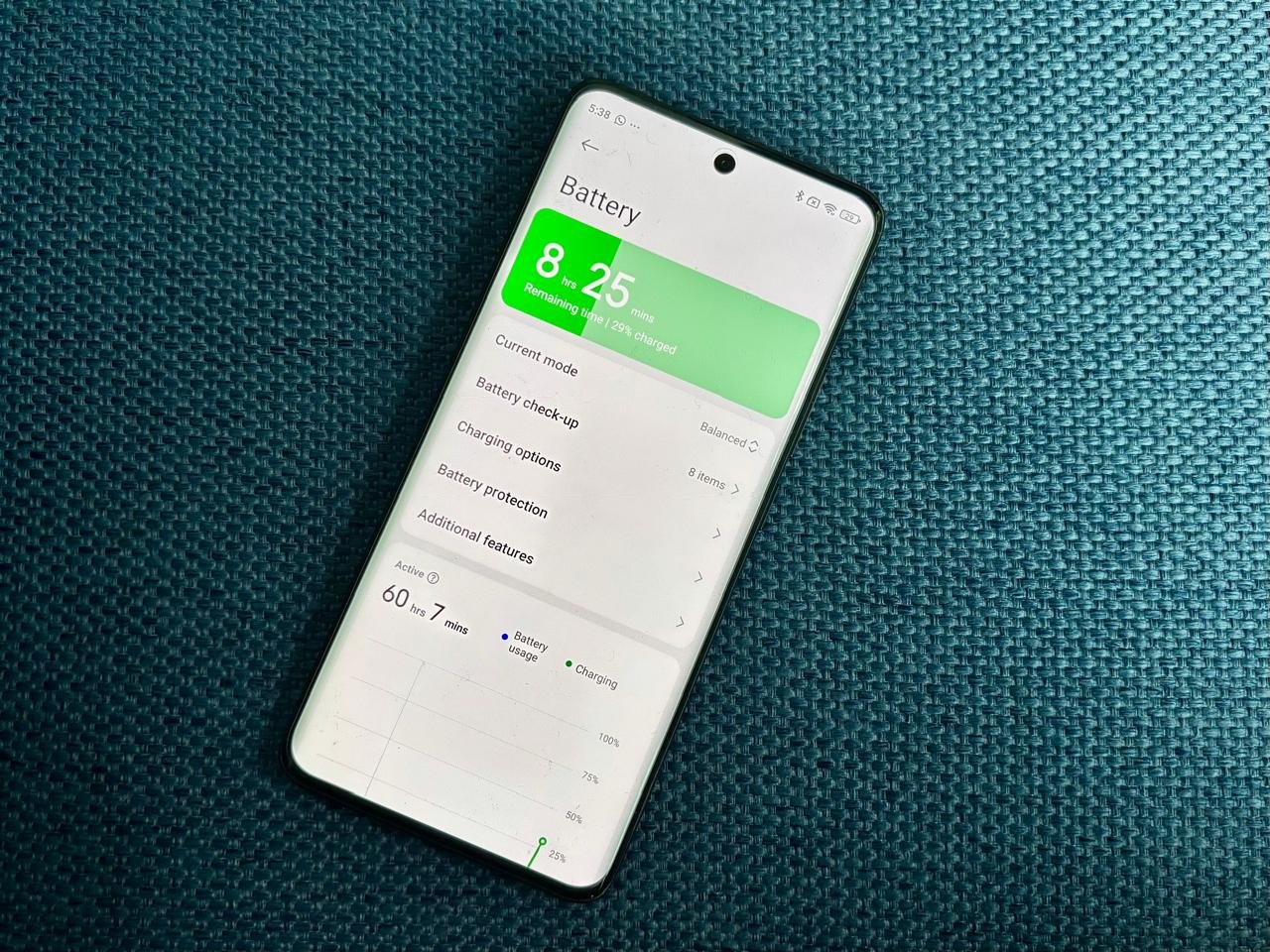
Battery life is a strong suit for the Poco M8, packing a 5,520mAh silicon-carbon unit that punches above its slim design. In testing, the battery lasts for more than 18 hours with moderate usage, such as calls, messaging, streaming, and social media. It comfortably extends to a full day or more, offering about 7 hours of screen-on time, even with light gaming included. Heavy tasks like video streaming drain approximately 6% of the battery per hour, while gaming puts more strain on it, but the performance still exceeds expectations.
Charging is via 45W wired support (charger included), taking the phone from 0% to 100% in under an hour, a solid upgrade from the M7’s 33W. It also offers 18W reverse charging for topping up accessories.
Verdict
The Poco M8 is a solid mid-budget phone priced from ₹18,999, known for its design, display quality, and battery life. It offers good value with long software support but is limited by average gaming performance and a basic camera system. While it doesn’t outperform competitors like the Realme P4x or Moto G96 in power or photography, its slim build and bright AMOLED screen are appealing. It’s great for calls, media, and light use, but those with specialized needs may want to consider other options.