


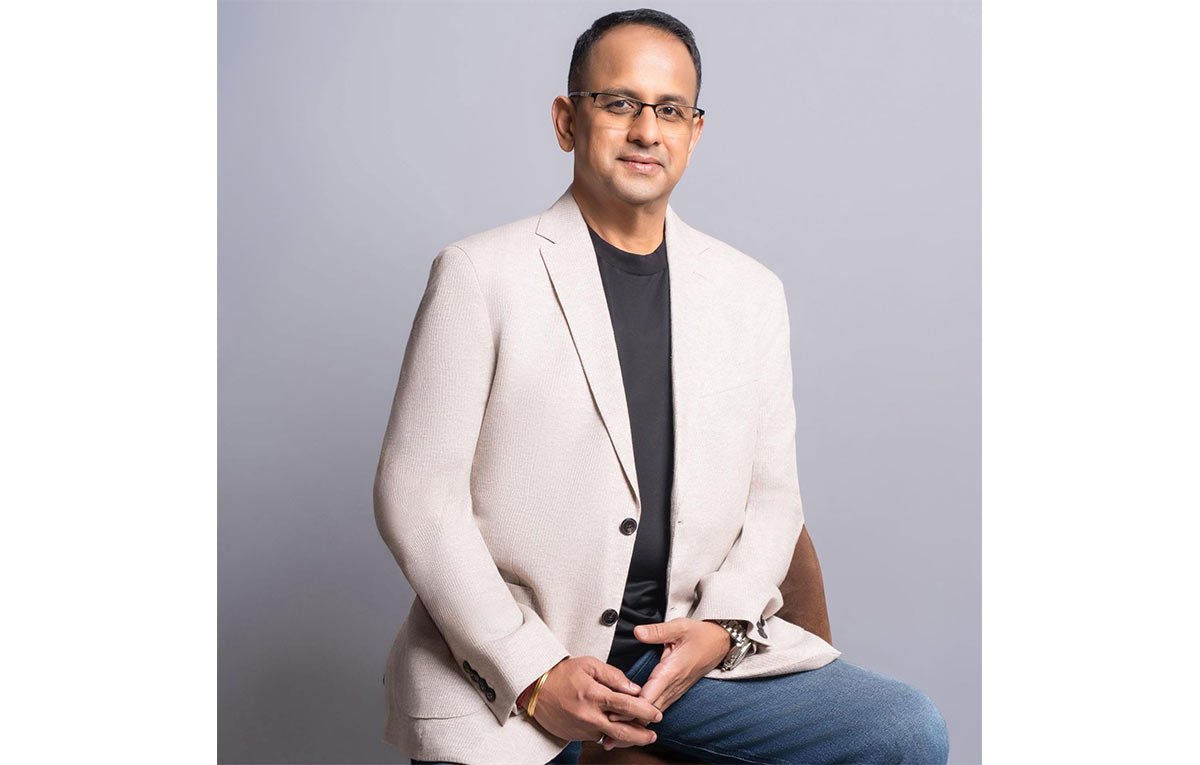
As President and Chief Business Officer for Reliance Retail’s Electronics Business, Kaushal Nevrekar has spent decades at the forefront of India’s technology transformation, from the early days of mobile data to making consumer electronics accessible to millions. Having witnessed multiple waves of disruption, he believes the biggest breakthroughs aren’t defined by cutting-edge technology alone, but by how effectively they improve everyday lives. In this edition of Tech Titans, Nevrekar shares why preparation is his most underrated leadership habit, the childhood lesson that shaped his approach to respect and discipline, and why he believes Gen Z is challenging leaders in all the right ways. He also reflects on betting on data long before it became mainstream, explains why AI should elevate human judgment rather than replace it, and outlines the challenge that he believes will define India’s next decade: reskilling its workforce for an AI-driven future.
What’s a personal habit or ritual that quietly shapes how you make big decisions?
I prepare. For every meeting, every decision, and every important conversation. People often mistake preparation for overthinking, but I’ve found it to be the opposite. The clearer your thinking is going in, the more openly you can engage in the moment. That’s why I write down the assumptions underneath any decision and the conditions needed for it to work. Because later, when I look back, I’m not asking what went wrong, but which assumption failed.
What’s one childhood incident that shaped who you are today?
My parents were deeply punctual people; be it school functions, appointments, or even casual visits, they were always on time. I asked my mother once why she bothered when others ran late anyway. She told me that being on time is the easiest way to show another person that you respect them. That stayed with me and slowly became the standard I’ve held myself to over the years.
What are your thoughts on Gen Z work culture, and how do you shape your work style to align with them?
I’ll say something that might be unpopular. I think Gen Z is largely right, and the discomfort older leaders feel around them is mostly about being held to a higher standard of consistency. They want to understand why decisions are made. They want to know their work connects to something real, and they want leadership that says what it means. That’s not unreasonable. For me, the adjustment has been more about honesty than flexibility. Calling things plainly, no sugar-coating, which actually lands well with this generation.
What’s the biggest lie the industry is telling itself about AI right now?
That AI is going to run the room. It won’t, and the data already shows why. Of more than two hundred enterprise AI deployments studied recently, the ones still operational share one thing in common: they positioned their people as editors and validators above the system, not below it. AI is brilliant at the heavy lifting. But judgment, taste, knowing how a decision lands on a customer or a team, is still ours. The most exciting future is one where AI makes our best operators sharper and more ambitious than any generation before them.
What problem in the world still frustrates you enough to keep you awake at night?
What I keep coming back to is how underprepared we are for the reskilling that this moment is going to demand. Every previous industrial revolution has rewired work, and the countries that took re-training seriously came out ahead. This one is moving faster than any of them, and the conversation around it is still mostly surface-level. India has the youngest workforce in the world and an enormous opportunity in front of it. If we get the depth of training right, not just the headline numbers, this is a generation that could lead the next one.
What’s a decision you made that looked risky at the time but turned out?
In 2002, when we ventured into the telecom space with Reliance Infocomm, our team believed in data when the rest of the market still believed in voice. The conventional thinking held data as a future problem. We all disagreed. The barriers were real, with customers encountering smartphones for the first time. But we backed the bet together, and it turned out to be the opening chapter of India’s mobile internet story. I’m just grateful to have been part of history.
What brands of gadgets do you use every day?
Working in consumer electronics for this long makes you unsentimental about technology. Most of what gets called revolutionary is largely evolutionary, so my setup is chosen purely on whether it reduces friction. A phone and tablet that work together, a laptop for serious work, an e-reader for travel, a smart band for recovery and sleep data, and good headphones for deep focus.
When people look back at your work decades from now, what do you hope they say you changed?
I hope they say we helped open up access. Not a watered-down version of technology, but the real thing, put within reach of ordinary Indians, at prices and in formats that fit their lives. Mobile internet, well before the market thought the country was ready for it. Retail is built to serve someone in a metro and in a Tier-3 town with the same seriousness of intent. If, decades later, people say our work helped Indians dream a little bigger and live a little better, that will be more than enough.
What’s harder: taking a bold decision or sticking with it when things go wrong?
Sticking with it. But discipline isn’t stubbornness; it’s knowing the difference between a strategy that needs more time and one that genuinely needs to change. I come back to the assumptions I wrote down at the start. If those conditions still hold, what you’re feeling is the discomfort of a long play. If they’ve shifted, that’s a different conversation.
What part of AI genuinely excites you — and what part quietly worries you?
What excites me is AI that serves people without asking them to change their behaviour. We see this in retail, with systems that understand intent before a purchase is made and inventory that responds to real demand, a seamless line between how someone discovers something online and what they find in-store. Organisations must focus on what AI does for the user, and what worries me is that not enough organisations are asking that question.
Rapid Fire
- Books you swear by: Noise, Unreasonable Hospitality, Working Backwards
- Current car: Mercedes
- Dream car/bike: Bentley
- Fitness gadgets you use every day: Whoop band
- Go-to AI tool: Claude and Perplexity
- Quote you live by: “I never dreamed about success. I worked for it” – Estée Lauder
- Podcast recommendations: Founders (David Senra), Lex Fridman, Huberman Lab