


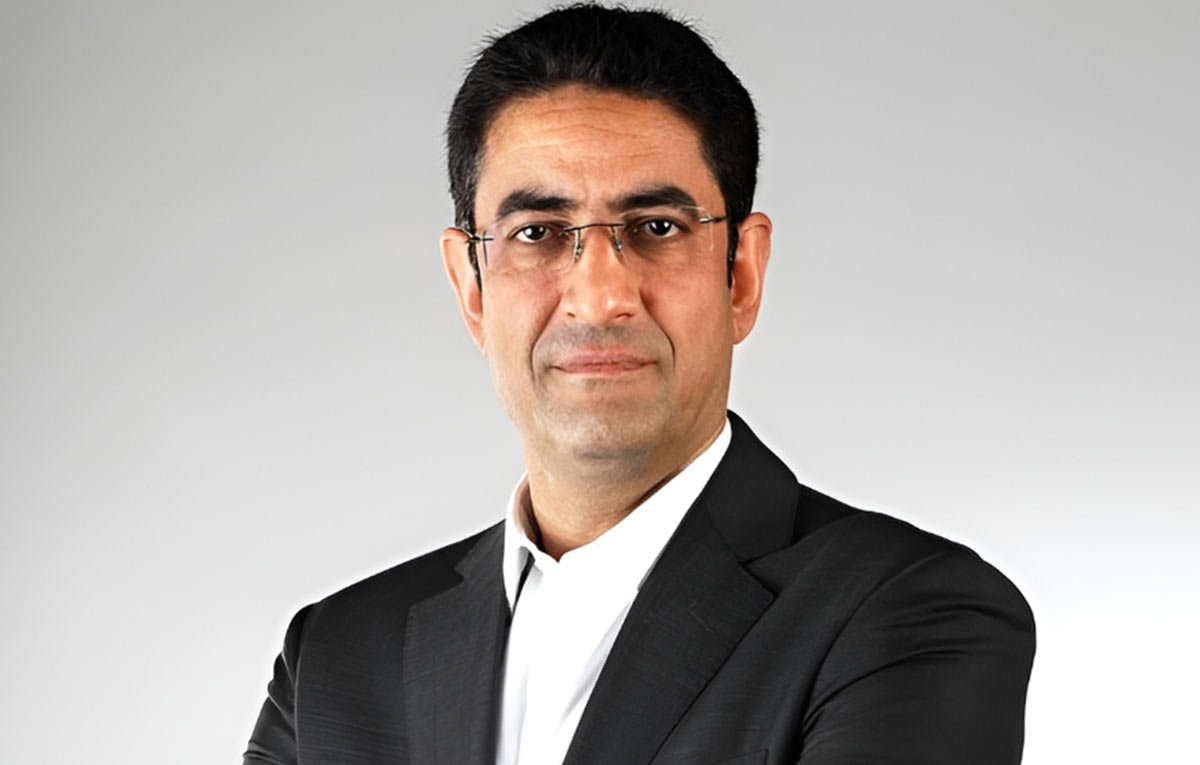
As Managing Director of Lava International, Sunil Raina has spent the past several years steering one of India’s most recognisable smartphone brands through one of the toughest periods in its history. Rather than chasing industry trends, he chose an unconventional path: that of stabilising the business first, rebuilding with discipline, and returning to smartphones with renewed purpose. For Raina, leadership isn’t about making bold decisions for the headlines; it’s about having the conviction to see them through. In this edition of Tech Titans, Raina reflects on the childhood experiences that shaped his resilience, why Gen Z values honesty over hierarchy, and the biggest misconception surrounding AI adoption. He also explains why India’s lack of globally recognised consumer technology brands remains his biggest frustration, shares the strategy behind Lava’s remarkable turnaround, and reveals why he believes the country’s next great challenge isn’t manufacturing products; it’s building brands the world can trust.
What’s a personal habit or ritual that quietly shapes how you make big decisions?
Before any consequential decision, I test it against two questions: what is the principle, and what is the premise. The principle is the value or rule I refuse to violate. The premise is the set of facts on which the decision is resting. Most bad decisions, I have come to believe, are not failures of intelligence; they are failures to notice that the premise has quietly changed. Principle matters because most consequential decisions are made with imperfect information. The premise can shift, the facts can mislead, the room can pressure you, but the principle is the one input that does not move. It is what lets you live with the decision, regardless of how it turns out.
What’s one childhood incident that shaped who you are today?
Growing up in Jammu & Kashmir during a period of deep instability taught me very early that certainty is a luxury. I remember the resourcefulness of the elders around me, the way they kept routines, education, and dignity intact even when the world outside the door was uncertain. The lesson I carried out of that childhood was that resilience is not a quality you are born with, it is a discipline you practise, quietly, every day. I understood that resilience is what stands when circumstances do not. That lesson was particularly present in 2018, when Lava was on the edge and what carried us through was not a single act of bravery but the willingness to get up, every morning and do the next correct thing.
What are your thoughts on Gen Z work culture, and how do you shape your work style to align with them?
Gen Z is often described in terms of what they want from work, but what I find more interesting is what they refuse to give: blind deference, performative loyalty, and meaning-free effort. I take that as a healthy correction. They will commit deeply, but only to work that is intellectually honest and to leaders who explain the why. My adjustment has been to over-communicate context, replace instruction with debate where possible, and judge output rather than attendance. The 3D Program at Lava — Discipline, Development, Delivery — was partly built around this: structure, but with room to think.
What’s the biggest lie the industry is telling itself about AI right now?
That scale is the same thing as intelligence, and adopting AI is the same thing as having an AI strategy. A great deal of what is being announced in our industry is procurement dressed up as transformation, a model licensed, a feature shipped, a press release issued. The harder, slower work is rebuilding the underlying product and data architecture so that AI is native to how the company operates, not a layer painted on top. At Lava we are taking the longer route deliberately, with U.Ai. It will look slower for a while. It will also be real.
What problem in the world still frustrates you enough to keep you awake at night?
That India does not have a single truly global brand. We are the world’s most populous nation, the third-largest economy, home to remarkable founders and engineers, and yet, when you walk into a home in Berlin or Sao Paulo or Lagos, there is almost nothing on the shelf that an Indian company built and an Indian company owns. Korea has Samsung and LG. Japan has Sony and Toyota. China has built household names in a generation. We have, so far, built service businesses that serve other people’s brands. That gap is what keeps me awake. Building a global brand out of India is not a marketing exercise. It demands hard work, patience, and resilience over decades in markets that do not yet trust you. The country that does not have its own brands ends up consuming someone else’s story. India deserves better, and the next twenty years are when we either build it or accept we never will.
What’s a decision you made that looked risky at the time but turned out?
In 2018, pausing Lava’s smartphone business and concentrating everything on feature phones. By every conventional reading it looked like retreat. The industry narrative was that feature phones were dying and the future was smartphones at any cost. The data on our own P&L said otherwise. We were bleeding in smartphones and quietly profitable in feature phones, and what we needed first was to stop the bleed. There is a line I keep returning to: the eagle does not catch flies. A leader’s most expensive mistake is spending energy on the wrong prey simply because everyone else is chasing it. As a result, Lava’s feature phone share has since grown from 11% to 26% in the last 8 years. Choosing where not to fight gave us the runway to rebuild. By 2022 we re-entered smartphones with Lava 2.0 strategy. The Smartphone revenues have grown at 50% CAGR since 2022, that too when the industry growth has been flat during this period.
What brands of gadgets do you use every day?
My daily smartphone is naturally a Lava. I use Agni 4. I would not ask the team to ship a product I don’t use myself. My Laptop is Apple’ MacBook. I use Probuds (TWS product of Lava) for audio.
When people look back at your work decades from now, what do you hope they say you changed?
That an Indian consumer technology brand, given up for dead, was rebuilt with discipline rather than capital and that it changed what people expected was possible. If Lava is remembered as the company that proved Indian product, Indian engineering, and Indian software could sit credibly next to anything from China or Korea, that is enough. The deeper hope is institutional: that the playbook of customer centricity achieved through Product, Partners, and People becomes a template others use to build the next generation of Indian brands.
What’s harder: taking a bold decision or sticking with it when things go wrong?
Sticking with it, by a wide margin. Bold decisions are made in a single moment, often with adrenaline carrying you through. Living with the decision is the longer test. It is the long haul that makes the bold decision right, not the moment it was taken. I have come to think of courage less as the boldness of the original call and more as the willingness to show up and be all in when you cannot predict the outcome, day after day, in the rooms where conviction is the only thing on offer. The leader’s job, after the bold call, is to refuse to flinch.
What part of AI genuinely excites you—and what part quietly worries you?
What excites me is what AI is going to do for ordinary lives. A farmer in a small town will soon have, in his pocket, the equivalent of a personal advisor that was once available only to the wealthy and the well-connected for his crop, his health, his children’s education, his finances. A first-generation college student will be able to learn from the best teachers in the world in his own language. A small shopkeeper will run his business with tools that, until recently, only large enterprises could afford. This is the first technology wave I can remember where the gap between an average Indian and a privileged one could genuinely narrow, rather than widen.
What worries me is the lie sitting underneath the hype: that AI is, by itself, the answer. AI is extraordinary at optimising what already exists, and that is precisely what makes it dangerous when used without judgment. For the average person, the risk is that it quietly makes you a slave of your own routine. It begins to choose what you watch, what you read, who you speak to, even what you think and shuts down the very change you might have needed in your life, because it gets you so good at your current path that the alternative stops being visible. A generation could grow up never knowing what it was choosing for itself and what was being chosen for it. That is the cost no one is yet adding up.
Rapid Fire
- Books I swear by: Give and Take, The Power of Now, Courage to be Disliked. I keep returning to The Art of War for strategic clarity
- Current car: Toyota Innova Hycross, Mahindra Thar
- Dream car/bike: BMW X7
- Fitness gadgets I use every day: None
- Go-to AI tool: Claude & ChatGPT
- Quote I live by: “Seek peace, not happiness. Happiness depends on circumstances; peace is independent of them.”
- Podcast recommendations: Joe Rogan Experience, The Diary of a CEO