

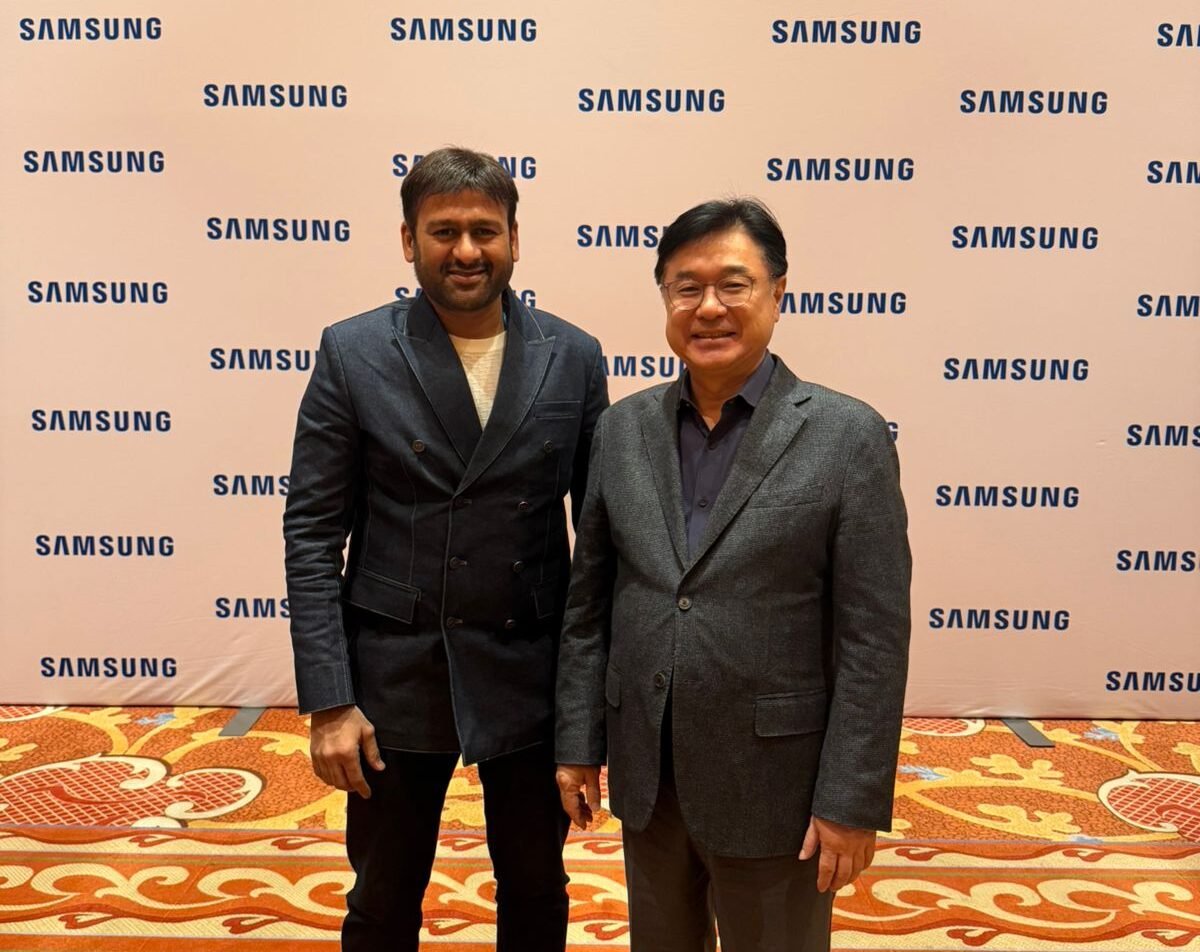
Samsung, one of the largest tech companies in the world, has invited us to a roundtable discussion with JB Park, the President and CEO of Samsung Southwest Asia. During this serious conversation, JB Park shared his insights on various topics relevant to India, including the vast potential of the Indian market, plans for establishing a global AI research hub, strategies for monetizing AI, and ideas for expanding their product offerings. He also addressed important issues such as privacy and after-sales support.
Let’s decode JB Park’s vision for Samsung’s future in India.
India’s Strategic Role in Samsung’s Global AI Growth
Mr. Park, Samsung has been significantly expanding its R&D and AI capabilities in India. Could you talk about India’s strategic role in Samsung’s global growth, particularly in AI and software engineering?
JB Park:
India is absolutely central to Samsung’s global growth in AI and software engineering. We have invested in over 14,000 engineers across Bangalore, Noida, and Delhi, with a strong focus on AI and semiconductor architecture. We’ve shifted from traditional manufacturing to advanced software engineering.
Bangalore alone hosts 10,000 engineers, including 4,000 expert semiconductor architects driving AI-centric development. We view India’s talent pool as equal to Silicon Valley’s in AI capabilities, and we source talent from across the country, including regions like Assam.
Through our CSR program “Solve for Tomorrow,” we’re also nurturing young engineering talent from school through college to build the future AI workforce.
India as Samsung’s Future Global AI Hub
That’s impressive scale. Do you see India becoming a global AI hub for Samsung?
JB Park:
Yes, we see India as a future global AI hub and nerve centre for innovation. Samsung Research Bangalore matches the scale and quality of Samsung Research America.
Our investments are focused on enabling India to lead AI research and global rollout, aligning perfectly with Samsung’s long-term AI strategy and India’s growing software dominance as we pivot from hardware to integrated AI services and platforms.
Samsung’s AI Monetization Strategy: No Subscriptions
How is Samsung approaching the monetization of AI features, especially for consumers?
JB Park:
Currently, we do not monetize AI features directly. Our strategy is to leverage AI to enhance device integration and user experience without subscription fees.
Samsung’s AI is embedded on-device rather than cloud-based, which helps us avoid direct charges and reduce data centre costs. Bixby, our voice assistant, integrates AI across devices as a free companion layer over third-party subscription services.
We only deliver subscriptions through third parties, ensuring affordability and broad access. Instead of charging for AI, we offer flexible payment options like 16- to 24-month EMI plans to make devices more accessible.
Trade-In Programs and Faster Upgrade Cycles
Are there other ways Samsung is keeping consumers engaged and encouraging upgrades?
JB Park:
Absolutely. We’re exploring trade-in and upgrade programs to accelerate product refresh cycles. Through the Galaxy Club trade-in platform, we offer resale value above market rates, enabling upgrades every 12 to 18 months.
We plan to extend this to home appliances and TVs as product lifecycles shorten. The goal is to keep consumers on cutting-edge technology without the burden of long-term ownership, addressing affordability and the need for continuous innovation.
India-Specific AI Features and Premium Product Strategy
Samsung is known for tailoring products to local markets. What India-specific AI features have you introduced, and how are you expanding the premium portfolio here?
JB Park:
Localization is key for us. We’ve embedded India-specific AI algorithms in appliances—for example, sari detection in washing machines and regional recipe recommendations in refrigerators via the 32-inch panel, integrated with Bixby for smart cooking.
Washing machines can detect Indian textiles and adjust cycles accordingly. We’re also planning selective launches of premium products like Korean washer-dryers once the market is ready.
For portfolio expansion, we take a cautious, data-driven approach, studying Indian consumer personas to time premium SKU launches like the Galaxy Fold. Currently, these target NRIs and aspirational consumers and are marketed through media announcements rather than mass TV ads due to limited volumes. We’re evaluating expanding trade-in and preorder options via Galaxy Club to gauge interest.
Privacy, Knox Security, and After-Sales Support
Privacy and after-sales service are major concerns with AI devices. How is Samsung addressing these?
JB Park:
We prioritize seamless, private AI experiences with Bixby, SmartThings, and Knox Vault. Bixby controls devices via voice across platforms, while Knox Vault provides hardware-level security meeting US military standards, preventing data leakage.
AI learns user patterns—like washing habits—without sharing sensitive data externally. We analyze usage data internally to refine and optimize features.
For after-sales, SmartThings enables early-fault detection and remote monitoring, sending proactive alerts to reduce repair costs and downtime. With over 3,000 service centres across India, we ensure fast, quality support. We’re also building consumer awareness to boost confidence in adopting AI features.
Communicating Samsung India’s AI Innovation Story
Samsung has done groundbreaking AI work in India, but how are you communicating these innovations to the public?
JB Park:
We recognize the need to better communicate India’s AI R&D contributions and our innovation leadership. Our leadership is committed to increasing media engagement to showcase achievements in engineering, design, and R&D from India.
This will help elevate India’s profile as a global AI innovation centre and strengthen Samsung’s brand recognition in AI alongside our hardware excellence.
Samsung India Outlook for 2026
What is your outlook for Samsung in India in 2026?
JB Park:
We expect strong growth in 2026, driven by AI-powered flagship launches and improving consumer sentiment. Our next flagship rollout is scheduled for February 2026 with advanced AI capabilities.
Positive economic indicators and government policies, such as GST changes, suggest consumers are more open to spending. Continued investment in AI and software will be central to sustaining momentum and market leadership.
Why Samsung TriFold Is Not Coming to India (Yet)
Was there a specific reason why the India market was not considered for the TriFold since it received very good response globally?
JB Park:
There are only two countries that sell the TriFold currently, and we just added Dubai and Singapore as the third and fourth. We are not selling globally, even in Europe or in South American countries.
It’s not available anywhere except Korea and the U.S. market. For premium devices like TriFold or XR, the key question is manufacturing scale and ROI. The minimum order quantity for viability is around half a million units. Can India absorb that volume at a ₹3.5–4 lakh price point? That is the challenge we have to solve.
Designing in India
While India is trying very hard to compete with China in consumer electronics manufacturing, the ecosystem still doesn’t exist. For example, there is zero emphasis on industrial design, which is why you won’t see any local startups, you know, designing a device from the ground up in India, both in terms of hardware and software. What is Samsung doing to change that, at least in-house, and is there any emphasis on industrial design from an Indian perspective?
JB Park:
Yes. We have a Samsung Design Centre in Noida that does all the local design for mobile phones, refrigerators, and washing machines. We have teams in Noida that give us 2 years of advantage, and we integrate that into product planning, and then manufacturing happens. If you go to the shops, you will see designs that are specific to the Indian consumer and not available anywhere else globally. So yes, we do have a design team locally.