


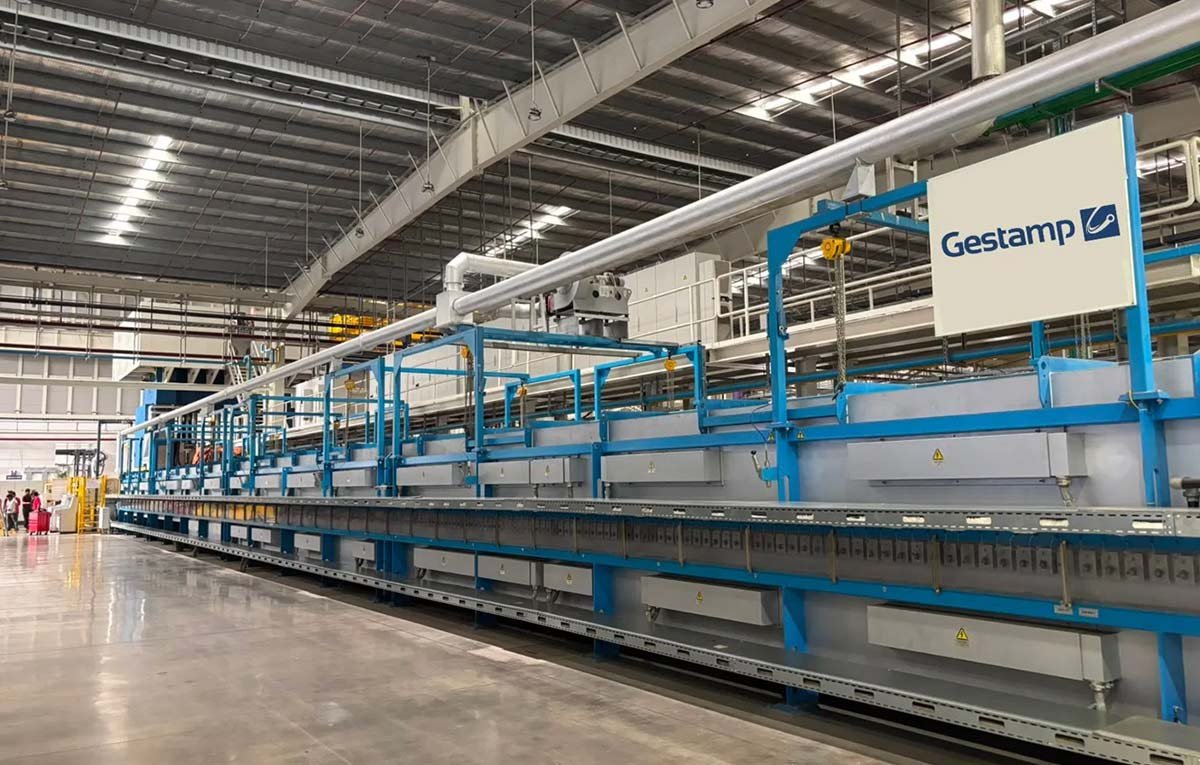
Gestamp has expanded its manufacturing footprint in India with the inauguration of a new production facility in Bhagapura, Gujarat. The company has invested ₹523.7 crore across the first two phases of the project, marking its fifth production facility in the country and strengthening its presence in one of India’s key automotive manufacturing hubs.
The plant spans 31,790 square metres and currently employs around 240 people. It features two hot-stamping lines, a laser cutting line and welding cells for assembly operations. The facility is focused on manufacturing highly engineered body-in-white (BiW) components and is also equipped to produce products from Gestamp’s Ges-Gigastamping family of large, lightweight components.
These technologies are aimed at helping automakers reduce vehicle weight and CO₂ emissions while improving safety and simplifying assembly processes. Gestamp has also installed an energy monitoring system at the facility to identify inefficiencies and optimise power consumption. The company said it plans to enter agreements to purchase electricity certified as coming from renewable sources.
Gestamp entered India in 2006 and began developing its own manufacturing footprint from 2010 onwards. Its operations now include three facilities in Pune, one in Chennai and the new plant in Bhagapura. The company’s total manufacturing footprint in India stands at 188,000 square metres, with 14 stamping lines, including five using hot-stamping technology. Two additional hot-stamping lines are currently being installed.
The company employs around 2,300 people in India across the development and production of BiW components and assemblies, chassis parts and mechanisms. Gestamp said its revenues from India grew by more than 80% over the last five full financial years, reaching €245 million in 2025.
The investment comes as Gestamp adopts a selective global investment strategy, focusing capital on markets with stronger growth prospects. The company expects India’s light-vehicle production to reach 7.8 million units by 2030, a 28% increase over 2025 levels, according to S&P Global Mobility projections.