


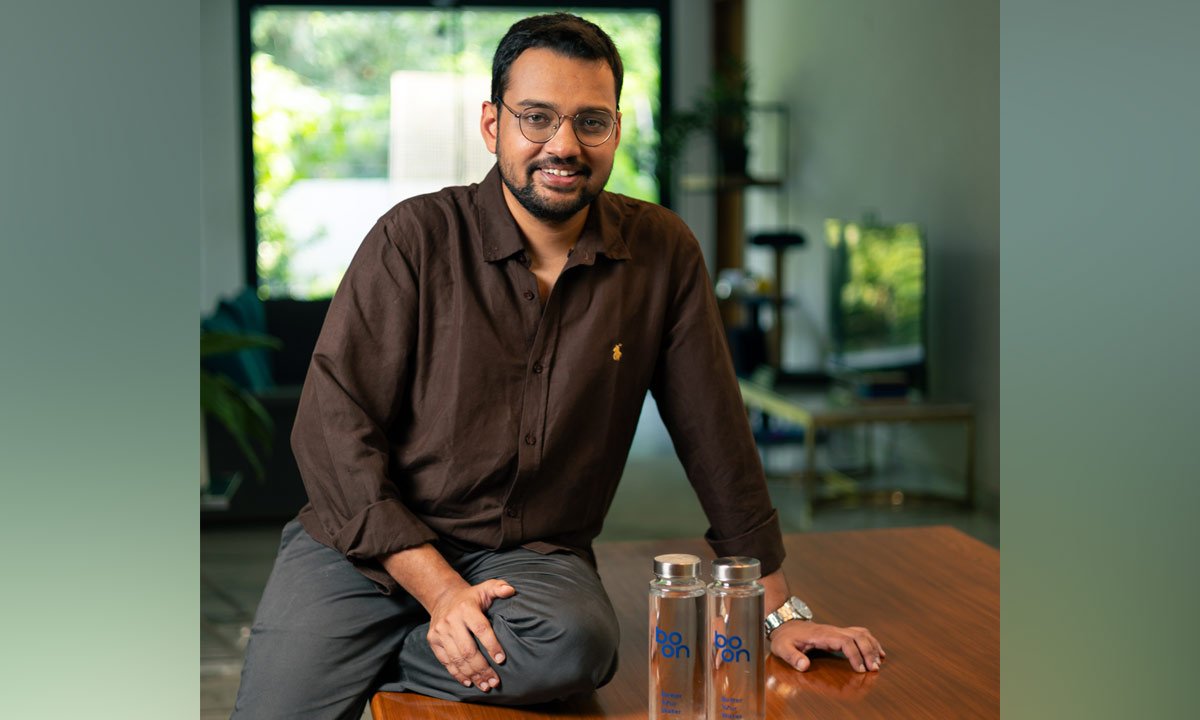
Water purification has traditionally been treated as a purely functional piece of infrastructure that’s essential, but rarely innovative. Boon, however, is attempting to reframe the category entirely. Founded by Advait Kumar, the company is building what it calls an “operating system for water,” where advanced purification hardware is only the starting point for a deeper intelligence layer powered by data and machine learning. Through technologies like UltraOsmosis membranes and its WaterAI platform, Boon’s systems continuously monitor water quality, consumption patterns, and system health, turning every installation into a connected node in a growing data network. We sat down with Kumar to understand how Boon is evolving from a hardware company into a data-driven water infrastructure platform, and what that means for the future of commercial water systems.
SN: You describe Boon as building an ‘operating system’ for water. Is this more of a hardware business with IoT layered on top, or a data-first infrastructure company where hardware is an enabler?
AK: Think about how the smartphone evolved – it started as a phone but became a platform. That’s our trajectory. We make deliberate hardware choices: our UltraOsmosis™ membranes, ECO RO configuration, LumaUV inline LED system – because if the physical product isn’t exceptional, the intelligence layer has nothing meaningful to work with. But the real defensibility we’re building is in WaterAI™. Every Boon system generates continuous data on water quality, consumption, and filter health. Over time, that data becomes an asset no hardware competitor can simply replicate. Hardware is our entry point; WaterAI is our operating system.
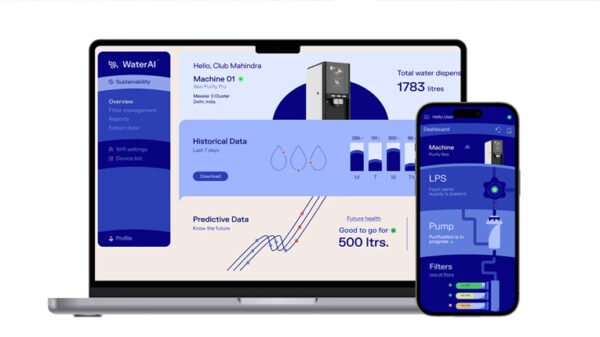
SN: How exactly does WaterAI function in a commercial environment? Are you using machine learning models for predictive maintenance, usage forecasting, or quality anomaly detection?
AK: WaterAI tracks two core metrics in real time: water quality and system health -monitoring TDS, pH, and flow rates continuously, with everything visible on a phone or web dashboard. Beyond monitoring, it learns usage patterns specific to each installation and uses them to forecast filter replacements before quality is ever compromised. There’s also an anomaly detection layer – if TDS spikes or flow drops outside normal parameters, the system flags it immediately. In a luxury hotel, you cannot have a guest receiving substandard water because a filter quietly degraded overnight. We also make WaterAI available via our plug-and-play WaterStick for existing purifier clients who already have it installed, which expands our data network significantly.
SN: Deep-tech hardware is notoriously difficult to scale internationally. What were your biggest operational hurdles across the 11+ countries you operate in?
AK: Three things humbled us most. First, compliance -water purification is a health infrastructure, and every market has its own certification requirements. What works in India needs significant reconfiguration elsewhere, and we’ve learned to treat compliance as a product feature. Second, service complexity – our value proposition is built on uptime, and bridging the distance between a unit in Qatar and our engineering team in Gurgaon required serious investment in local service partnerships and modular system design. Third, trust -even with Roca Spain’s backing and UNDP endorsement, walking into a new geography as an Indian startup means you earn credibility rather than inherit it. Our 400+ hotel references across India have become our most powerful international sales asset.
SN: Commercial water purification can generate significant reject water. How does Boon address sustainability?
AK: This is an engineering priority for us, not a marketing one. Conventional RO systems can waste up to 70% of processed water. Our UltraOsmosis™ technology adjusts purification intensity dynamically based on incoming water quality – much like a smart AC modulates its output rather than running at fixed capacity. This, combined with rerouting reject water back through the system’s processing cycle, makes our machines 4 to 5 times more efficient than market-standard purifiers. The bigger picture is systemic: every Boon installation eliminates the logistics, plastic, and carbon chain associated with a 20-litre jar supply. Our app gives clients real visibility into plastic bottles avoided and water wastage prevented – we make sustainability legible, not just aspirational.
SN: What advantages, or disadvantages, does being an India-born deep-tech company bring when competing against established global players?
AK: Both are real. The disadvantage is perception – established Western brands carry an assumed pedigree, especially in premium hospitality procurement. That’s a genuine headwind we navigate actively. But the structural advantages are decisive. India gave us one of the most demanding proving grounds in the world – extreme TDS variability, seasonal inconsistencies, and infrastructure gaps that most Western markets never face. By the time we enter the Middle East, where high TDS and water scarcity are facts of life, we’ve already solved those problems at scale. And our ability to deliver world-class water technology at a commercially viable price point – that’s an India-born advantage no legacy brand equity can replicate.
SN: Have you conducted lifecycle assessments, and can you quantify Boon’s carbon footprint per litre purified compared to conventional systems?
AK: Lifecycle thinking is embedded in our design, even if publishing formal third-party LCAs at the frequency of large multinationals is still a work in progress. On energy, our inline LED UV consumes significantly less power than conventional bulbs or tank-based UV systems, and UltraOsmosis’s adaptive operation avoids the waste of fixed-capacity running. Extended membrane life is also a deliberate output of the technology – fewer replacements mean less embedded carbon per cycle. But our most significant carbon story is systemic: replacing a hotel’s 20-litre jar supply chain eliminates substantial logistics emissions and thousands of plastic units annually per property. Formalising this into verified LCA data is a priority as ESG reporting becomes mandatory for hospitality operators in our key markets.
SN: Is Boon working toward closed-loop water ecosystems — reject water reuse, greywater integration, or zero-liquid-discharge environments?
AK: Within our current systems, reject water reuse is already part of UltraOsmosis’s architecture – it’s not discharged but rerouted back into the processing cycle. At a building ecosystem level, our roadmap is to become the intelligence layer that makes circular water strategies actionable. WaterAI’s consumption and quality data is the prerequisite for any serious closed-loop design – you cannot manage what you cannot measure. As our installed base deepens, we can help building managers identify where water can be recovered and integrated into non-potable use cases like irrigation or cooling. Zero-liquid-discharge at scale is a multi-system challenge, but it’s the logical next chapter of the platform we’re building. When we say ‘operating system for water,’ this is exactly what we mean in practice.