


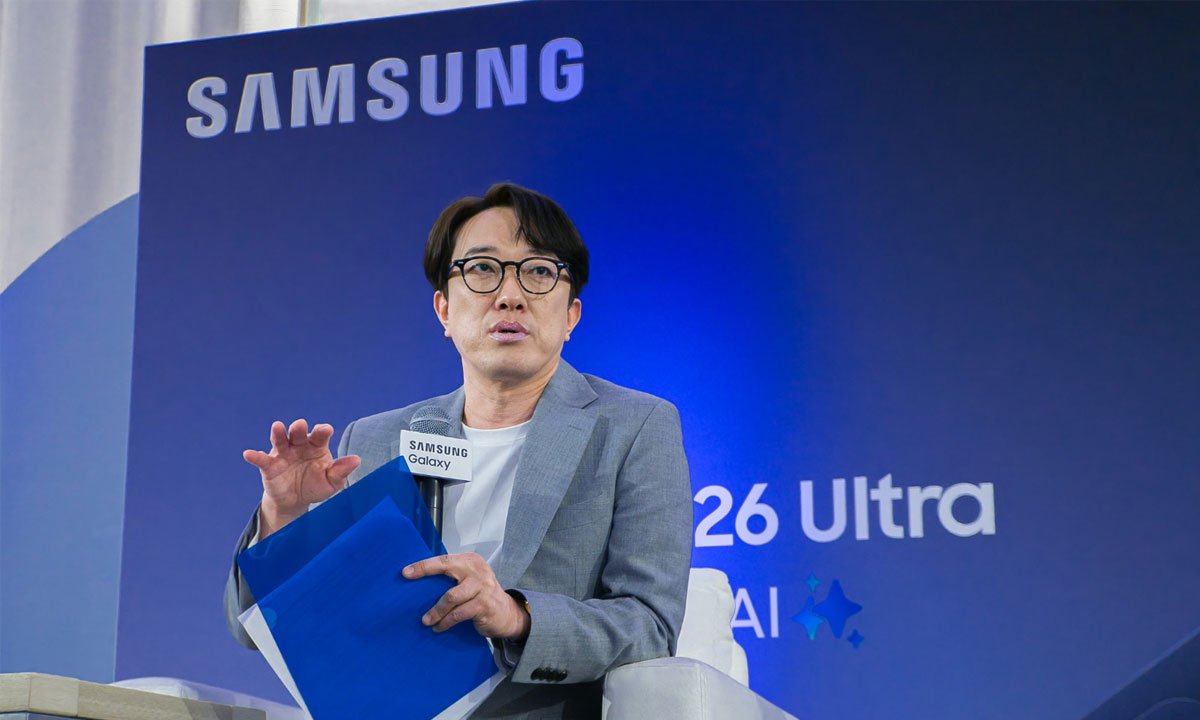
San Francisco’s bright summer morning formed the backdrop for Samsung’s latest Galaxy Unpacked gathering, where the company introduced the Galaxy S26 series and outlined its next chapter in AI-driven mobile technology. Amid the buzz surrounding new hardware and software innovations, a smaller group of journalists gathered for a candid leadership conversation with Won-Joon Choi, COO of Samsung’s Mobile eXperience (MX) Business, and JB Park, President and CEO of Samsung Southwest Asia.
Choi opened the discussion by explaining that the Galaxy S26 lineup represents a subtle but important shift in Samsung’s strategy. While the Galaxy S24 marked Samsung’s first “AI phone” and the S25 focused on building an AI platform approach, the S26 was designed after extensive consumer research that reaffirmed the fundamentals people still care about most: performance, camera capability, and battery life. Samsung’s goal with the S26 series, he said, was to strike a careful balance between strong hardware foundations and meaningful AI experiences.
That philosophy manifests in several ways across the new devices. The Galaxy S26 Ultra introduces a Privacy Display, a dynamic technology that allows sensitive content to remain visible only to the user. Camera performance across the entire S26 lineup has also been reworked, not just for capturing images but for editing and sharing them more seamlessly using Samsung’s AI-driven tools. Behind the scenes, Samsung has also been working closely with Google to build what Choi described as an “AI OS” framework, integrating AI functionality at the operating system level to enable more agentic experiences across apps and services.
At the heart of Samsung’s AI push are three guiding principles: reach, openness, and trust. The company wants Galaxy AI to reach as many users as possible, expanding from hundreds of millions of devices today to even more in the coming year. It is also embracing a hybrid AI model that combines on-device intelligence with cloud-based capabilities and third-party integrations. At the same time, Samsung says it is placing equal emphasis on transparency and privacy, ensuring that sensitive information remains protected at the hardware level.
JB Park followed with a perspective closer to home for Indian audiences. He highlighted how India’s young and tech-forward population has become a critical part of Samsung’s innovation ecosystem, with engineers across the company’s R&D centres contributing to the AI infrastructure that powers Galaxy devices. For Park, the Galaxy S26 series represents more than just another flagship launch — it is positioned as a companion device for a new generation of aspirational consumers eager to embrace the AI era.
What followed was a wide-ranging discussion covering everything from agentic AI and the future of apps to foldable displays, smartphone pricing, camera evolution, and Samsung’s broader device ecosystem.
Below is the full transcript of that conversation.
Question 1: Do we see the new Privacy Display feature, which is exclusive to the S26 Ultra, going forward on the foldables, on the Flip and the Fold in the next edition? And what are some of the challenges that you foresee when it comes to getting this feature to the Fold form factor?
Won-Joon Choi: This (Privacy Display) is something that we started working on a long time ago. Frankly speaking, the idea was proposed by the MX (Mobile eXperience) division to our sister company, Samsung Display. From the idea to the actual commercialisation, we’ve gone through a lot of trials and errors. And we came up with a different kind of structure to overcome the challenges.
I think the same principle will apply to the Privacy Display feature. We started with the most premium kind of device, and then as time goes by and as the technology matures, we’re trying to propagate it down to Galaxy S26+, S26 (base) and other devices. So, we do have that plan.
When it comes to the foldables, we are still doing our research because the foldable display itself has a different structure than our bar type smartphone display. The foldable display has a lot of challenges to overcome. We want to enable the Privacy Display feature on foldables, but we are still in the middle of doing our research.
Question 2: Samsung has announced fast charging capability of around 60W. What kind of chargers are these because I’m guessing the charger is not part of the packaging, it’s not inside the box? How early can we see these chargers? Are they proprietary Samsung or another charger?
Won-Joon Choi: We’re going to have our own 60W charger ready for launch. We’ve been working on it, so the products are ready. You can purchase our charger from the market. The second question about whether it will work with other chargers. We are following the standard specs. As long as they follow the fast-charging standard specs, there’s no issue.
Question 3: Can you talk a little bit more about the Agentic AI? For example, we know that Uber is one. Are you partnering with any other app developers, like hotels or airlines for Agentic AI?
Won-Joon Choi: Obviously, that’s the plan. We are working with Google to enable the AI OS. The Galaxy S26 is the first product that utilises AI OS framework that we have built together. We have been working with a few partners. Not just Uber, but DoorDash, Starbucks and others.
We are doing a lot of validation. At the time of S26 launch, you will have a handful of applications that will be available in English and Korean. So, two things – one is expanding the language support other than English and Korean. And the other one is expanding this capability to more services and partners. So obviously, we do have a plan. We have already approached multiple vendors together with Google.
With Galaxy S26, we will have a handful of applications. By the time we are ready to launch the foldables in the second half of the year, our expectation is to have as many apps available in this framework.
Question 4: The Galaxy S26 series heavily leans on the Agentic AI. What is the difference between AI agents and Agentic AI? Do you see a shift where the smartphone apps are being replaced by the AI interface in the near future?
Won-Joon Choi: Excellent question, but very difficult to answer. AI agent is when people launch ChatGPT or Gemini, and you ask a question, the agent answers the question. In the Agentic AI era, you tell the AI about what you want to do, and then it will figure out, it will do the thinking, do the planning, and it will execute. From thinking to planning to execution, the AI will – without you intervening – complete the task. The whole journey of completing what you asked for – that’s what agentic AI is in simple terms.
Will AI interface be replaced by apps? Some of the applications like Netflix and Spotify provide content, and users use these apps for entertainment purposes. I think such apps will remain around. However, some other apps, like when you want to do certain tasks, if you look at it, for certain complicated tasks, you need to open an app and copy or get some information and copy that. Then you close that (app) and open another app, and then just do an execution. Some of the reminder apps and task organisation apps – these apps may disappear because your agent can remember all the information that you already provided. This agent can explore your calendar, your files, your notes, and then it gets the right information on behalf of these apps.
I think some of the apps may disappear, but others will stay. Also, in terms of the interface, when the smartphone was invented back in 2007, it was mainly touch-based UI, along with app ecosystem. Those are the two distinct features of smartphones. The touch-based UI can still exist, but a lot of work can be done by natural interface such as voice and video. So, voice and video can be the main interface for users to use devices.
Question 5: What is the future of Apps Store, according to you?
Won-Joon Choi: As I mentioned, some of the apps will maintain their roles, like those delivering content for gaming and music. Other apps can stay below the surface, and this surface can be a new interface based on visual and voice, and again AI agents can play them.
Question 6: My question is related to the automotive world. Samsung has been deepening the connected car integration, as well as the technology that you find in cars. How will Samsung’s ecosystem of the phones, of the wearables, enhance the in-vehicle experience?
Won-Joon Choi: Let me answer that question by giving you an example of Samsung’s ecosystem. Galaxy AI started with mobile devices, and we have been trying to propagate the AI features to our other devices such as watches, tablets, PCs, and so forth. The features that we announced today will be optimised for other form factors, like watches, tablets, and others.
However, we are not working on an automotive OS. I think it’s more about giving you a seamless experience with our devices (like phones and watches) when you are in the car. Even in the automotive environment, you can use the same sort of Galaxy applications using Android Auto. So that’s the direction. But in the short term, we don’t have a plan to get into the automotive OS space.
Question 7: In the last couple of generations, Samsung’s focus has moved more towards video photography than still photos. And the camera sensor size has kind of remained the same, but the processing has been elevated. Is it fair to say for videos, you don’t need a bigger sensor than what you already have?
Won-Joon Choi: The camera is one of the most important features of Galaxy smartphone. If you remember, back in 2020, we introduced a big sensor (108 MP). Ever since then, we’ve been leading the industry in terms of imaging sensors. The capturing function of the camera is the starting point or the foundation. It is very, very important. But we are not only focused on capture, but editing too, especially for the young generation. Even after they take a lot of pictures, they want to modify the pictures to the way they like. We also have been really focused on sharing. Social is very important to us. We’ve been working with Meta to optimise the picture and video qualities that is uploaded to Instagram, for example. These are the areas that we really focus on. You said we’ve been more focused on videos, which is true. But that doesn’t mean that we’re not focusing on still pictures.
Pictures, selfies and video are the three areas that are equally important to us. In pictures and selfies, we have made significant improvements over the years. And now, I think we are making a lot of progress on videos. The reason why we are focusing on video is that people tend to take more videos. So, we want to really increase the dynamic range and stabilization. OIS (Optical Image Stabilisation) is very important. When you take a video, the stabilisation is the key.
Hardware innovation is also continued. But on top of all these hardware innovations, we’ve been really focusing on software, not only the algorithm itself, but also ISP (Image Signal Processor). For our flagship SoC (System on Chip) that we are using from Qualcomm and System LSI Exynos, we have been trying to incorporate our camera algorithm into the SoC.
We want to differentiate ourselves from other vendors using the same chip. We have our own IP that is exclusive to us. So that’s the direction. In summary, we are focusing on end-to-end visual experience, from capture to edit to sharing and in terms of pictures, selfies, and videos, and through hardware enhancement and innovation, along with the software algorithm, plus SoC.
Question 8. The Industrial Revolution was followed by many wars and so on. After the internet era came, there was a crash. Are companies better prepared for the AI revolution? I mean, it’s causing disruption. People are scared of AI. Are tech companies better prepared for the AI revolution? And do you think youngsters would like to see AI not being mentioned as AI, but as features on the phone? Would they be more comfortable with that instead of calling it AI?
Won-Joon Choi: AI revolution, I think, is unavoidable. It’s going to happen, it is happening, and it’s different from the previous revolutions. For example, during the internet revolution, it was mainly about revolutionizing internet-related aspects (network, speed, etc.). The mobile (revolution) changed the way people used devices and got mobile experiences. But AI is different in the sense that it will impact every area, you name it, medical, law, everything.
Everything will change through AI. It’s not just the IT sector. I think we need to be prepared. Not just IT companies, but legal, HR, medical, everything. Everyone needs to be prepared. I believe people are recognizing that and they are doing a lot of preparation.
Some people are saying that big tech companies are investing a lot of money…is this a hype or not? It’s going to crash or not? I think there can be some adjustments along the way, but at the macro level, we still need to invest. We still need to bring resources. And we still need to do a lot of research. I think it’s still the beginning, in my opinion. It’s not done.
About your second question, if you remember when touch UI-based smartphone was new, people used a keyboard (like QWERTY and others), but do you believe that it’s unique or special now? Not anymore. I think as time goes on and as these AI features get integrated more deeply into the device and UI applications, people will not feel this (AI) is special and we won’t need to even call this AI. I think people will just naturally accept this is something that I can use, something that can help. I think that time will come.
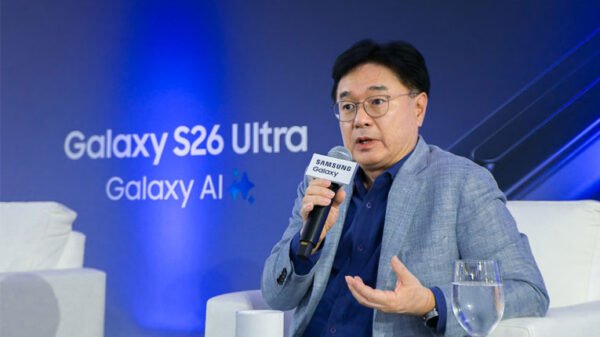
Question 9: My question is around the pricing. The S26 Ultra has in fact $1299 which is the same as the S26 Ultra in the US but in India we have seen a price hike of about $100. So why is that? Second is how expensive is too expensive for smartphone? How further can you possibly push the pricing?
JB Park: Samsung values what the device can bring to you as an innovative product. Every country has a different duty, tax regime and foreign exchange. To your second question, the definition of ceiling for premium devices. It depends on every single person. Samsung is focusing more on the value that our product can give in terms of increasing your productivity or easing your daily life. If that’s worth that much, I think it’s important that you pay for that.
The new Galaxy S26 series with AI will enable people to bring out those (AI) features and they will be able to use them in their daily life. I think that’s more than the (premium) price ceiling of $800 in India.
Question 10: My question is very futuristic. As AI becomes more agentic and proactive, Do you believe the role of screen itself is about to change? What will that look like in an ambient sort of a post-screen environment? I’m talking about like an Iron Man-like situation where, you know, you don’t really need a screen. How far are we from that, and how has Samsung internally been preparing for that transition, if you think that is a new thing coming?
Won-Joon Choi: At Galaxy Unpacked, I said AI is the new normal. One thing that we believe is that the way you interact with your devices will change. It’s going to be more natural through your voice and vision. So, voice and vision will be the primary objects for the device. But it must be bi-directional, meaning that I can talk to this agent through my voice.
With some sort of camera or through glasses, I can show this agent what I see. That’s one direction. But the other direction is the agent needs to give the information that I hear through voice and video. I can have earbuds or glasses with speakers, so that’s one kind of interface.
But when it comes to visual, you need a screen. This can create a lot of controversy, but we believe, the screen will matter more than anything. When you provide this (vision) in your phone, like a screen, we can interact with this device with richer contents. So, the importance of screen will increase. However, whenever you try to interface with your device, you need to get the device out of your bag or your pocket. That’s cumbersome, inconvenient. So we believe that there will be new type of devices, not to replace smartphones, but to complement this.
We need something that you can always wear. That’s why we’re working with glasses. But some people do not want to wear glasses because it changes the look. So, what are the new types of devices that you can create? Without having a phone, you need to get your phone out of your backpack. So, create something that you can carry, you can wear, maybe. What are you wearing – glasses, earrings, necklaces, watches? So, some sort of interface, or the new devices that I can interface with. And for those devices, I think some of them will have a display. Others may not.
And that’s why on the glasses, we are working on two types – one without display, one with display – and some sort of cool devices, it may have a display or it may not. So, I think there will be different kinds of devices that will be launched on the market. In our opinion, just to have a more natural interface, not to replace one. That’s our view.
Question 11: Samsung is already in its 7th generation of foldables. I think that form factor of technology has matured quite a bit. Do you see the form factor changing drastically in the coming years as far as foldables are concerned?
Won-Joon Choi: We have two different types of foldables – one is basically you start with your bar type smartphone – whenever you need a large screen, you can unfold it, which is our Fold7 and TriFold. Then if you have a bar type smartphone, but you know, it is hard to carry, or if you have small hands, it’s hard to put it in your pocket, etc. so you just flip it and unflip it. So that’s the form factor to provide the best portability. When it comes to the Fold, we have a regular Fold and TriFold. With a larger screen, what do you do with it? I think one is productivity. Essentially, our Fold7 is like two bar-type smartphones when you unfold it. So, it provides you with better productivity – you can have multiple windows and all the screen, and you can play with them. But for Fold, when you unfold it, another application is entertainment. You can utilize this large screen for Netflix or Disney and YouTube. So that ratio is for better kind of viewing experience. Tri-fold ratio, when you
unfold it, is different from the Fold main screen. So, finetuning for the existing models is number 1 priority.
Second is, should we apply this technology to other device types, such as the note PC. So that I think we are also working on. Forming capabilities to other types of devices. Lastly, we are also working on completely different type of form factors. Some people ask us often enough – when is rollable coming? We’ve been working on rollable form factors for many years. But we don’t want to launch the product just for the sake of launching a product. That’s not enough. We need to provide a unique experience when we launch a new form factor. And that equation, we still are trying to create.
Whenever we have confidence that with this new form factor, people can have a better experience or unique experience, we launch. Samsung has been always the first to launch or innovate the new form factors. And, this will continue. We will continue to try to create a new form factor to provide a new experience for our users.
Question 12: The Privacy Display is clearly a game-changer. You already have a clear edge in terms of competition. My question is that, do you think it will make it to the Galaxy Book? Second question is does it also affect the battery, the pixel, and in the long run, does it also make the resolution lesser overall?
Won-Joon Choi: We are trying to apply Privacy Display to other device types, when it makes sense. So mobile phones have a lot of private information. Sometimes you have financial information, or you have corporate messages. It makes sense to have that category and then the big difference between our Privacy Display versus the private film in the market is we can have a dynamic nature of turning the Privacy Display on and off – not only for apps, but also for regions because we can have a pixel-by-pixel control.
I think it’s a game changer, as you mentioned. But we want to apply this technology to other devices when it makes sense. So, Note PC, is one of the possible devices because sometimes when you use a corporate PC, there’s a lot of sensitive information on the PC. Like at the airport, you want to use your PC. Some people are using the film protector, right? We are working on it, but the bottom line is that we will apply this technology to new device types only when it makes sense.
In terms of battery life, there’s no impact. The Privacy Display consists of wide pixels and narrow pixels. We do a lot of fine-tuning in terms of how much brightness we need to provide through the wide pixels versus through the narrow pixels. So overall, it doesn’t degrade battery life when compared with our normal display. So, there’s no impact.
Coming to the resolution, we need to put the narrow pixel and wide pixel together. And when you have wide pixel only, or turn on wide pixel only, then you have a less resolution. And that is a question. But when you do that, we also optimised the pixel structure and pixel size so that people cannot feel the difference between the normal and the Privacy Display. So that’s one of the biggest challenges that we have been trying to overcome, and then we came up with our own solution.