


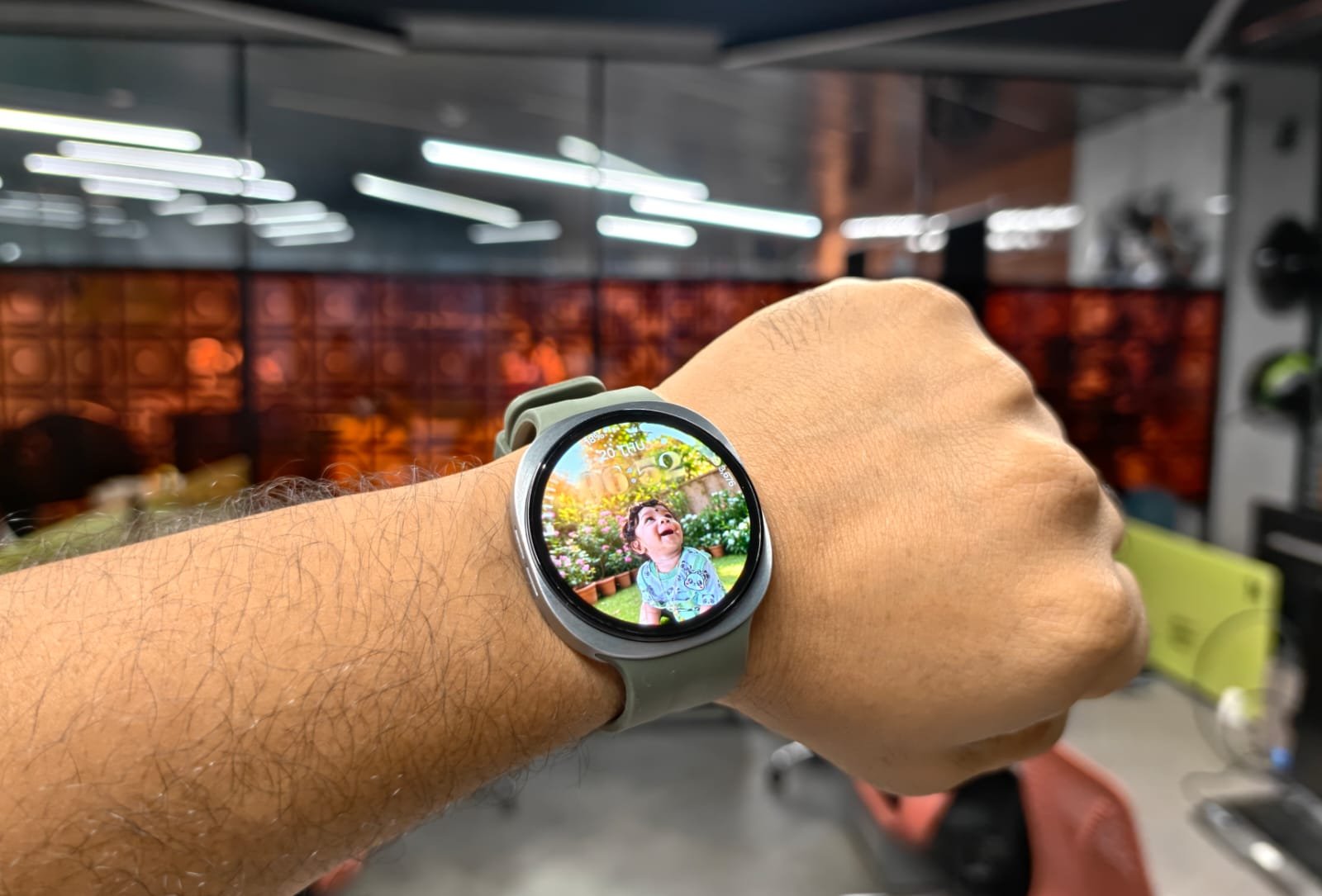
The Samsung Galaxy Watch9 runs on Wear OS by Samsung, but is this the smartwatch that can truly hold its own in the premium segment? After living with it for a full week, from early-morning runs and busy workdays to evening workouts and overnight sleep tracking, I set out to answer that question.
Design & Build
The Samsung Galaxy Watch9 takes a distinctly modern approach compared with the heavier Galaxy Watch8 Classic. The Watch8 had a premium stainless-steel frame weighing about 63.5 g with a 46 mm mechanical rotating bezel, while the Watch9 adopts a lightweight aluminium “squircle” chassis. Unfortunately, Samsung has dropped the physical rotating bezel in favour of a clean, slim profile that feels refined and contemporary on the wrist. The band is still easily removable with quick-release pins, so swapping straps remains just as convenient as on an Apple Watch. I swapped between the stock silicone and a metal bracelet during the week; both stayed secure and comfortable even during sweaty runs. IP68 + 5 ATM water resistance plus MIL-STD-810H durability meant I never thought twice about rain, showers, or a quick swim. It feels like a premium everyday watch rather than a rugged tool, which matches its positioning. After a week of daily use, the Watch9’s lighter aluminium build and minimalist design proved far more practical for workouts, office hours, and overnight sleep tracking.
Performance
The Samsung Galaxy Watch9 is a premium-line smartwatch that delivers smooth performance, and its Super AMOLED display is impressive. Under the hood sits Qualcomm’s Snapdragon Wear Elite (3 nm), the same chip that powers the higher-end Watch Ultra 2. In daily use, the difference is obvious: apps launch faster, the tile carousel scrolls without stutter, and Wear OS under the One UI Watch interface feels responsive even when I’m jumping between Samsung Health, notifications, and third-party apps.
The display is the real star. It can reach up to 3,000 nits of peak brightness. Outdoors on a bright day, the screen stayed perfectly readable with the always-on display enabled, while indoors, it looks deep and vibrant. Touch response is excellent, and the new health metrics like Heart Health Score, Fitness Index, Daily Cardio Load, antioxidant index, and continuous Vitals tracking load quickly and present data in a clean, glanceable way.
GPS lock-on is faster and more stable than on last year’s model, even under tree cover. Heart-rate tracking during runs and interval sessions was accurate. Sleep staging, SpO2, skin temperature, and the expanded wellness suite all worked reliably through the week. The only caveat is the usual Samsung ecosystem note: the full set of advanced sensors and ECG/blood-pressure features works best (or exclusively) with a Galaxy phone. On a non-Samsung Android device, you still get solid core tracking, but a few premium health tools remain locked.
Battery Life
Battery life has improved. Samsung rates the watch for around 30 hours with always-on display enabled. In my mixed-use week with notifications throughout the day, a couple of outdoor GPS workouts, continuous heart-rate monitoring, sleep tracking every night, and AOD left on, I consistently got a full day plus a solid chunk of the next morning. On lighter days without long GPS sessions I could stretch closer to a day and a half.
Heavy GPS use or constant AOD does pull it closer to the 24-hour mark, so most people will still want to charge nightly or every other night. Wireless charging at up to 10 W gets it from empty to full in roughly 90 minutes using the included puck. It’s not class-leading multi-day endurance, but the jump in capacity and the more efficient Snapdragon chip make the Watch9 noticeably less stressful than the previous generation for typical daily wear.
The Galaxy Watch9 impresses as a polished evolution rather than a complete reinvention, featuring a premium aluminum build, sharp Super AMOLED display, and smooth Snapdragon Wear Elite performance, making it a top contender in the high-end smartwatch market. It offers complete health and fitness tracking, a user-friendly interface, and a versatile quick-swap band system. While its battery life isn't the longest and some advanced features work best within the Samsung ecosystem, it remains a reliable daily companion for anyone already in that ecosystem or willing to join, competing well with other premium Wear OS and Apple Watch options. If you appreciate a bright circular display, strong health insights, and lightweight performance, the Galaxy Watch9 is a standout choice.
The Good
- Bright Super AMOLED display
- Smooth performance
- Reliable health tracking
The Bad
- No rotating bezel
- Shorter battery life with heavy use
- Advanced features limited to Samsung phones
-
Build & Design
-
Performance
-
Battery
1 Comment
Pingback: Samsung Galaxy Watch Ultra 2: Cool Fitness Features!