


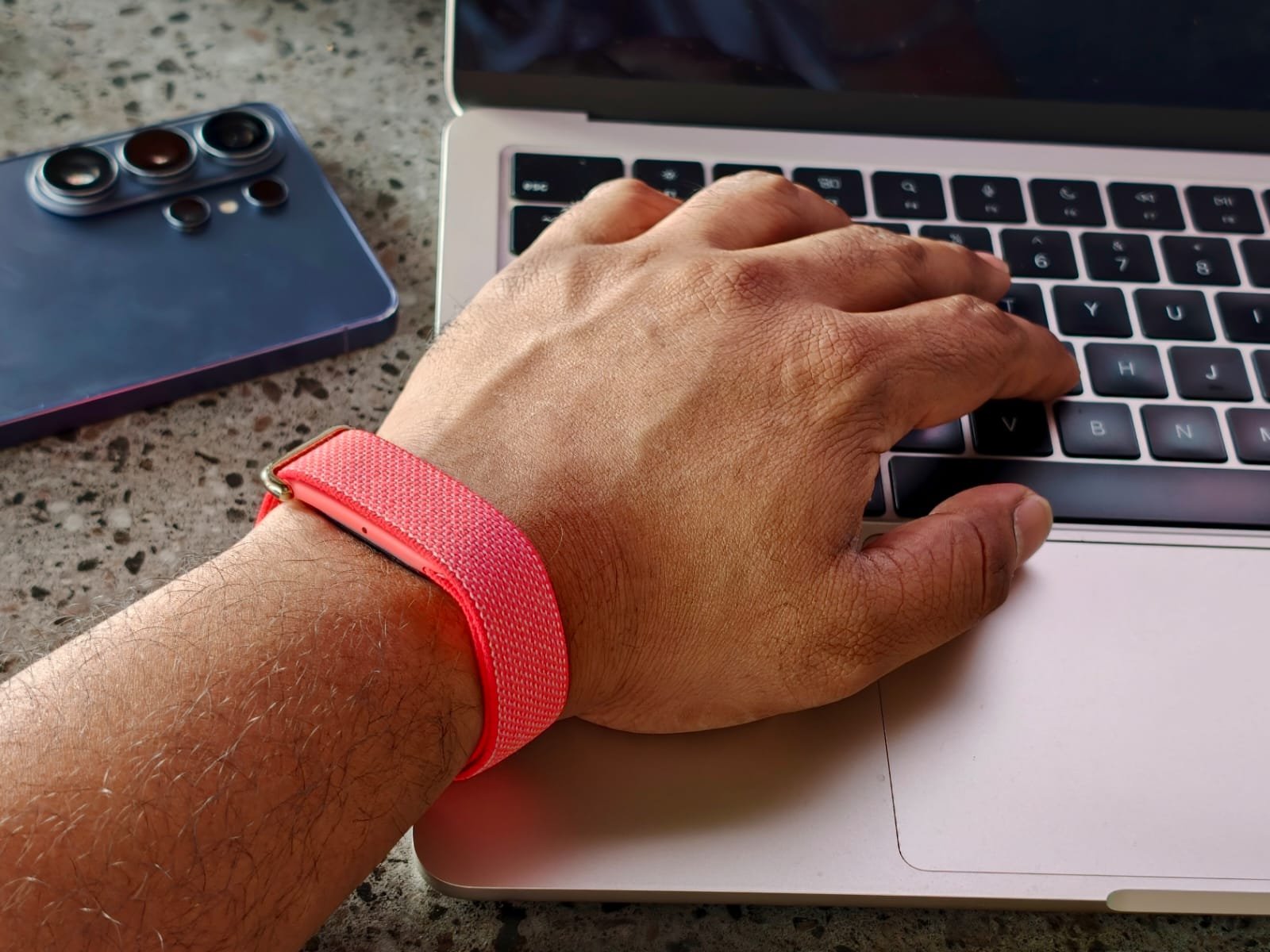
We all know the feeling. You are sitting in a meeting, trying to focus, and your wrist starts buzzing. Is it a crucial text from your boss? An urgent UPI payment notification? Nope, it is your smartwatch aggressively reminding you that you haven’t taken 250 steps this hour. For years, we have accepted that tracking our health meant strapping a glowing, buzzing mini-smartphone to our wrists. They are bulky, they demand constant attention, and honestly, trying to sleep with a glaring screen strapped to your arm is a nightmare.
Google has made Fitbit Air. It strips away the screen, kills the notifications, and focuses entirely on being a no-nonsense health tracker that quietly does its job in the background. But the big question is simple: in a market flooded with feature-packed smartwatches, is a screenless tracker really worth spending ₹13,999? Let’s find out.
Design & Build
When you unbox the Fitbit Air, you might actually wonder if something is missing. There is no sleek AMOLED dial, no rotating crown, and absolutely no glass. It is just a pebble-like tracker and a strap. It is incredibly compact and minimalist.
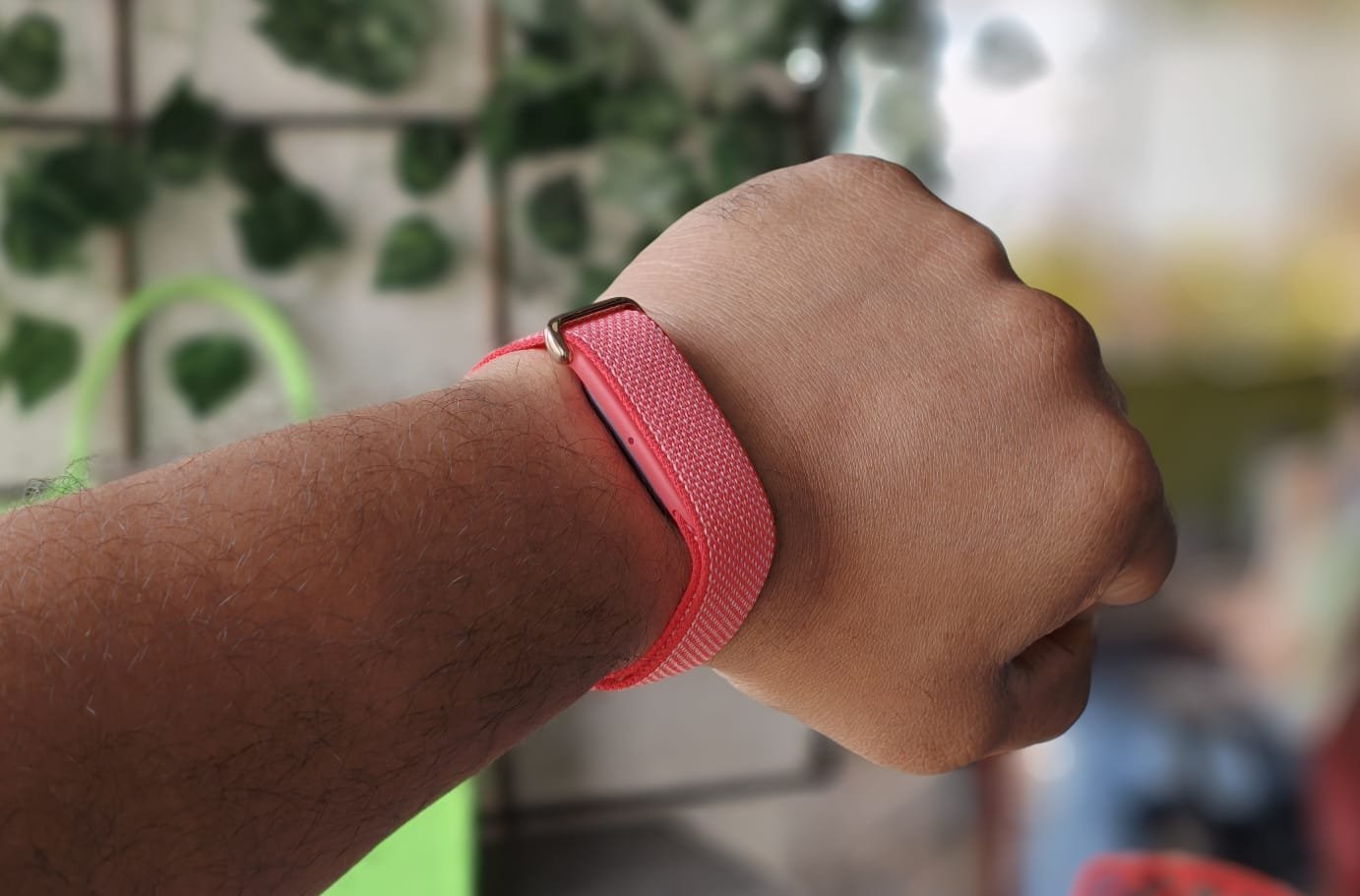
Unfortunately, my review unit came in the Berry colour, which is essentially a very vibrant pink. While it might not be my first choice for a subtle everyday look (I would probably lean towards the stealthier Obsidian or Fog options), the colour quickly became irrelevant once I put it on.
Weighing in at a mere 12 grams, the Fitbit Air completely redefines what a wearable feels like. To put that into perspective, it is about half the weight of its closest screenless rival, the Whoop 5.0. Once you buckle the micro-adjustable strap and get it snug against your skin, it genuinely feels like you are wearing nothing at all.
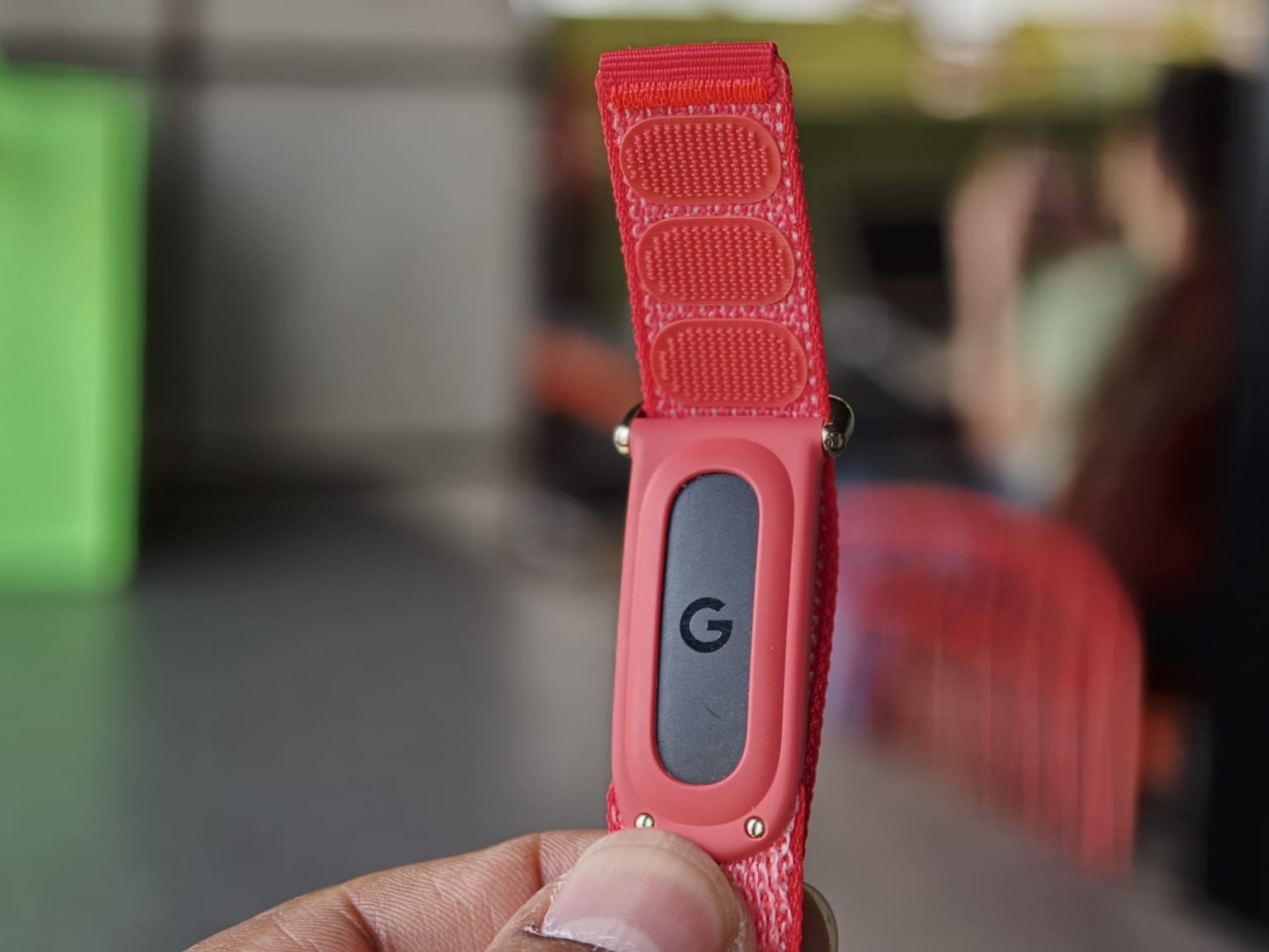
This weightlessness is the Fitbit Air’s greatest superpower, especially after dark. Most smartwatches are terrible sleep companions because they are heavy, dig into your wrist, or blind you if you accidentally move your arm. The Fitbit Air sits flush and silent. It is, without a doubt, the best device for sleep tracking purely because it doesn’t bother you while you are trying to sleep. It’s also water-resistant up to 50 meters, so it easily survives a sweaty gym session or a sudden Mumbai downpour.
Features & Performance
I have been using the Fitbit Air for just over a week now, and the experience is a massive shift from traditional smartwatches. Without a screen to constantly check, you might feel a bit disconnected for the first day or two. Once you break the habit of looking at your wrist, you realize that the magic happens on your phone.
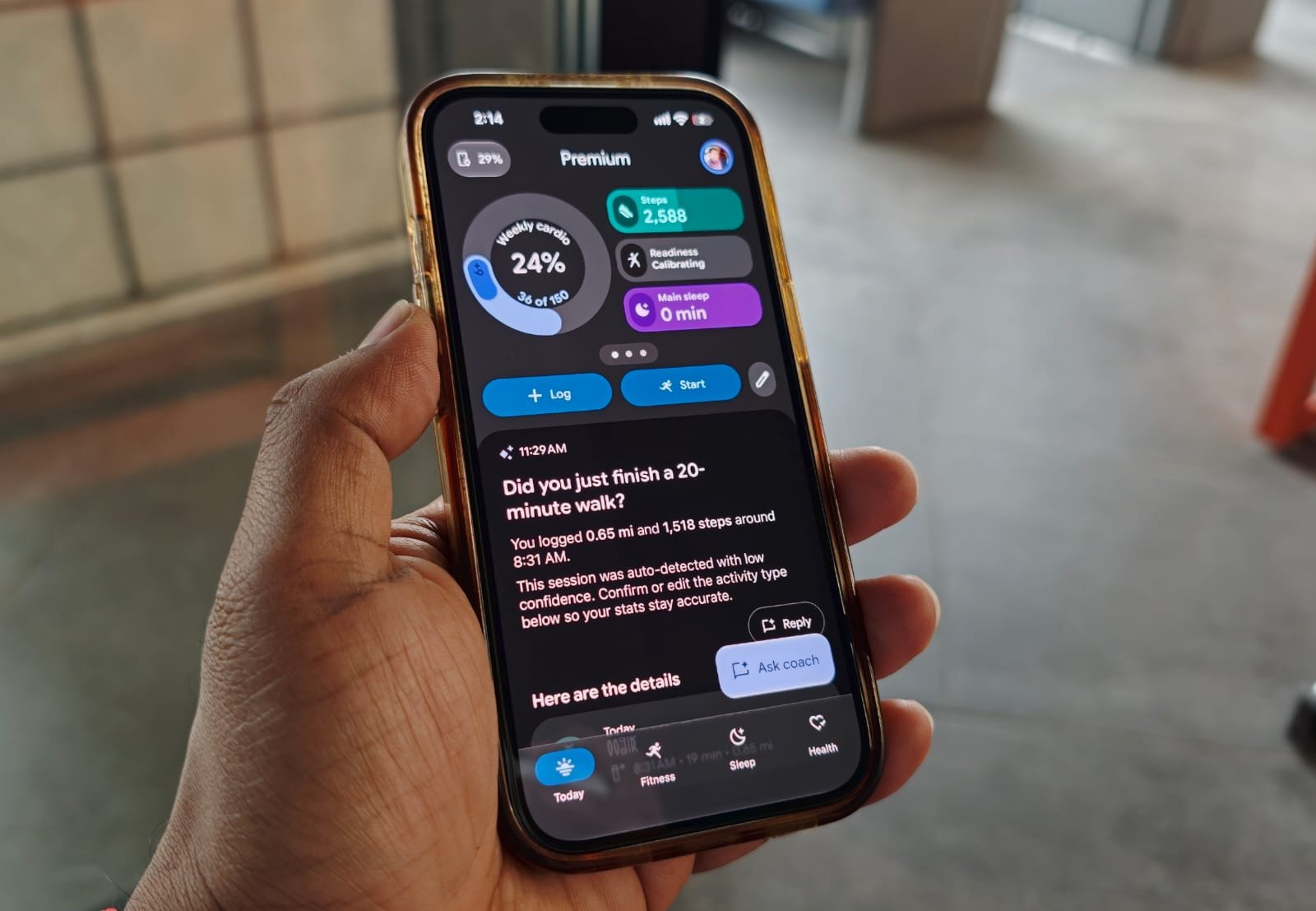
The Fitbit Air collects a notable amount of data and sends it directly to the updated Google Health app. It tracks everything from your heart rate and blood oxygen levels (SpO2) to heart rate variability and steps. The sleep tracking is genuinely top-tier, giving you an in-depth breakdown of your sleep stages and a daily Sleep Score that accurately reflects how rested you actually feel.
Here is the catch, though: it requires a bit of patience. It took a full 7 days for the system to calibrate to my specific baseline. For the first week, the app was just gathering data, but once it locked into my patterns, the detailed insights became incredibly useful.
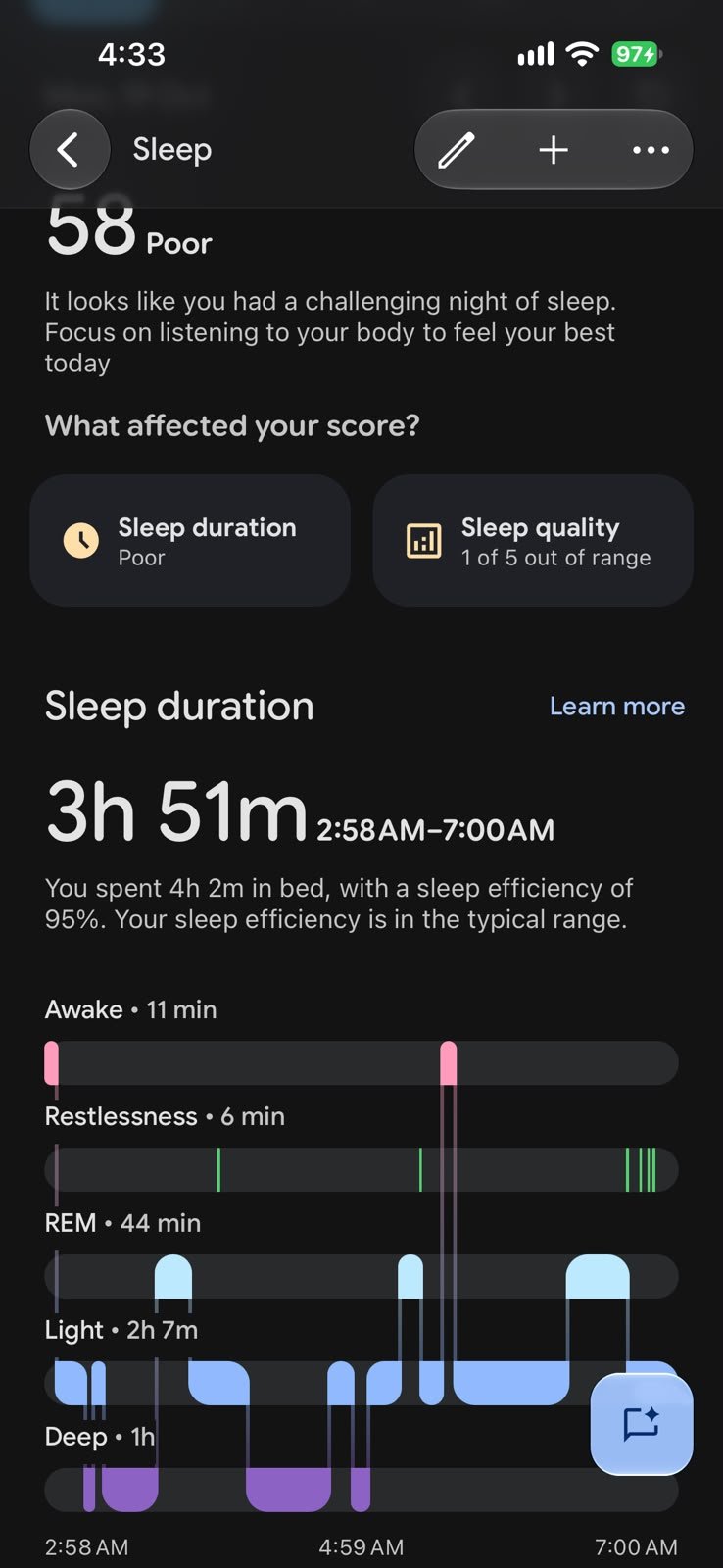
The real star of the show is the Gemini-powered AI coach. It doesn’t just show you raw numbers; it explains what they mean for your body today. If you had a terrible night’s sleep, it tells you to skip the heavy lifting and opt for a light walk. I am currently using the Google Health Premium plan, which unlocks the full potential of this AI coach. While basic tracking is free, the deep personalized coaching requires the Premium subscription (which costs ₹499 a month). However, Google includes a generous 3-month free trial of Premium Health when you buy the device, giving you plenty of time to decide whether the AI insights are worth the recurring cost.
Battery Life
If you own an Apple Watch or a premium Wear OS device, you are probably familiar with battery anxiety. You are lucky to get a day and a half before you need to hunt for a charger.
Because the Fitbit Air ditches the power-hungry screen and the constant vibrating notifications, the battery life is nothing short of insane. Google claims it lasts up to a week, and in my testing, that is exactly what it delivers. I went a full 7 days of 24/7 wear, tracking daily workouts, constant heart rate monitoring, and every single night of sleep, before I finally had to snap it onto its magnetic charging puck.
When you do need to charge it, it is incredibly fast. A quick 10-minute top-up gave nearly 45% charge, and it goes from dead to 100% in just over an hour. This means you can throw it on the charger while you take a shower, and you will practically never have to worry about the battery dying on you.
At ₹13,999, the Google Fitbit Air is not a cheap impulse buy. You are paying a premium price for a device that technically does less than a standard ₹5,000 smartwatch. It won't let you control your Spotify playlist, it won't show you your WhatsApp messages, and it can't take phone calls.
But that is exactly why it is brilliant.
Not just another gadget demanding your attention; it is a dedicated health tool that respects your focus. If you are tired of notification fatigue, if you hate sleeping with a bulky watch, and if you want highly accurate, AI-driven health data without the digital noise, the Fitbit Air is exceptional. It strips away the smart and perfectly masters the watch. If you want to actually focus on your health without the distractions, this is the wearable to get.
-
Build & Design
-
Performance
-
Battery