

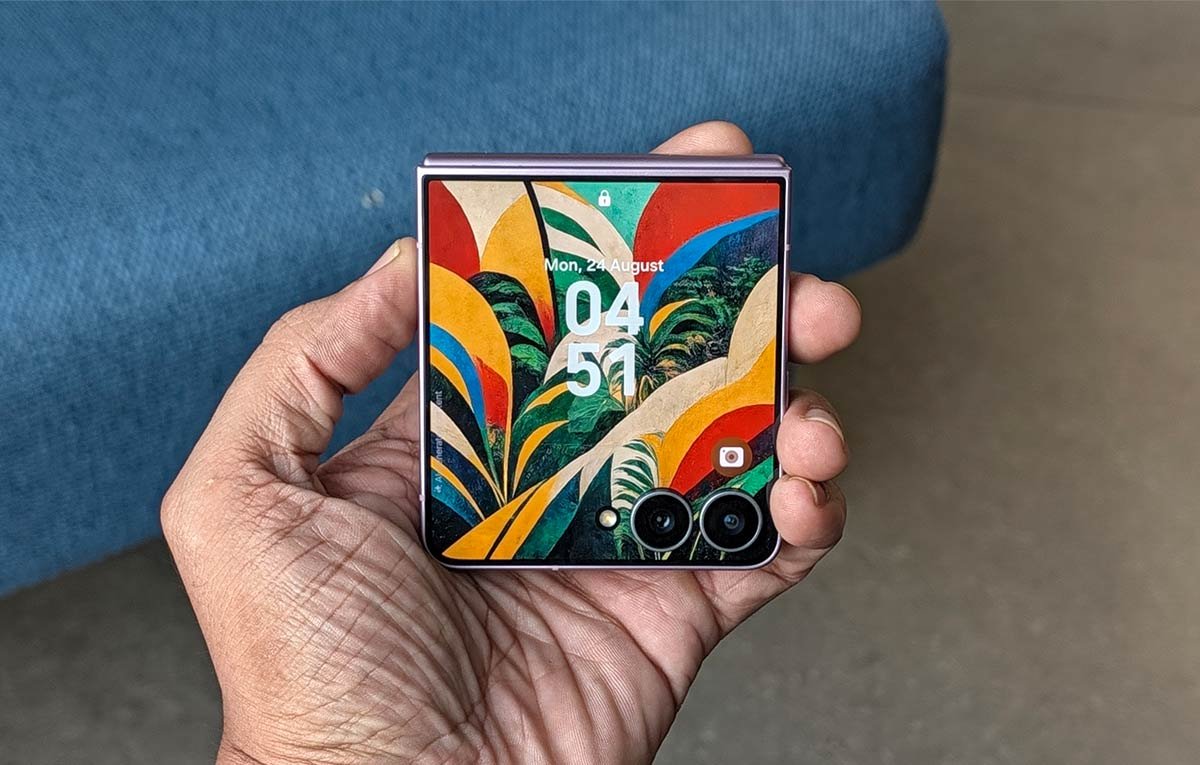
Verdict
The Galaxy Z Flip 8 is a difficult phone to score because it is simultaneously one of the most polished clamshell foldables you can buy and one of the least compelling upgrades if you already own the previous generation. For someone coming from an older Flip, this is an excellent upgrade. The thinner body, lighter weight, smoother hinge, improved cover screen, stronger performance and refined camera experience add up to a phone that feels considerably more mature. But if you're coming from the Flip 7, I'd pause. The fundamental camera hardware hasn't changed. The battery capacity hasn't changed. The design philosophy hasn't changed. And the price has gone up by ₹15,000. At ₹1,24,999, though, the question isn't whether the Galaxy Z Flip 8 is good. It very clearly is. The question is whether you're willing to pay a premium for the privilege of having a phone that folds. If the answer is yes, the Flip 8 remains one of the most convincing ways to do it. If you're already carrying last year's model, however, I'd save the money, wait for a deal, or wait for Samsung to give us a reason to flip again.
The Good
- Slimmer, lighter design
- Excellent main display
- Strong performance
The Bad
- No telephoto camera
- Average battery life
- Limited cover-screen apps
-
Design
-
Display
-
Sound
-
Performance
-
Camera
-
Battery Life
Samsung switched its foldable strategy this year by unveiling its anticipatory answer to Apple’s foldable in the form of the Galaxy Z Fold 8, which gave the company the opportunity to call the regular book-style foldable the Fold 8 Ultra, while adding a good ₹25,000 premium to it. Amidst the limelight hogged by those two handsets, the quiet entrant is the Galaxy Z Flip 8, the vertically foldable handset that has gained a few upgrades of its own. Now, if you happen to be a ‘foldables’ person, you are either a Flip person or a Fold person, and if you’re the former, you should note that the new Z Flip is devoid of any major new additions and is still Rs 15,000 dearer than its predecessor. And industry whispers tell us that a price adjustment is definitely on the cards for the month of September, when its price is expected to increase by at least 10 percent. If you’re thinking of buying the device, here’s a detailed review.
Design
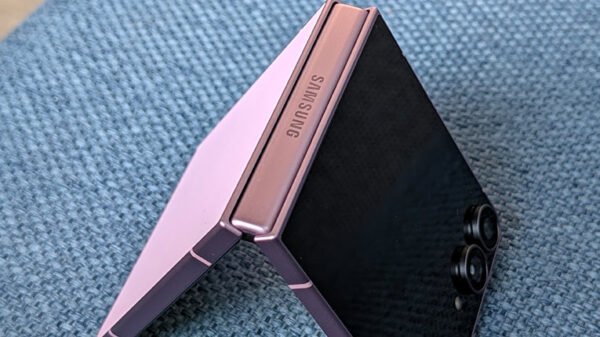
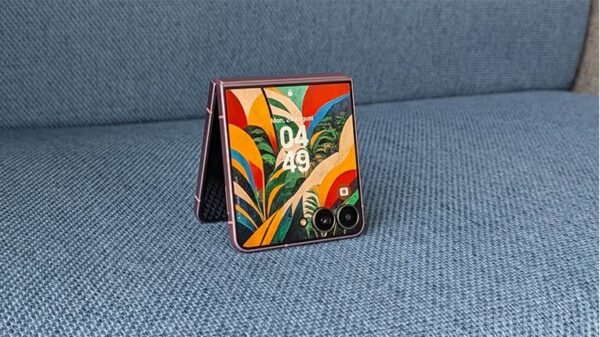
The Flip 8 is a curious case of Samsung changing quite a lot without making the phone look particularly different. Fold it up and it remains unmistakably a Galaxy Z Flip: compact, square-ish, slightly jewellery-like and immensely satisfying to snap shut. But the dimensions have been quietly worked on, and those changes matter more in your hand than they do on a spec sheet.
At 180g and just 6.1mm thick when unfolded, this is Samsung’s thinnest and lightest Flip yet. It is also noticeably slimmer than the Flip 7, and the difference is most apparent when you are carrying it around. The whole point of a clamshell foldable is that it disappears into a pocket, and Samsung has leaned further into that advantage.
I’ve always thought this was the most compelling thing about the Flip form factor. A conventional flagship is designed to give you more screen, more cameras and more battery. The Flip asks a different question: what if your phone could become considerably smaller when you aren’t using it?
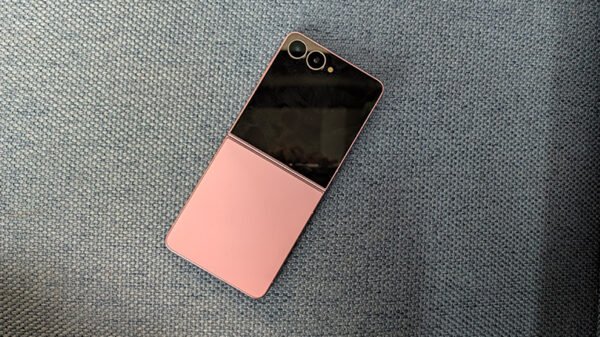
The Flip 8 remains very good at that. The hinge also feels more polished. Opening the phone has a smoother, more controlled quality to it, and Samsung has made the crease less visually intrusive. It hasn’t disappeared, but after a few days of use, I found myself barely thinking about it. That is probably the best compliment a foldable can receive.
There is also a welcome sense of solidity here. Samsung has managed to make the phone lighter without making it feel fragile, which is important because a foldable that constantly feels like you should be handling it with surgical gloves rather defeats the point. The design isn’t perfect, though.
Samsung has made the Flip thinner and lighter, but I would have happily traded a few grams for a larger battery or better thermal management. Still, as a piece of hardware, this is an exceptionally well-resolved little phone.
Display & Sound
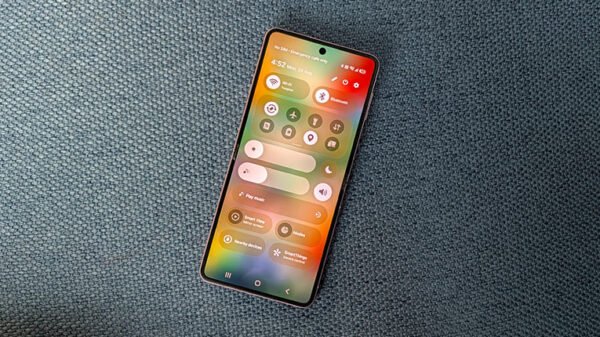
Open it up and you get a 6.9-inch Dynamic AMOLED 2X display running at 120Hz. It is bright, sharp and predictably excellent. Samsung has been doing OLED displays for long enough that there isn’t much left to prove here. Colours are punchy without becoming cartoonish, text is pin-sharp and HDR content looks superb. The 120Hz refresh rate also gives the interface the fluidity you’d expect from a premium Samsung phone.
The bigger story, however, is the 4.1-inch FlexWindow on the outside. This is where the Flip 8 feels more useful than its predecessor, although I still don’t think Samsung has extracted everything it could from the concept. The larger outer display gives you more room for widgets, notifications and quick interactions, and you can now do considerably more without opening the phone. Google Maps, Messages and YouTube can be used from the cover screen, for example.
I’ve found this particularly useful for navigation and quick checks. If I’m walking somewhere, checking a message or controlling something without wanting to get sucked into the full phone experience, the cover screen is genuinely convenient. But Samsung remains oddly conservative about what you can run on it.
There is still an element of app gatekeeping, with some applications requiring Good Lock or additional configuration to work properly on the outer display. Motorola has been more permissive with its cover-screen approach, and that makes Samsung’s caution feel increasingly unnecessary.
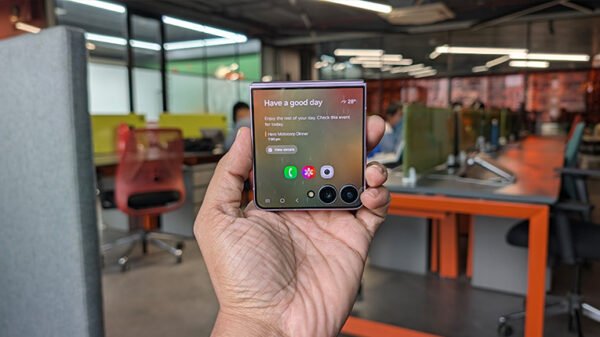
The irony is that the cover screen is one of the best arguments for buying a Flip in the first place. Samsung should be encouraging you to use it as much as possible rather than making you jump through hoops to unlock its full potential.
Sound, meanwhile, is good rather than exceptional. The stereo speakers are loud enough and have decent separation, making YouTube videos, podcasts and the occasional Netflix binge perfectly enjoyable. The unfolded screen also makes the Flip surprisingly good for watching content.
Performance
This is where Samsung has made one of the more meaningful changes.
The Flip 8 gets Samsung’s Exynos 2600 chipset, paired with 12GB of RAM. On paper, that gives it the sort of hardware you’d expect from a flagship, and in everyday use it largely delivers.
Apps open quickly, animations are smooth, and multitasking doesn’t cause the phone to break much of a sweat. Gaming is equally competent, although sustained heavy workloads bring the thermal question back into the conversation.
What I particularly like is that the Flip doesn’t feel like a compromise disguised as a flagship. That’s important because the clamshell form factor can sometimes make manufacturers prioritise compactness over outright performance. Here, I never felt I was using a smaller phone in a performance sense.
The more interesting question is whether the upgrade will be meaningful to existing Flip 7 owners. And I’m not entirely convinced.
For someone coming from a Flip 5 or Flip 6, this will feel like a significant generational jump. For a Flip 7 owner, however, the performance difference is unlikely to transform the experience. That’s really the story of this phone. It is very good at being fast. It simply isn’t revolutionary at being faster.
Samsung’s software also remains one of its strengths. One UI 9 is polished, mature and particularly well suited to the unusual hardware. Galaxy AI is integrated throughout the experience without feeling like Samsung has plastered an AI button onto every available surface.
I also like the way the Flip encourages a different relationship with your phone. You can leave it folded for longer, glance at what matters and open it only when you actually need the full screen.
That sounds trivial until you realise how often we reach for our phones without actually needing to use them.
Camera
The camera system is perhaps the clearest reminder that the Flip 8 is still a compromise. You get a 50MP primary camera with OIS and a 12MP ultrawide. There is no dedicated telephoto camera. The front camera is 10MP.
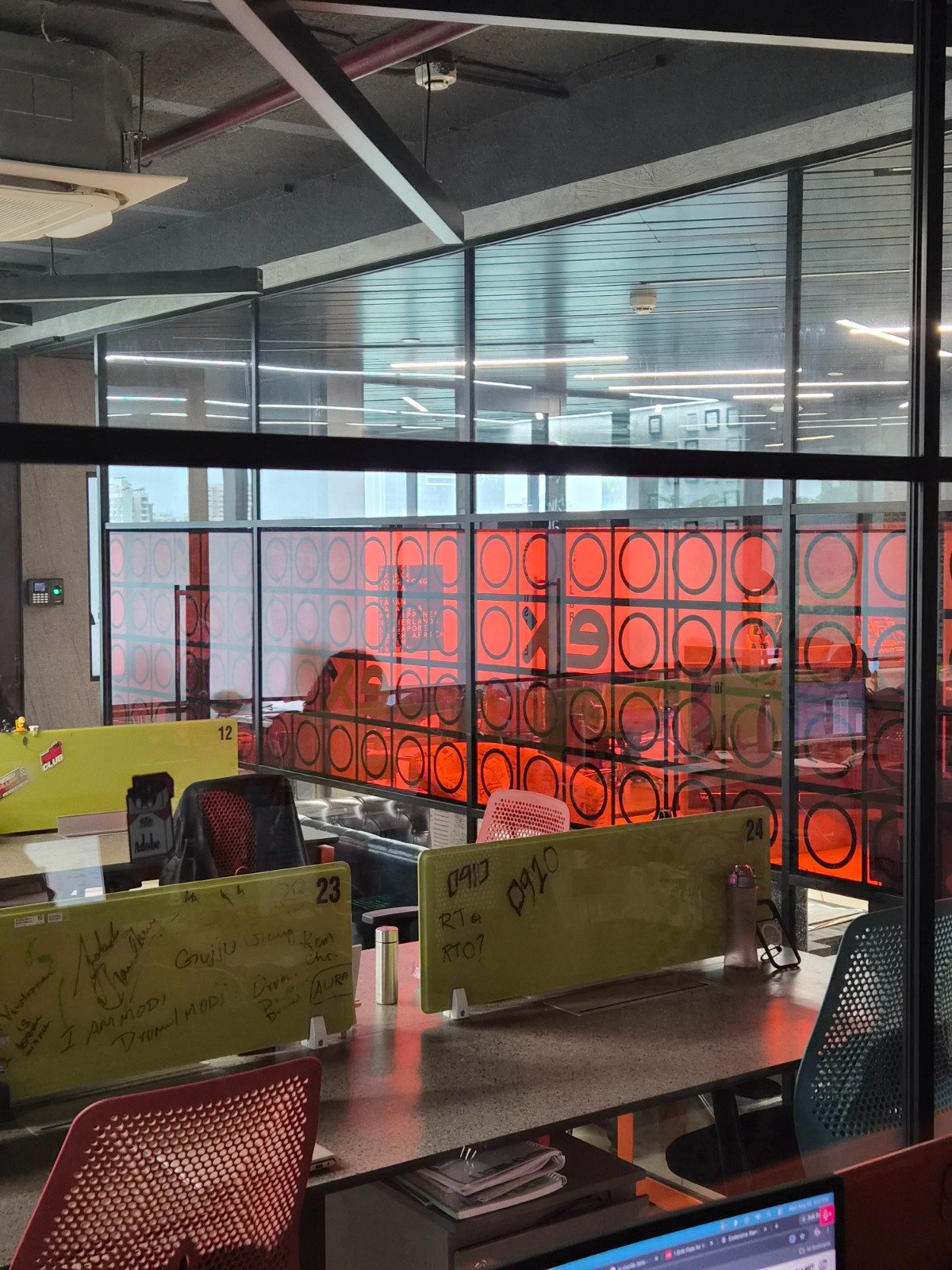
The main camera is the one to use. In daylight, it produces the sort of images you’d expect from a modern Samsung flagship: punchy colours, strong dynamic range and plenty of detail. Samsung’s processing remains quite aggressive, but I generally prefer its interpretation of a scene to the flatter output of some competitors.
The 2x crop is useful, too, particularly for portraits and subjects that aren’t close enough for the main camera’s native perspective. But it isn’t a replacement for a proper telephoto lens. And that becomes increasingly difficult to ignore at this price.
The Flip 8 is now firmly in expensive flagship territory, and when a conventional phone at the same money can give you three proper cameras, the limitations become obvious.



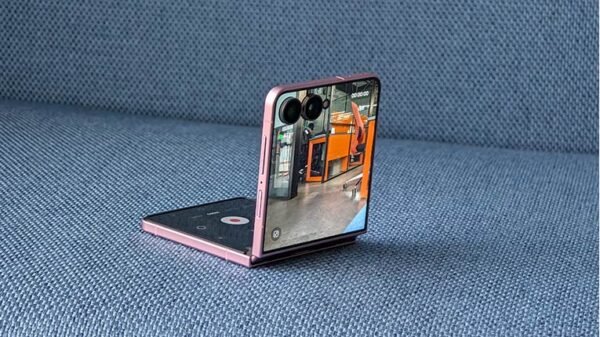
Where the Flip gets interesting is with FlexCam. You can partially fold the phone and essentially turn it into its own little tripod. This makes shooting yourself significantly easier, whether you’re recording a Reel, taking a group photo or trying to capture a low-angle shot without lying on the pavement like an amateur wildlife photographer.
Samsung has also added Horizontal Lock to its video toolkit, which is particularly useful for creators. The phone can maintain a horizontal orientation while you’re moving, giving you more flexibility when shooting handheld.
This is one area where the Flip’s unusual hardware genuinely improves the camera experience rather than simply being a novelty. I used to think foldable cameras were mostly about taking selfies with the rear cameras. They’re now much more useful than that. The Flip can become a tiny self-contained filming rig, and for someone who creates content, that’s a practical advantage.
Still, if photography is your primary reason for spending this sort of money, I’d look elsewhere in Samsung’s range. The Flip 8 is a good camera phone. It isn’t a great camera phone.
Battery Life
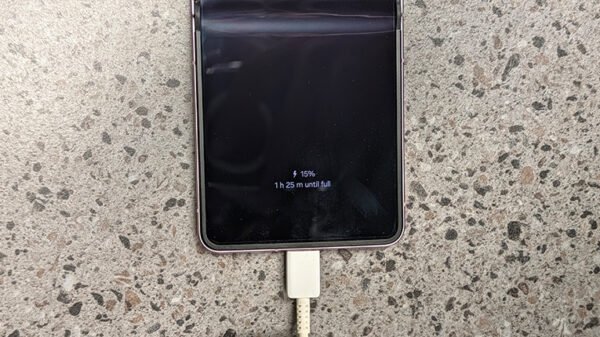
Samsung has retained the 4,300mAh battery capacity from the Galaxy Z Flip 7, but it’s got a silicon-carbon upgrade this time around. This is what has allowed the phone to be thinner and lighter.
For a normal day involving messaging, calls, navigation, social media, photography and some video, I can get through the day. But the Flip isn’t the sort of phone I would leave the house with at 30 per cent battery and expect to forget about charging. Heavy use brings the percentage down quickly.
Navigation is particularly demanding, and sustained camera use or gaming can also make the phone warm while consuming battery at a noticeable rate. Charging remains capped at 25W, which feels increasingly conservative at this price.
This isn’t a deal-breaker for me because the Flip’s compactness is the reason it exists. But I’d happily accept a slightly thicker phone if it meant materially better endurance. A foldable doesn’t need to win the battery Olympics. It just needs to stop making you think about its battery. The Flip 8 doesn’t quite get there.