

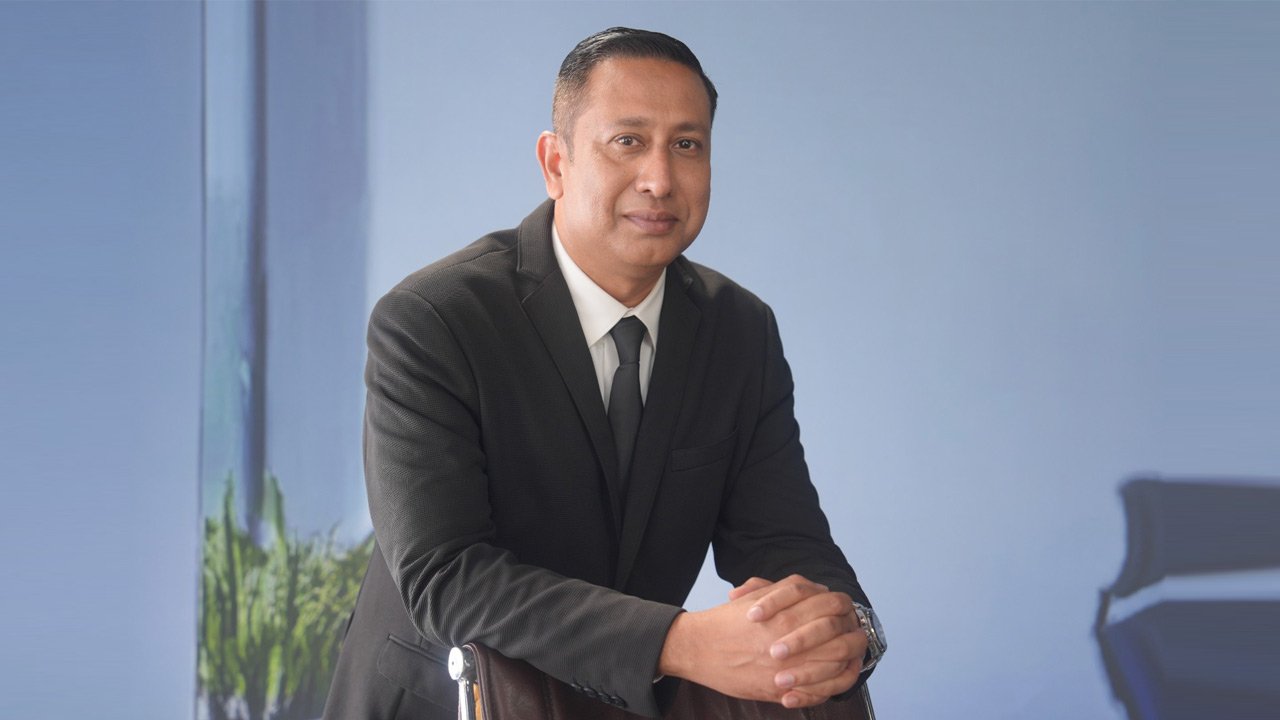
The camera is no longer just a tool for photographers. As India’s creator economy expands, imaging is finding new relevance across filmmaking, OTT, advertising, live events, social media and an increasingly diverse professional landscape. At the same time, smartphones have made high-quality imaging more accessible than ever, forcing dedicated cameras to evolve with greater portability, smarter autofocus, AI-assisted features and faster workflows. In this conversation, Mukesh Srivastava, Head of Imaging & Professional Solution, Sony India, discusses the changing landscape of India’s digital imaging market, why dedicated cameras still matter in the smartphone era, how AI is reshaping the creative process, and where Sony sees the next wave of growth coming from.
SN: How would you describe the health of India’s digital imaging market as we enter FY26? What are the biggest opportunities and challenges you see for the sector?
MS: India’s digital imaging market is at an interesting stage of evolution as we enter FY26. The category is expanding beyond its traditional base, driven by the growing demand for high-quality visual content across consumer, creator and professional applications.
We are seeing imaging move into a much wider range of areas — from photography and content creation to cinema, OTT, advertising and newer formats such as vertical and micro-drama. At the professional end, broadcast, media production, sports, concerts and live events are also creating new opportunities. We are seeing this growth geographically as well, with increasing interest emerging from Tier 2 and Tier 3 markets.
For Sony, this creates an opportunity to contribute to the broader growth of the category through our imaging ecosystem across Alpha, Cinema Line, lenses and professional imaging solutions. At the same time, one of the key challenges for the industry is to keep pace with how quickly these applications and user expectations are evolving, while making imaging technology more accessible and relevant to a much broader audience.
Also Read: Sony Launches FE 100-400mm F5.6-8 OSS Super-Telephoto Lens in India
The continued growth of India’s media and entertainment industry, along with government initiatives supporting the creative economy, can further accelerate this opportunity.
So, I would say the opportunity and the challenge are closely linked, how do we expand the imaging category into new applications and markets, while continuing to make the technology relevant to the evolving needs of creators and professionals. That is where I see the next phase of growth for the industry.
SN: Smartphones have become incredibly capable of imaging. What is still making consumers, creators and professionals choose a dedicated camera over a smartphone?
MS: Smartphones have played an important role in making photography and content creation more accessible than ever before. They have encouraged people to take more pictures, experiment with video and, importantly, develop an interest in how they capture and share their experiences. In that sense, smartphones have actually helped expand the overall imaging ecosystem.
The opportunity for dedicated cameras is to take that interest further. As consumers become more conscious of what they create, they also begin to look for greater creative control and consistency in how they capture a moment.
This is the thinking behind our ‘Farak Padta Hai’ campaign. When a moment matters, the way you capture it can make a difference. Whether it is the emotion of a wedding, the unpredictability of wildlife, the atmosphere of a travel experience or a creator bringing a story to life, a dedicated camera gives you greater control over how that moment is interpreted and remembered.
The difference is not simply about image quality. A dedicated camera gives creators the ability to choose the right lens, control depth of field, work in challenging light, track subjects with greater precision and shape the final image according to their creative intent. It allows you to move from simply capturing a moment to consciously creating an image or a story.
SN: How important is portability becoming in the professional camera segment? Are creators increasingly looking for equipment that can deliver professional results without the bulk traditionally associated with professional cameras?
MS: While portability is important, for today’s professional and hybrid creators, the customer’s expectation is no longer to choose between professional performance or a compact system, as they expect both aspects in the gear of their choice. This is an area where mirrorless technology has made a significant difference. For instance, the Sony ILCE-7V brings a full-frame sensor and professional-level imaging capabilities in a body weighing approximately 610 grams.
The combination of a compact camera body with the latest generation of lenses is particularly relevant for genres such as wildlife, where speed, reach and mobility are critical. With features such as up to 30 fps continuous shooting, the ILCE-7V is well suited to working with telephoto lenses, and advances in lens design are also making these lenses increasingly compact and practical to carry.
Hence, the conversation today is not simply about making professional cameras smaller, it is about optimising the entire system the body, lenses and overall workflow so that professionals can carry less without having to compromise on what they can create.
SN: AI is becoming a major part of imaging technology. Where do you see AI making the biggest difference in cameras? Autofocus, subject recognition, image processing, editing, or something else?
MS: At Sony, we see AI as an intelligence layer that can make the entire imaging system smarter; from how a camera understands a subject, to how it captures a fleeting moment, processes an image, manages exposure and colour, and ultimately supports the creator’s workflow.
The first area where consumers are already experiencing this is subject recognition and autofocus. Across our Alpha, ZV and Cinema Line cameras, AI-based recognition is helping cameras understand what is in front of them and track it more intelligently. But the real value is not the technology itself, it is the confidence it gives the creator. Whether you are photographing wildlife, shooting a wedding, creating a vlog or filming a scene, you can spend all your time thinking about the shot itself.
The next evolution is around anticipating the moment. Features such as pre-capture are a good example. The camera can begin capturing before the shutter is fully pressed, which becomes extremely useful when the decisive moment is unpredictable. This is where processing power, AI and high-speed readout come together to solve a very real creative problem, sometimes the camera needs to be ready even before the photographer has completely reacted.
Ultimately, the best use of AI in imaging is when you don’t notice it. It should make the camera more intelligent and capable, while allowing the creator to remain in control of the creative decision-making.
SN: India has a huge and diverse creator ecosystem. Are there any India-specific needs or shooting conditions that influence how Sony approaches its imaging business here?
MS: India is a very diverse imaging market, and that diversity is reflected in the way cameras are used here. We have creators working in very different environments, from dense urban spaces and weddings to wildlife, travel, fashion, filmmaking and content creation and each of these use cases brings a different set of requirements.
One important consideration is reliability in challenging shooting conditions. India can mean high temperatures, humidity, dust and long shooting hours, particularly for professionals working outdoors. So features such as effective heat management, dust and moisture resistance, battery performance and overall durability are not simply technical specifications, they have a very practical relevance for the Indian user. Our latest cameras are designed with these considerations in mind. For example, the α7 V incorporates enhanced heat dissipation and a dust-and moisture-resistant design, while cameras such as the α7R VI are engineered for reliability in demanding environments.
But I would say in India opportunity goes beyond hardware. The diversity of the creator itself is probably one of the most important India-specific consideration. A wedding photographer in Jaipur, a wildlife filmmaker in Madhya Pradesh, a fashion creator in Mumbai, a travel creator in the Northeast and a filmmaker working in a metro city may all have completely different requirements. This is why we look at the ecosystem rather than just individual products, different camera bodies, lenses, Cinema Line solutions, accessories and software requirements to work together to address different creative journeys.
We are also seeing a strong need for mobility and faster workflows. Indian creators are increasingly producing content for digital platforms, often with small teams or even working alone. Being able to transfer content quickly, control the camera remotely and move from shooting to sharing efficiently has become increasingly important. Sony’s Creators’ App and Creators’ Cloud ecosystem are designed around this broader workflow, with support extending across a wide range of Alpha, ZV and Cinema Line cameras.
Finally, there is a very strong opportunity in education and community. India has consumers entering imaging from very different starting points, and we believe our role is not just to sell them a camera but to help them understand what they can create with it. That is why platforms such as the Sony Alpha Community, with workshops, expert-led content, photo contests and genre-specific learning, are an important part of our approach.
So, for us, understanding India is really about understanding the diversity of Indian creators and the conditions in which they create. That insight influences everything, from the products and features we bring to market, to the ecosystem, education and support we build around them.
SN: What are the biggest misconceptions about dedicated cameras today? Is there still an assumption that you need to be a professional photographer to justify buying one?
MS: I think one of the biggest misconceptions today is that you need to be a professional photographer to justify buying a dedicated camera. That was perhaps a more common perception in the past, but the camera category has evolved significantly.
Today, people are getting into imaging because they have an interest in creating, exploring and expressing themselves. They may be passionate about travel, wildlife, portraits, filmmaking, vlogging or simply documenting their lives and experiences. They don’t necessarily see themselves as photographers or filmmakers, they simply want to create better and explore their creativity.
We see this reflected in the way the imaging community is evolving as well. There is a much wider mix of professionals, enthusiasts and emerging creators coming together across different genres and interests.
Another misconception is that dedicated cameras are difficult to use. Modern cameras have become much more intuitive, with technologies such as autofocus, subject recognition and automated image processing taking care of many of the technical aspects. At the same time, users can gradually explore manual controls and more advanced features as their interest and confidence grows.
So, I don’t think you need to be a professional to justify buying a camera. In fact, it can be the other way around. You can start with curiosity, develop an interest in photography or visual storytelling, and then use a dedicated camera to explore that interest further. The camera doesn’t have to be the destination of your journey as a photographer, it can be what starts the journey.
SN: Finally, what is Sony India’s biggest priority for the imaging business in FY26? Is the focus more on growing the overall market, attracting new users, or getting existing creators to move up the ecosystem?
MS: Our biggest priority for FY26 is to drive the overall growth of the imaging category in India. We see significant headroom for growth as imaging continues to evolve beyond its traditional applications and becomes increasingly relevant across consumer, creator and professional segments.
Alpha, Cinema Line and our lens ecosystem will continue to be important drivers of this growth. At the same time, we are seeing strong opportunities in areas such as broadcast and media solutions, sports, concerts and live events, houses of worship and drone-based imaging. We are also seeing increasing potential in Tier 2 and Tier 3 markets as interest in photography, video and content creation expands beyond the larger metros.
The focus, therefore, is not on choosing between attracting new users or moving existing users up the ecosystem. It is about growing the category, expanding the applications for imaging, reaching new audiences and providing the right solutions as their needs become more sophisticated.
With the growth of India’s creative economy and media and entertainment industry, we believe the opportunity for imaging is becoming much broader. Our focus is to participate in that growth and strengthen Sony’s role across this expanding imaging ecosystem.