


For most people, Epson is a name synonymous with printers and projectors. It’s a perception the Japanese technology company has built over decades, and one that makes sense given its strong presence in both categories. However, spend some time looking at what Epson is doing today, and it becomes clear that there’s a much bigger story unfolding. From industrial robotics and digital textile printing to automation and immersive projection technologies, the company is looking to play a larger role in India’s evolving technology landscape.
India’s growing manufacturing ambitions, increasing adoption of automation and the shift towards more flexible, on-demand production are creating opportunities that extend well beyond conventional printing. At the same time, businesses are becoming more conscious of operational efficiency, energy consumption and long-term costs, areas where Epson believes its technology portfolio has an advantage.
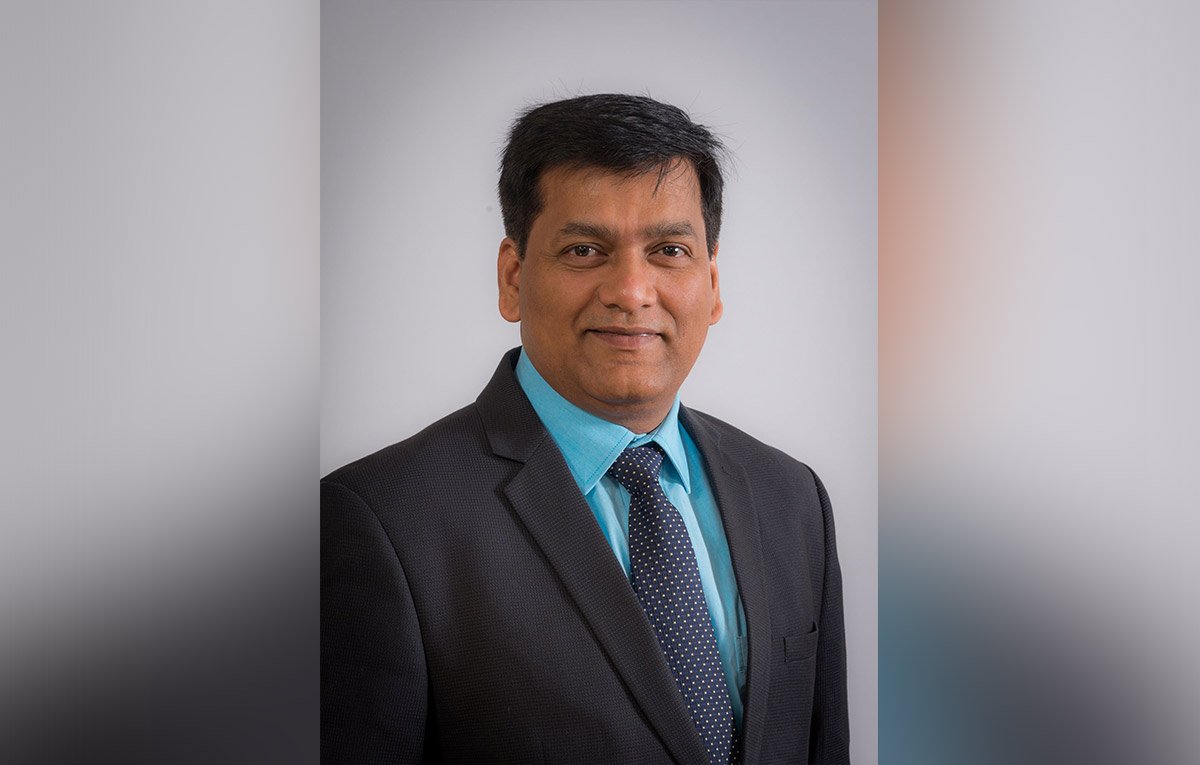
To understand how the company is approaching this shift, where it sees its biggest growth opportunities and how it plans to change the way Indian consumers and businesses perceive the brand, I spoke to Satyajeet Satpathy, Director – Sales & Marketing at Epson India.
SN: Epson has identified India as a strategic growth market. What has changed in the Indian market that makes it more important to Epson today than it was three or five years ago?
SS: India has always been an important market for Epson, but the nature of the opportunity has evolved significantly over the last three to five years. India’s ambition to become a global manufacturing hub through initiatives such as Make in India, the expansion of its industrial base and increasing investments in technology are creating new opportunities across Epson’s business. As manufacturers modernise their operations, demand for advanced printing technologies and industrial automation is growing, driven by the need for greater precision, productivity and consistency.
At the same time, Indian businesses are becoming more conscious of operational efficiency and total cost of ownership. Their focus is shifting beyond the initial investment in technology to its long-term value, including reliability, resource utilisation and operating costs. There is also a growing emphasis on reducing the environmental impact of business operations. These priorities align closely with Epson’s technology philosophy, particularly our Heat-Free inkjet technology and solutions designed to deliver greater efficiency with fewer resources.
We are also seeing changes in the way technology is being adopted in education and entertainment. Schools and educational institutions are increasingly looking at digital tools to make learning more interactive and engaging, creating opportunities for our projection technologies in classrooms and learning environments. Similarly, the growing interest in premium home entertainment experiences is opening up opportunities for Epson’s home theatre and lifestyle projectors.
In commercial and industrial printing, we are seeing growing opportunities in specialised applications. The shift towards digital textile and label printing, for instance, is being driven by the need for greater flexibility, shorter production runs, faster turnaround times and reduced wastage. We expect these segments to grow by 30–40% annually and contribute approximately 10–12% of our revenue over the next three to four years.
Together, these developments are creating a broader opportunity for Epson across home and office printing, commercial and industrial printing, visual communications and projection, alongside our industrial robotics business. What makes India particularly important today is not just the size of the market, but the changing needs of its businesses and consumers and the increasing relevance of the technologies we offer.
SN: Where do you see the biggest growth coming from in India over the next three years: traditional printing, industrial printing, projection, robotics, or entirely new categories?
SS: We see growth opportunities across our business portfolio in India, supported by the country’s expanding economy, increasing technology adoption and evolving customer needs. Businesses and consumers are increasingly looking for solutions that enhance productivity and efficiency while making more responsible use of resources.
In printing, demand continues to rise across home and office segments, alongside opportunities in commercial and industrial applications. The shift towards digital printing is opening up new possibilities in textile and label production, where businesses are seeking greater flexibility, customisation and shorter production cycles. Our Direct To Garment and Direct To Fabric solutions address diverse requirements in textile printing, while our SurePress and ColorWorks Printers cater to different applications in label production.
In home and office printing, we see continued demand for cost-effective and energy-efficient solutions. Epson’s Heat-Free inkjet technology, which consumes less power than laser printing, addresses these requirements while supporting more sustainable printing practices. Beyond printing, our projection solutions serve a wide range of applications across education, corporate, home entertainment and large venues. Industrial automation is another area of opportunity, with our SCARA and six-axis robots supporting a range of manufacturing applications.
Overall, our focus is on strengthening our presence across these segments and leveraging our technology capabilities to address the evolving needs of the Indian market, with efficiency and sustainability remaining important considerations.
SN: You’ve highlighted textile and label printing as major opportunities. What is actually holding Indian businesses back from adopting digital printing faster — cost, awareness, infrastructure, or simply inertia
SS: The transition from conventional to digital printing involves more than simply adopting new technology. Many Indian businesses have traditionally relied on established printing methods, production processes and business models. Moving to digital requires a shift in mindset, as well as changes to existing operational workflows. The initial investment, familiarity with conventional methods and a clear understanding of the commercial benefits are also factors that influence the pace of adoption. Businesses need to be confident that the technology will deliver tangible returns and fit their specific production requirements.
However, market dynamics are increasingly driving this transition, particularly in textile printing. Indian manufacturers serving global markets are responding to customers who increasingly expect greater customisation, shorter production runs, faster turnaround times and the ability to respond quickly to changing fashion trends. Digital printing is well suited to these requirements, offering greater design flexibility and enabling more on-demand production. It also helps reduce excess inventory and material wastage.
In label printing, the benefits are somewhat different. Digital technology enables businesses to print exactly the quantities they need, when they need them, without committing to large minimum orders or maintaining extensive label inventories. It offers faster turnaround, greater flexibility in managing multiple SKUs, languages and product variations, and better control over sensitive or confidential label designs, particularly for new product launches. The ability to print on demand also reduces the risk of labels becoming obsolete when product information or packaging requirements change.
There is an important environmental dimension to this transition as well. By enabling more precise production, reducing excess inventory and minimising wastage, digital printing can help businesses use materials and resources more efficiently. These benefits are becoming increasingly relevant as companies pay greater attention to their environmental footprint.
To accelerate adoption, awareness and the opportunity to experience the technology first-hand are important. Epson has established solution centres in Bengaluru and Delhi, where customers can test their own applications, understand the capabilities of digital printing and evaluate its commercial potential before making an investment decision. We see our role not just as providing technology, but also as helping businesses understand how it can improve their production processes and competitiveness.
SN: Do you expect industrial printing to eventually become a larger business for Epson India than its traditional office and consumer printing businesses?
SS: Industrial printing is an important growth opportunity for Epson India as businesses explore digital production to improve flexibility and respond to changing requirements. We are investing in technologies and customer engagement to help manufacturers and converters assess how digital printing can serve their applications.
Our office and consumer printing businesses remain central to our presence in India. They serve a broad range of needs, from home and small-business printing to enterprise workloads and retail bill printing and continue to evolve alongside customer expectations. We see these businesses as complementary to industrial printing: each addresses different applications and customer requirements.
Whether industrial printing will eventually become larger than our traditional office and consumer businesses will depend on how adoption develops across sectors and applications. Our priority is to invest in the opportunities we see, strengthen our capabilities and work closely with customers so they can identify the right technologies for their business needs and growth plans.
SN: With India pushing hard on manufacturing and automation, where do you see Epson’s robotics business fitting into the country’s manufacturing ambitions?
SS: Epson has a strong global legacy in industrial robotics, backed by decades of experience in developing automation technologies for manufacturing. We have a legacy of over 40 years in this business. Our robots are deployed across industries worldwide, supporting a wide range of precision-driven applications.
As India strengthens its manufacturing ecosystem, we see growing opportunities for automation across sectors such as electronics, automotive, medical devices and consumer goods. Epson’s portfolio of SCARA and six-axis robots caters to applications including assembly, pick-and-place, material handling and inspection.
With their high speed, precision and reliability, Epson robots help manufacturers optimise production processes, improve quality and enhance operational performance. We aim to leverage our global expertise and technology capabilities to support Indian manufacturers in their transition towards smarter and more automated production environments.
SN: As large-format LED displays become increasingly affordable, where does Epson believe projection still has a technological or economic advantage?
SS: Projection is a versatile visual technology whose applications extend far beyond conventional display requirements. Its ability to create large-format visuals, adapt to different environments and transform physical spaces into immersive experiences gives it a distinct role in the evolving display landscape.
In the home segment, projection is redefining entertainment by bringing cinema-like experiences into everyday living spaces. With portable, short-throw and home theatre solutions, consumers have greater flexibility in how they experience big-screen entertainment. In education and corporate environments, projection enables large-format presentations, interactive learning and collaborative experiences. In large venues and experiential spaces, technologies such as projection mapping, edge blending and interactive projection are creating new possibilities for visual storytelling and immersive experiences across architectural structures and unconventional surfaces.
From an economic standpoint, projection offers particular advantages in large-format applications, where achieving expansive screen sizes can be more cost-effective, while also providing flexibility in installation and screen configurations.
Ultimately, projection is not just about displaying content; it is about how visual technology can transform spaces, enhance engagement and create experiences that conventional display formats may not always be able to deliver. This versatility is what makes projection an important part of the future of visual communication and entertainment.
SN: Epson is increasingly positioning itself as much more than a printer company. If you had to change one perception that Indian consumers and businesses have about Epson today, what would it be?
SS: We are happy that consumers associate Epson with printing, as it has been one of our core businesses and an important part of our journey. However, at a broader level our efficient, compact and precise innovation is enriching lives and helping create a better world. We would therefore like them to see Epson as a technology company that is focused on making a positive difference to society through innovation.
Across our businesses, we develop technologies with a clear focus on addressing real-world needs, whether it is improving learning experiences, transforming entertainment, enabling greater business productivity or supporting industrial advancement. An important consideration across these innovations is sustainability and how technology can help use resources more efficiently and reduce environmental impact.
Ultimately, we would like Epson to be recognised not just for the products it makes, but for the positive contribution its technology is making to enrich people’s lives, businesses and society.