

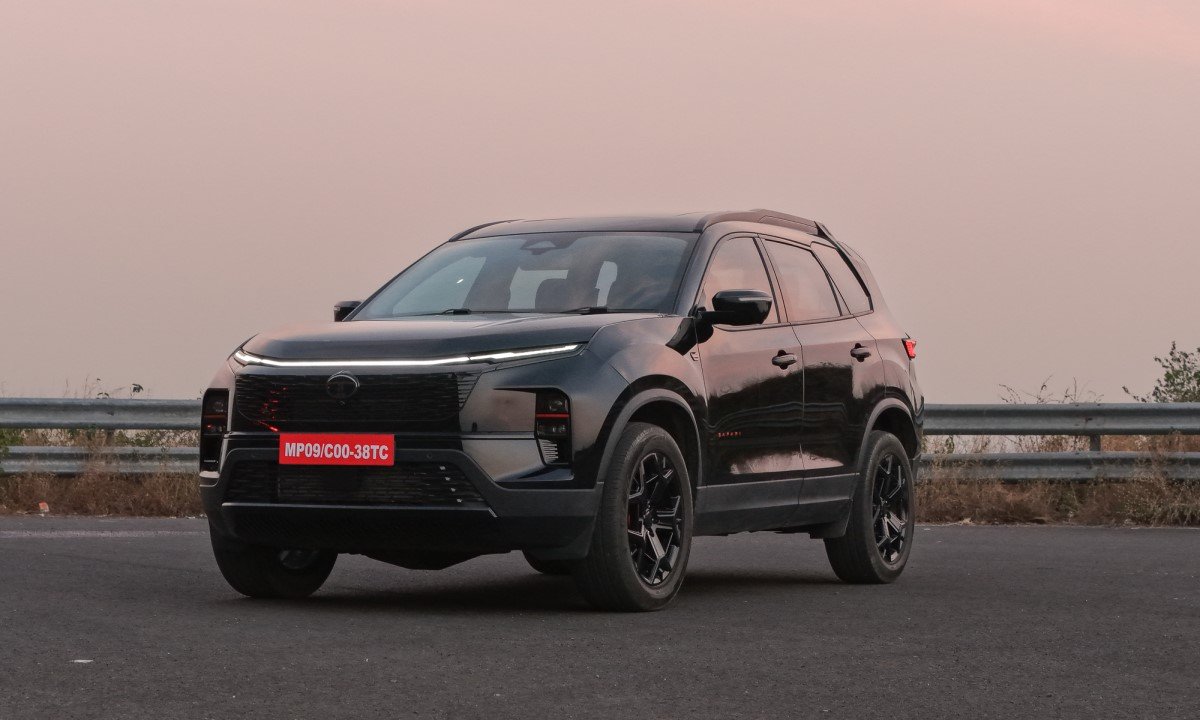
I drove the new petrol-powered Tata Harrier and Safari on a quiet Delhi NCR morning, starting out at Faridabad before gradually letting traffic, flyovers, and real roads dictate the pace. There was no test track, no perfectly scripted route; just the kind of conditions these SUVs will actually live in. Later that afternoon, the Safari took on a very different role: a casual drive into South Delhi’s New Friends Colony for a shawarma run at Al Bake, with four people on board and no agenda beyond hunger. That contrast, from early morning solitude to city chaos, is where Tata’s new 1.5-litre Hyperion TDGi petrol engine revealed itself best. Not as a headline-grabbing performance motor, but as something more modest. More human.
Petrol Personality
Tata has made plenty of noise about the Hyperion engine, and normally that would set off alarm bells. But within the first half hour of driving, it became clear that this engine is not about theatrics. It is about how easily these large SUVs now flow. The Hyperion is a 1.5-litre turbocharged petrol producing 170 PS and 280 Nm, paired with six-speed manual and automatic gearboxes. Numbers aside, what stood out immediately was how light the cars felt on their feet compared to their diesel counterparts. Tata claims an around 80 kg weight reduction, and you can feel it; not in straight-line speed, but in how willingly the nose responds to inputs. Pulling away from a signal in Faridabad’s industrial sectors, the throttle response felt clean and progressive. There was no sudden shove, no awkward hesitation. Just a smooth build-up that made it easy to place the car exactly where I wanted in traffic.
Why This Engine Works Better Than Tata’s Older Petrols
Older Tata petrols often felt either overworked or underwhelming. The Hyperion avoids both traps. Part of that comes down to its variable geometry turbocharger, which adjusts boost intelligently instead of delivering it in a single lump. In city driving, this means less waiting and fewer downshifts. Another part of the equation is 350-bar direct fuel injection, which gives the engine a crispness that’s hard to fake. The throttle doesn’t feel digital or artificially sharpened. Instead, it feels precise, especially in the mid-range where most real-world driving happens. Tata has also gone with Miller-cycle combustion and a high compression ratio, which sounds like engineering trivia until you realise what it enables: better efficiency without dulling response. Cruising at NCR highway speeds, the engine felt relaxed rather than strained, and fuel consumption never felt like an afterthought.
The Faridabad Morning
Early morning driving around Faridabad is a gift. Wide roads, light traffic, and long flyovers let you explore a car’s natural rhythm. The Harrier, in particular, felt surprisingly cohesive here. Steering is not sporty, but it is honest. There’s a linearity to inputs that encourages confidence rather than aggression. The lighter petrol front-end makes direction changes feel less deliberate than before, and the chassis, which is still based on Tata’s OMEGARC architecture, feels more willing to play along. What I appreciated most was refinement. Tata has clearly worked hard on NVH suppression, and it shows. The engine remains quiet at idle, and even when pushed, noise never dominates the cabin. This matters more than outright performance in an SUV of this size.
Safari as It’s Meant to Be Used
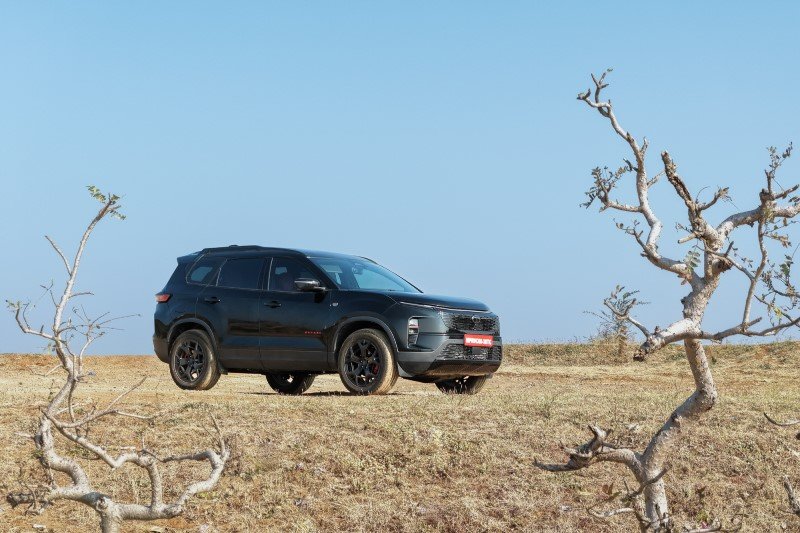
Later in the day, the Safari stepped into its natural role. Four of us piled in and pointed it towards New Friends Colony, with one simple goal: Al Bake shawarmas. This is where the Safari’s petrol character really clicked. In traffic-heavy South Delhi roads, the smoothness of the power delivery made the car feel far less bulky than it looks. There’s no diesel clatter, no sudden torque spikes, but just a consistent, predictable response that suits a family SUV. Even with passengers and a full load, the engine never felt breathless. The torque is sufficient without being overwhelming, and the automatic gearbox works unobtrusively in the background. Nobody commented on the engine, which is perhaps the highest compliment.
Ride Comfort and Everyday Ease
Ride quality remains a strong point for both SUVs. The suspension setup absorbs rough patches without feeling floaty, and broken urban roads don’t unsettle the cabin. The Safari, especially, feels like it was built for exactly this kind of usage; long drives punctuated by bad roads, speed breakers, and sudden stops. Seat comfort is excellent, and the petrol engine’s refinement adds to the sense of calm. Tata’s focus here is obvious: these cars are designed to reduce fatigue rather than excite constantly.
Tech That Fades Into the Background
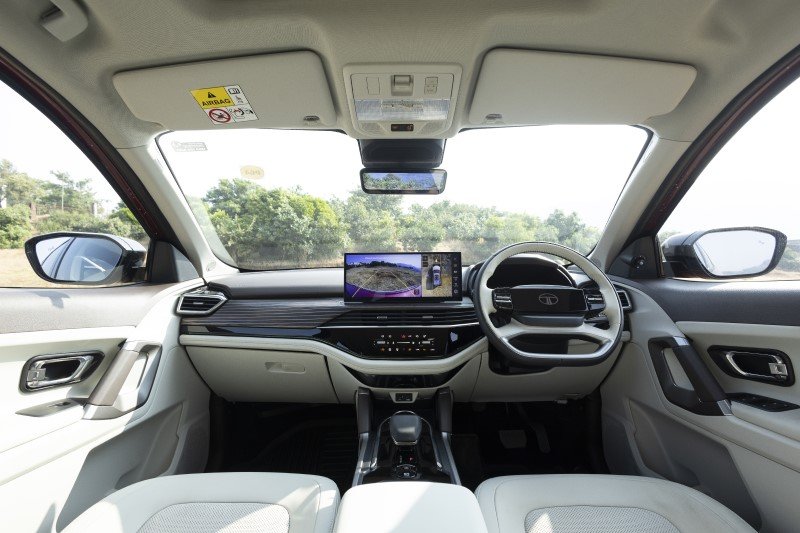
Both cars now feature a massive Neo QLED infotainment display, Dolby Atmos audio, connected car tech, and ADAS features. Yet none of it demanded attention during the drive. The screen is bright and legible, but not distracting. The ADAS systems intervene gently, if at all. This is important because too much tech can make driving feel supervised. Here, it felt supportive. The digital rear-view mirror with dashcam, memory ORVMs, ventilated seats, and 360-degree camera all contribute quietly, enhancing the experience rather than defining it. But if there’s one little feature of these cars that I think should become standard on all SUVs, it’s camera washer functionality. When you activate the windshield sprinklers, a short stream of water also gets directed towards the cameras, washing all the dirt off them, so your front and rear view feeds can remain spic and span.
Dark Red Editions
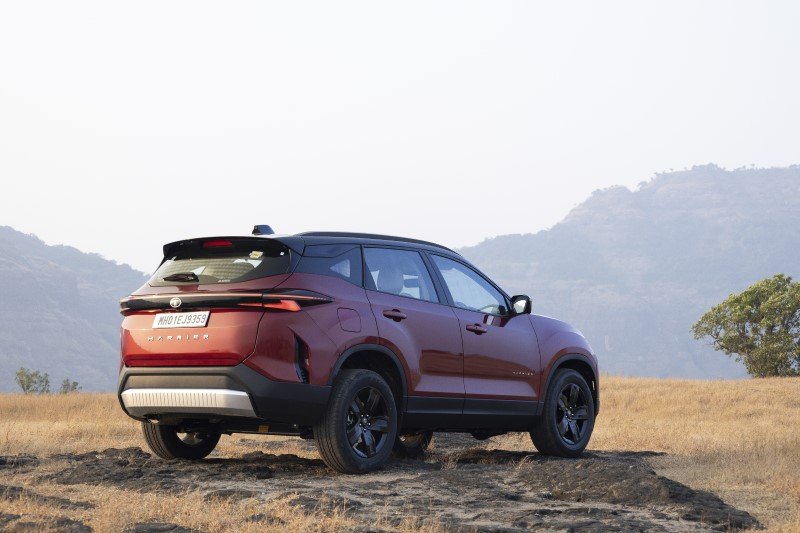
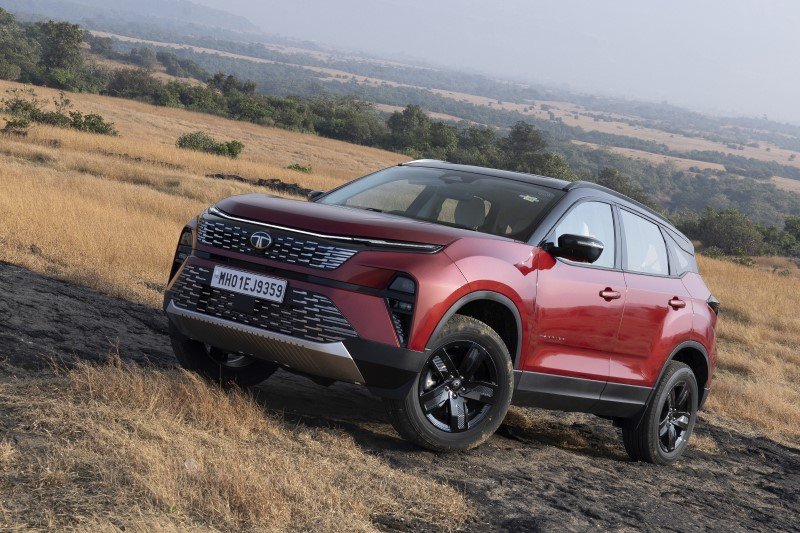
The Dark Red editions of the Harrier and Safari deserve special mention because they manage something rare: visual drama without excess. Amidst the metal, the deep red paint looks rich rather than loud. It changes character depending on light, being almost maroon in shade, glowing crimson under the sun. Paired with subtle exterior detailing, it gives both SUVs a sense of occasion. More importantly, it doesn’t feel like a gimmick. The Dark Red treatment complements the Harrier’s aggressive stance and the Safari’s regal proportions equally well. If you want your SUV to stand out without screaming for attention, this edition hits that balance.
Safety and Confidence, Without Paranoia
Both SUVs carry 5-star BNCAP ratings and come loaded with Level 2+ ADAS. In use, these systems feel measured. Lane assists don’t tug aggressively at the wheel, adaptive cruise is smooth, and emergency braking systems stay out of the way unless genuinely needed. And they did shock us once during the shawarma run when a fellow journalist went a little overboard with the acceleration in traffic.
More Mature
The petrol-powered Tata Harrier and Safari don’t reinvent these SUVs, but they refine them in meaningful ways. The Hyperion engine adds lightness, smoothness, and a more driver-friendly character without compromising what made these cars successful in the first place. After driving them through Faridabad’s calm roads and Delhi’s chaotic streets, one thing became clear: these SUVs now feel easier to live with. They won’t thrill enthusiasts chasing outright performance. But for buyers who value a balance between comfort and control, and between efficiency and enjoyment, the Hyperion-powered Harrier and Safari feel almost complete. And sometimes, the best compliment you can give a car is this: it lets you enjoy the drive and the shawarma at the end of it.