


Verdict
I went in expecting the 10,000mAh battery to be the only thing worth writing about. It wasn't. Two to three days of real-world use on a single charge is the number that still surprised me the most, but the X8 Power also gave me a Snapdragon 6 Gen 5 chipset that ran BGMI at max settings without breaking a sweat, a 120Hz AMOLED display backed by stereo speakers that were perfect for streaming video and games, and a leather-back build with durability ratings that make the extra weight a fair trade. It's not without rough edges. The camera performance is less than impressive, especially once the lights go down. And POCO's bloatware is one of its biggest problems, even though it's easy to fix. Neither is a dealbreaker on its own, but they're the two things standing between this phone and an easy recommendation.
The Good
- 2 to 3 Day Battery Life
- Bright Display
- Solid Performance
The Bad
- Significant Bloatware
- Weak Ultrawide Camera
- Slightly Heavy
-
Design & Build
-
Display
-
Performance
-
Software
-
Battery
-
Audio
-
Camera
Smartphone batteries have become the biggest battle in the mid-range segment this year. A 7,000mAh or 8,000mAh cell, which would have been a headline feature not long ago, has now become the baseline. The POCO X8 Power goes well beyond that baseline. It ships with a 10,000mAh battery, a Snapdragon 6 Gen 5 chipset, a 120Hz AMOLED display, and a price tag of ₹38,999 for the 8GB/256GB variant I tested. The base 8GB/128GB variant comes in at ₹35,999. The battery is clearly the headline feature, but I wanted to see whether the rest of the phone holds its own once you look past the numbers on the spec sheet.
Design and build
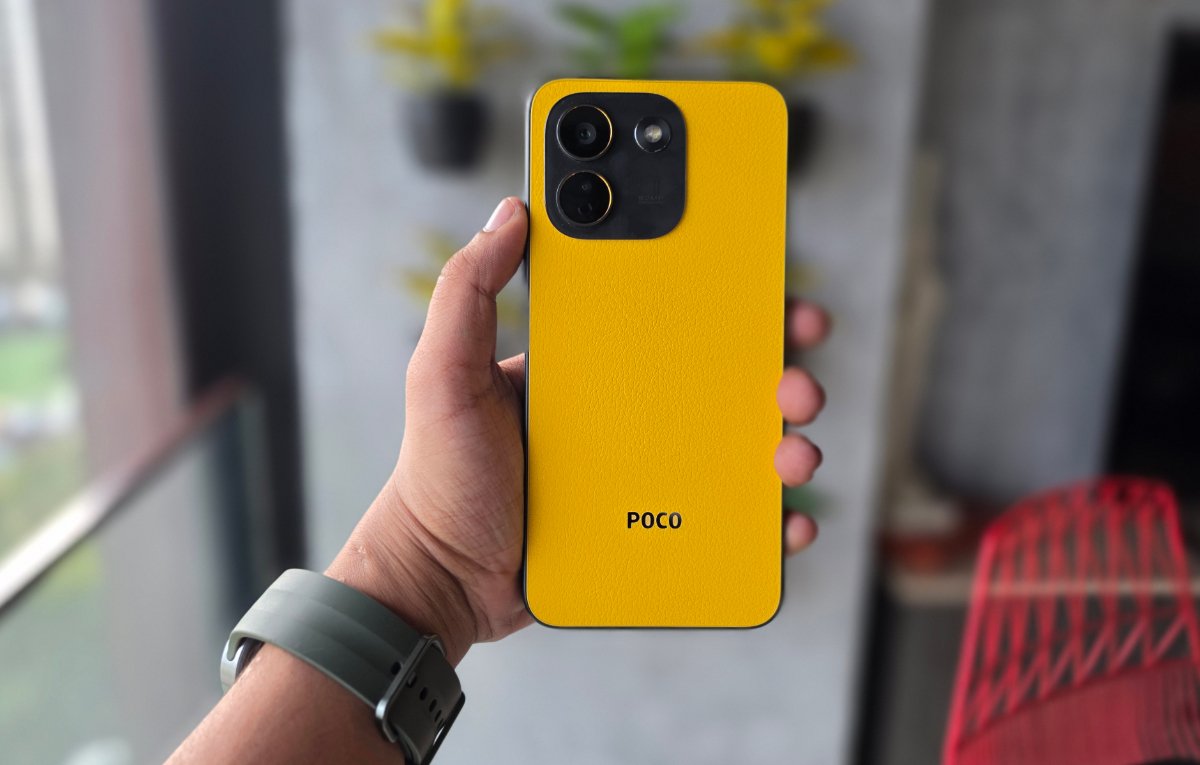
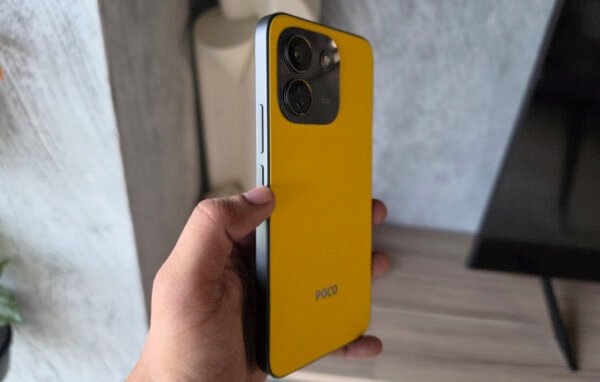 I tested the leather-back version, and it was nice to hold and look at. It’s unique from the plain plastic backs you usually get at this price, and it doesn’t pick up fingerprints the way glossy finishes do. The phone weighs 229 grams, and that’s the first thing you notice picking it up. It sits on the heavier side for this segment. But once you factor in the 10,000mAh cell packed inside, the weight makes sense, and it never feels unbalanced or awkward in hand. POCO also manages to get IP66, IP68, IP69 and IP69K ratings, along with Corning Gorilla Glass Victus 2 on the display, both ahead of what you typically get in this price bracket. POCO clearly prioritised battery capacity and durability over shaving the phone down, and that trade-off pays off here.
Display and audio
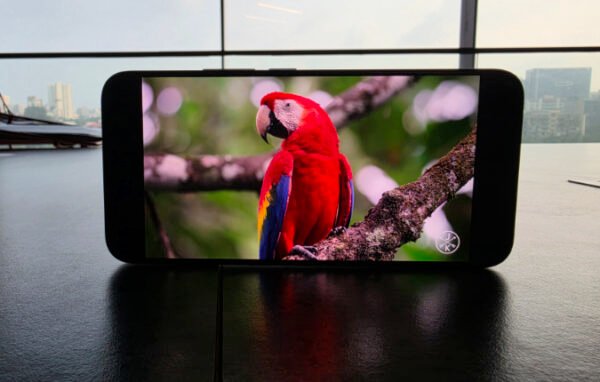 The X8 Power comes with a 6.83-inch AMOLED screen with a 120Hz refresh rate, plus stereo speakers with Dolby Atmos and Hi-Res Audio support. It exceeded my expectations. The colours are punchy, the brightness holds up well for everyday use, and the speakers are loud and clear for video and gaming audio. The one issue I ran into was occasional lag when streaming YouTube at the highest available resolution, which was a minor concern, not a dealbreaker.
Performance
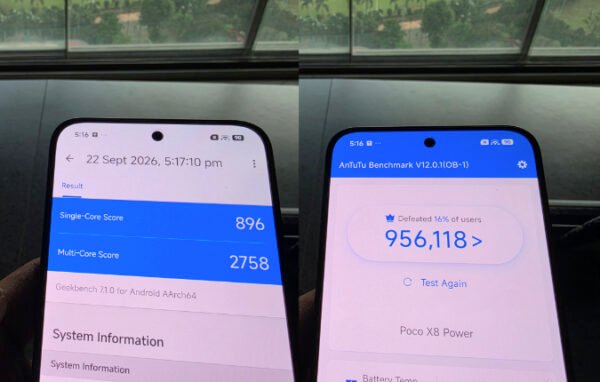 The Poco X8 Power has the Snapdragon 6 Gen 5 chipset, paired with 8GB of LPDDR5X RAM, and handles everyday tasks without fuss. On Geekbench, the phone scored 896 on single-core and 2758 on multi-core, with a GPU score of 3294. It scored 956,118 on the AnTuTu Benchmark test, ranking above the Redmi Note 14 Pro+ and just below the Motorola Edge 70 Fusion
Gaming surprised me most with the X8 Power. Even at the highest graphics settings, gameplay stayed smooth. Loading times were short, and battery drain during gaming sessions was lower than I expected. That’s a big win for a phone in this price range, where performance under max settings usually falls off first.
Also Read: POCO M8x Review: A Sign of Changing Times
Camera
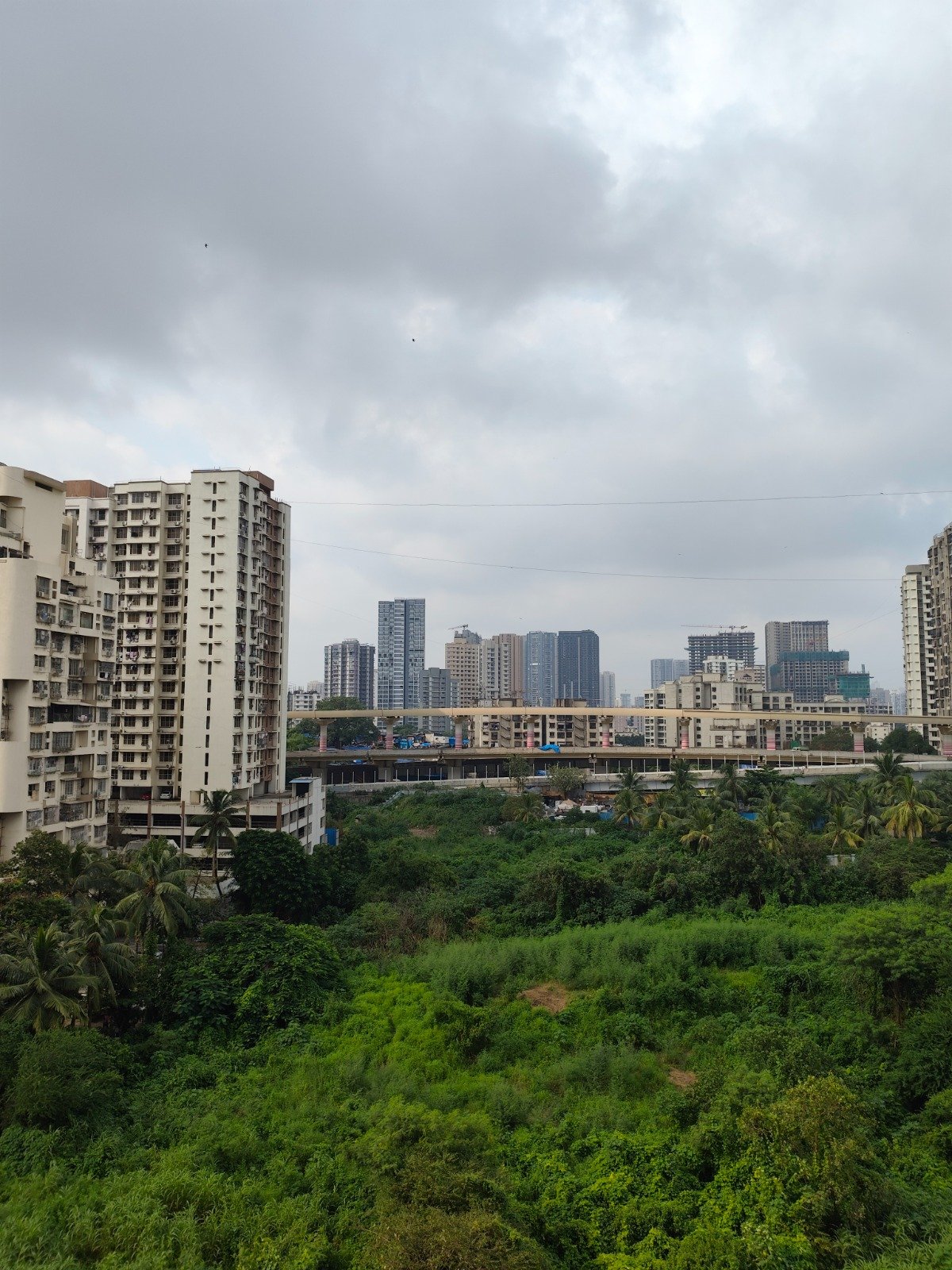
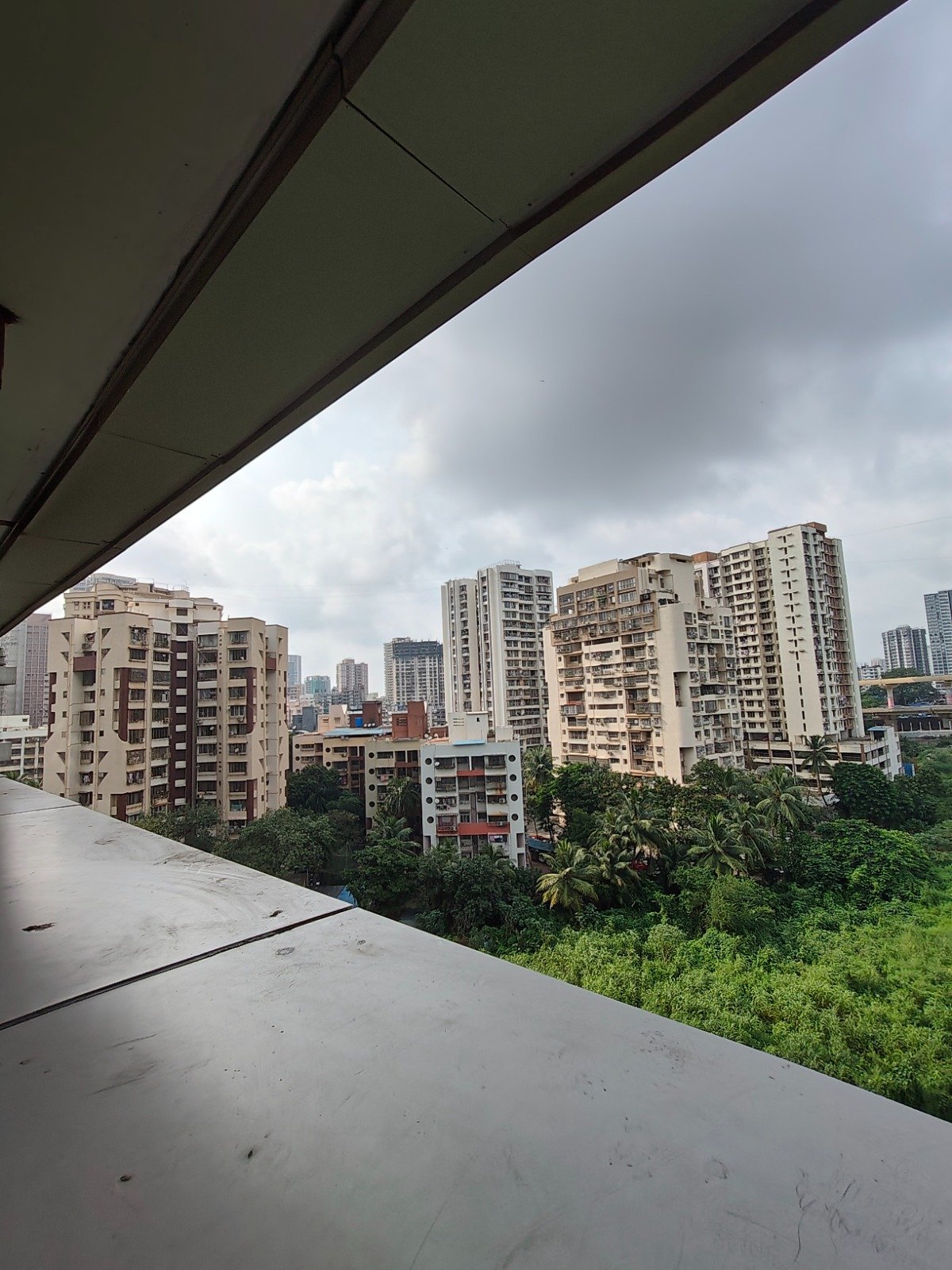
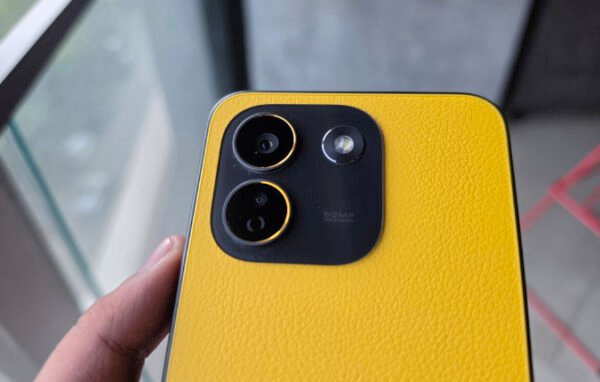 The 50MP main camera is the strongest part of the setup: it has reliable colour accuracy and captures good depth in portrait shots. The 8MP ultrawide is alright, acceptable quality, nothing more. Low-light performance across both lenses is where the setup falls short, and detail drops noticeably once the lights go down. For a phone this focused on battery and build, the camera feels like a secondary priority.







Software
The X8 Power runs HyperOS 3 on top of Android 16, and POCO promises 4 years of major OS upgrades and 6 years of security updates, among the longer commitments in this segment. The OS was intuitive, smooth, and considerate in the small details. But the ridiculous amount of bloatware was seriously annoying; the phone came with 13 games pre-installed, 3 of which were the exact same game with different wrappers. The bloatware didn’t stop there; Agoda, Amazon, and Netflix were just a few, on top of Xiaomi’s game centre, app store, home, remote, and many more pre-installed apps. This is usually a trade-off in this price range, but the Poco X8 Power has overdone it.
Battery
This is where the X8 Power beats its competitors by a mile. Across 4 to 5 hours of daily screen-on time, including HD video playback, gaming sessions and benchmark testing, the phone lasted 2 to 3 days before I needed to charge it. POCO pairs the 10,000mAh cell with 100W fast charging, which charges the phone from 20 to 100 per cent in 1 hour 20 mins, which is respectable. The phone also supports 27W reverse charging and charged my smartwatch without drastic battery drain.
How it stacks up against the competition
At ₹38,999, the X8 Power has the biggest battery in its price bracket, but it also costs more than most of its competition. The Realme P4 Power comes closest on battery capacity with its 10,001mAh cell, but the comparable 8GB/256GB variant costs ₹27,999, more than ₹10,000 below POCO’s price, and it gets a MediaTek Dimensity 7400 Ultra chipset instead of a Snapdragon. The iQOO Z11 5G takes the opposite approach with a smaller 7,050mAh battery and a slimmer 7.99mm, 199-gram body at a similar ₹34,999 price point, trading endurance for a lighter, more balanced build. The Redmi Note 17 Pro is the closest rival, expected in India at ₹39,999 for the 8GB/256GB variant, just above POCO’s own price point, but it trades battery size down to 9,000mAh, steps down to a Snapdragon 6s Gen4 chipset, and charges slower at 67W.