



There was a time when getting a brand in front of millions of people was the ultimate marketing win. A television commercial during a popular show, a YouTube pre-roll before a much-awaited video, or a well-placed digital ad could do the job. Today, getting someone to actually pay attention is a different challenge altogether, with audiences scrolling past ads, skipping videos and juggling multiple screens. As a consequence, brands are beginning to rethink how they convey their messages and even how people experience them.
Enter Playable Advertising
Instead of asking audiences to watch, interactive campaigns invite them to participate. This could mean a mobile game built around a product, a digital experience that rewards exploration, or an activation that makes a brand’s message part of the entertainment itself. The thinking is simple: people may forget an ad they have seen, but an experience they have actively participated in could leave a more lasting impression.
Gaming offers an especially interesting opportunity in India. According to Stone Cold Media Co-Founder and CEO Tushar Patel, the country has over 590 million gamers, spending an average of 13 hours a week playing. The audience and distribution are already there, he argues, but brands have yet to fully unlock the potential of gaming as a marketing channel.
The shift isn’t entirely unfamiliar. Memes became a marketing format, YouTube opened new avenues for content-led brand building, and now gaming is emerging as another space where brands can meet audiences on their own terms. The difference is that games offer something traditional advertising rarely does: active participation. Rather than simply receiving a message, players interact with an experience, potentially creating stronger recall and a more meaningful connection with the brand.
But making a game around a brand is not as straightforward as dropping a logo into an existing format. The real challenge lies in making the brand’s message feel like a natural part of the experience rather than an interruption.
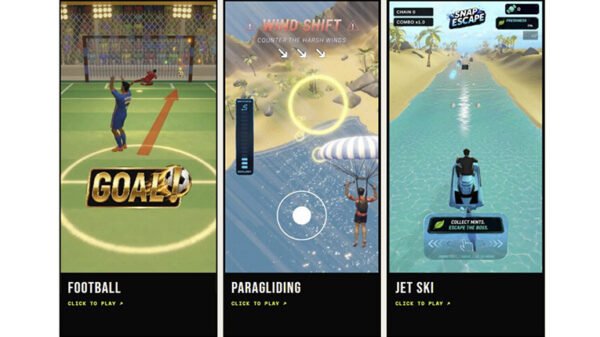
discovery into active play and deliver the rewarding interaction the campaign required.
For Jackie Thakkar, Co-Founder and CCO of Stone Cold Media, that starts with the narrative. The idea is to take a brand’s unique selling points and translate them into an engaging experience that remains true to its identity and objectives. The first question, she explains, is how to make the experience genuinely fun while still communicating what the brand stands for.
One example is SatyaRakshak, a game created by Stone Cold Media for YouTube India to educate audiences in Tier 2 and Tier 3 cities about cyber fraud and online safety. Instead of approaching the subject as a conventional awareness campaign, the game used a colloquial narrative and a relatable universe to make the message more accessible. Players could engage with an experience while learning to recognise misinformation and understand how to protect themselves online.
It illustrates a larger point about interactive brand communication: the game has to work even before the branding does. If the experience is engaging in its own right, the message has a better chance of reaching its audience without feeling like an interruption. If it feels like an advertisement wearing a game costume, the novelty can wear off quickly.
That distinction matters as more brands explore gaming, creator-led entertainment and interactive activations. Participation alone does not guarantee effectiveness. A campaign still needs a clear purpose, an understanding of its audience and a way to measure whether the interaction translated into awareness, recall or action.
For marketers, the opportunity is to move beyond counting impressions and consider what audiences actually do with the content. Do they spend time with it? Do they return? Does the experience help them understand a product or remember a message? These are the questions that separate an entertaining gimmick from a useful marketing tool.
Playable advertising is not about replacing every commercial with a video game. Nor does every brand need its own virtual universe. It is about recognising that audiences increasingly expect to participate in entertainment rather than simply consume it.
In a crowded digital landscape, attention is only the beginning. The more interesting question is what a brand can do with it. And sometimes, the answer might be to stop asking people to watch and give them something worth playing instead.