


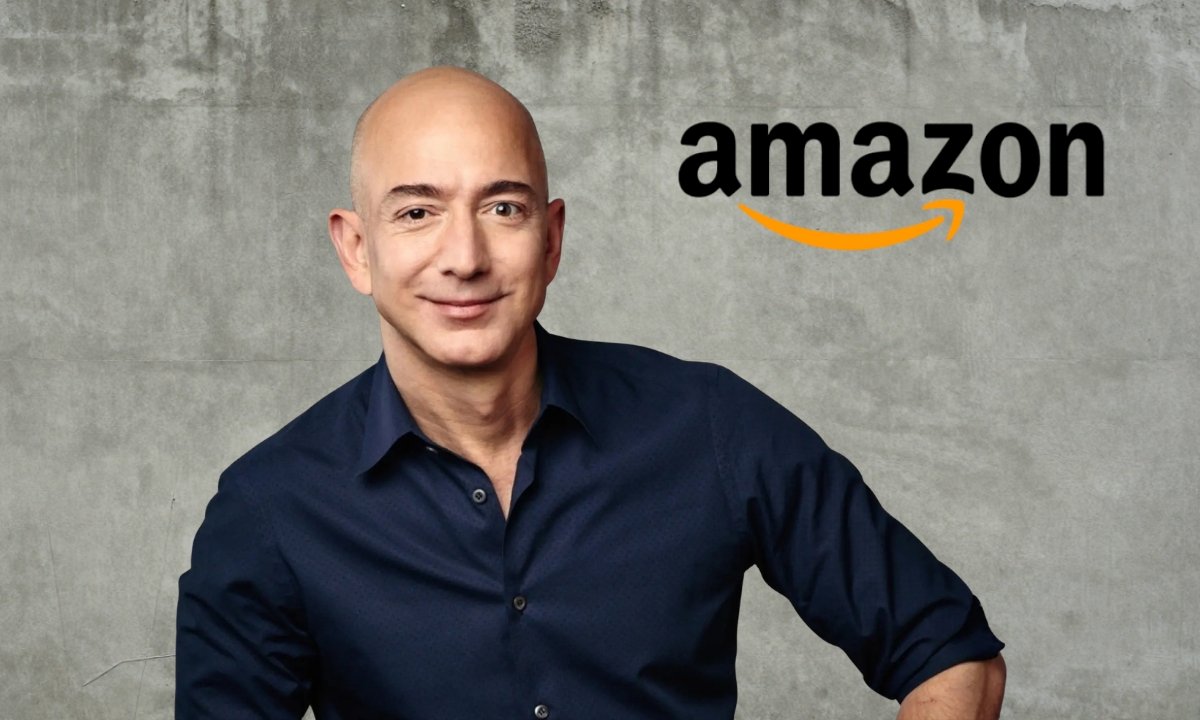
Most leaders are taught to avoid mistakes.Jeff Bezos built one of the world’s most valuable companies by making more of them.
That sounds reckless until you understand the philosophy that transformed Amazon from an online bookstore operating out of a garage into a company worth well over US$2 trillion. Bezos wasn’t obsessed with making perfect decisions. He was obsessed with making decisions quickly.
His reasoning was surprisingly simple which I also find quite impactful in day to day business and holds true for every founder.If you wait until you have 100% of the information, you’ve probably waited too long.Instead, Bezos introduced what has become one of the most quoted leadership frameworks in modern business, the 70% Rule. If you have roughly 70% of the information you need, make the decision. Waiting for the remaining 30% usually costs more than making an imperfect choice today.
It feels uncomfortable because humans are wired to reduce uncertainty. Businesses, however, reward speed.Imagine if Amazon had waited for complete certainty before launching Prime in 2005. At the time, offering unlimited two-day shipping for an annual fee looked financially absurd. Analysts questioned the economics, competitors laughed, and even internally there were doubts.
Watch the YouTube Shorts: https://youtube.com/shorts/JZhybRSiV3M
Today, Prime has more than 250 million members globally and has become one of Amazon’s biggest competitive advantages. A decision that looked irrational became one of the smartest bets in retail history.But Bezos didn’t stop there.
He also classified decisions into two surprisingly simple categories. This should help and in bringing clarity.
Type 1 decisions are one-way doors.
Walk through them, and turning back is difficult or impossible. Acquiring a company, entering a completely new business, or making a major capital investment falls into this category. These decisions deserve careful analysis because reversing them is expensive.
Type 2 decisions are two-way doors.
You can walk through them, experiment, learn, and come back if they don’t work. Launching a feature, changing pricing, testing a new marketing campaign, or trying a different user interface are all reversible.
The problem, according to Bezos, is that most organizations treat every decision like a Type 1 decision.
Committees get formed.Presentations become longer.Meetings multiply.Momentum disappears.By the time approval finally arrives, the opportunity has already packed its bags and left.
Amazon deliberately pushed Type 2 decisions down the hierarchy. Smaller teams could move quickly without waiting for endless executive approvals. If something didn’t work, they simply reversed course and tried again.
This philosophy explains why Amazon experimented with products ranging from Kindle and Alexa to cashier-less stores and cloud computing. Not every idea became a success. The Fire Phone famously failed. Yet the willingness to make fast, reversible decisions created AWS, now one of the most profitable businesses in the company’s history.
Speed compounds.Every quick experiment teaches something.Every lesson improves the next decision.Every decision creates momentum that competitors struggle to match.
Ironically, waiting for certainty often increases risk. Markets evolve, customer preferences shift, and competitors move first. Perfect information is usually available only after the opportunity has disappeared.
Bezos often reminds leaders that being wrong isn’t the biggest danger.Being slow is.The companies that dominate industries aren’t necessarily those with the smartest executives. They’re often the ones willing to learn faster than everyone else.
Also Read: The Student Who Couldn’t Sell His Idea for $1 Million… Then Built a Company Worth Over $2 Trillion
In an age where artificial intelligence, mobility, media, and technology are changing almost monthly, that lesson feels more relevant than ever.Leadership isn’t about predicting the future perfectly.
It’s about building an organization that can adapt faster than the future arrives.
The Indisciplined Playbook
- Don’t wait for perfect information. At around 70% certainty, act.
- Identify whether a decision is reversible before overanalyzing it.
- Reserve lengthy discussions for one-way doors, not every meeting.
- Create a culture where small failures are acceptable if they produce faster learning.
- Remember that speed, when paired with learning, becomes a competitive advantage that is difficult to replicate.
1 Comment
Pingback: Indisciplined Leader: Jensen Huang - The Man Who Bet NVIDIA on the Future Before It Existed