

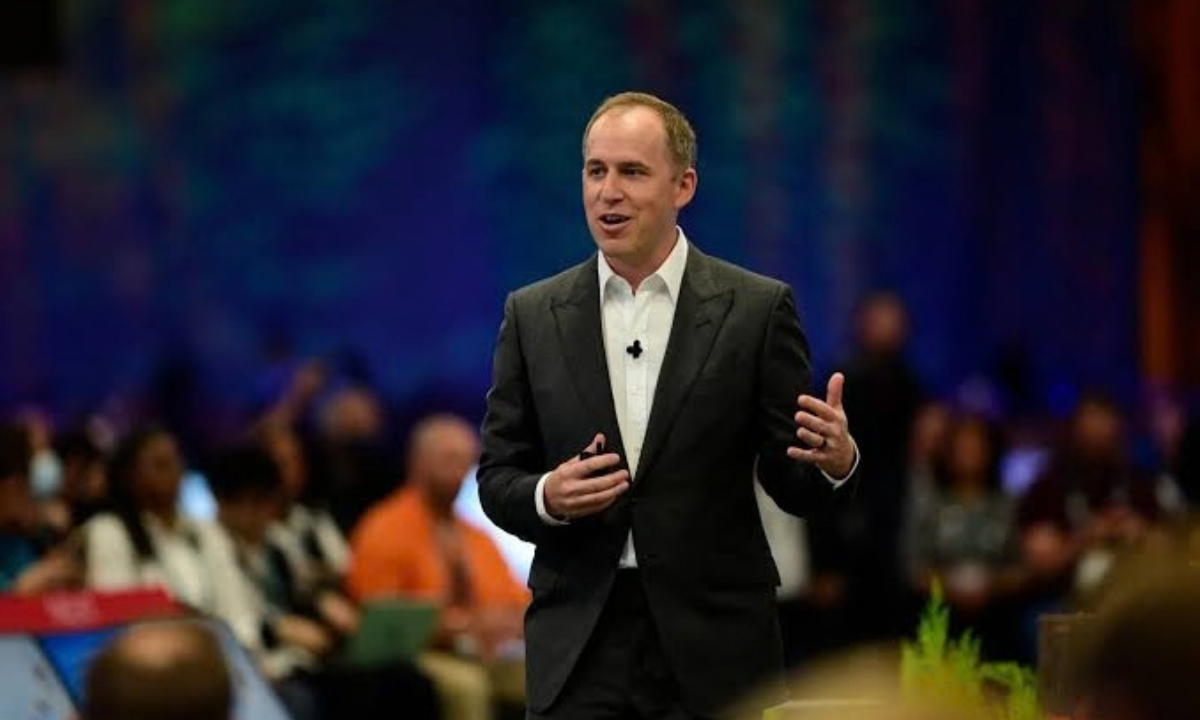
You have probably pressed Bret Taylor’s button thousands of times.The Facebook Like button became one of the most recognisable pieces of internet design. But the story behind it begins with a much smaller company, a 12-person team and a founder who would eventually leave Google, sell his startup to Facebook, become Facebook’s CTO, build another company, sell it to Salesforce for around $750 million, become Salesforce’s co-CEO and then walk away again. What a story, every corporate guy’s dream.
But actually Taylor’s story is less about the Like button and more about what he did after it. In 2007, Taylor left Google, where he had worked on products including Google Maps, and co-founded FriendFeed with Paul Buchheit, Jim Norris and Sanjeev Singh [One Indian has to be there ].The idea was straightforward but ahead of its time: bring the increasingly fragmented stream of people’s online activity into one real-time feed. FriendFeed also introduced a Like feature, allowing users to react to posts without writing a comment. Facebook later launched its own Like button in 2009. Taylor wasn’t the sole inventor of Facebook’s Like button, but FriendFeed’s product was an important part of the early evolution of the social web’s reaction mechanics.
Then came the first big leap.Facebook acquired FriendFeed in 2009 in a deal widely reported at around $50 million roughly Rs 500 crore. Taylor joined Facebook and eventually became Chief Technology Officer, helping shape the technology behind a platform that was rapidly becoming one of the most important companies on the internet.
Also read : Indisciplined Leader: Tim Cook – Left a $31 Billion Dollar Company
For many founders, that would be the end of the story.For Taylor, it was another chapter.He left Facebook and co-founded Quip, a collaborative productivity platform designed around documents, communication and teamwork. Salesforce acquired Quip in 2016 for approximately $750 million. Taylor then joined Salesforce’s leadership team and eventually became co-CEO alongside Marc Benioff.
And then he left again.Today, Taylor is back in startup territory with Sierra, the AI company he co-founded with Clay Bavor. The company is betting on AI agents that can handle customer interactions and actually take action on behalf of businesses, rather than simply answering questions.
Look at the pattern and it becomes difficult to ignore.Google wasn’t the finish line. Facebook wasn’t the finish line. Quip wasn’t the finish line. Even becoming co-CEO of Salesforce wasn’t the finish line.Taylor repeatedly walked away from increasingly prestigious positions to chase the next problem.That is the real indiscipline.Most careers are built around accumulating status. Taylor’s has been built around deliberately resetting it.
The lesson isn’t to quit successful companies just because you can. It is to recognise when your previous success has become an anchor rather than an advantage.
The Indisciplined Playbook
Don’t confuse success with the destination. A $750 million exit, a CTO title or a co-CEO role can be achievements without becoming identities.
Build, sell, learn, reset. Taylor has repeatedly used one chapter as preparation for the next.
Question the obvious career path. The conventional move after becoming Salesforce co-CEO would be to stay there. Taylor chose another startup.
Follow the next problem, not the next title. His career has moved from maps to social networking, productivity software and now AI agents.
Key Takeaway: The biggest career risk isn’t failure. It is becoming so comfortable with your last success that you stop looking for the next problem worth solving.
Bret Taylor keeps choosing the uncomfortable option.
And sometimes, that is exactly where the next breakthrough is hiding.
The Leaders Who Broke The Playbook.