


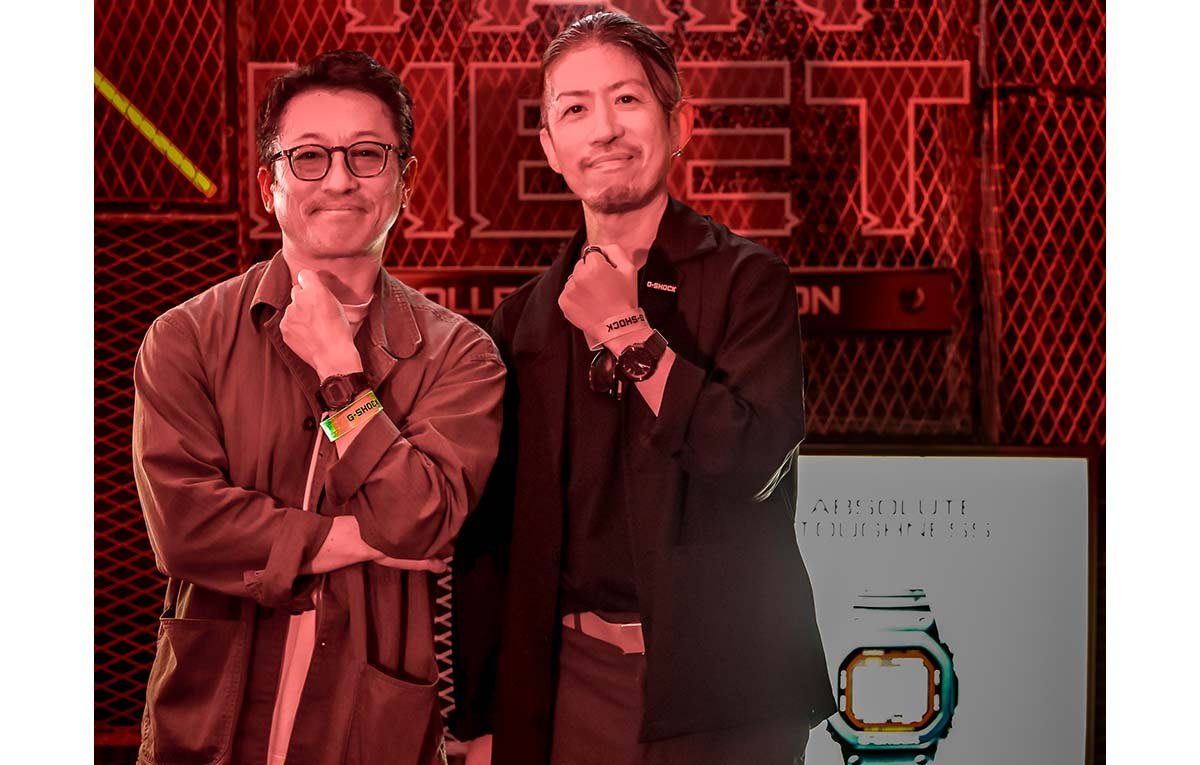
The GA-2100 has become one of G-SHOCK’s most recognisable modern designs, bringing the brand’s signature toughness into a slimmer and more understated form. Conceived as a reinterpretation of the traditional G-SHOCK aesthetic, the watch combines an octagonal bezel inspired by the original DW-5000 with a slimmer profile enabled by the Carbon Core Guard structure. In this interview, Junichi Izumi, Product Manager at Casio India and creator of the 2100 series, discusses the thinking behind the GA-2100, the challenge of balancing heritage with contemporary design, and why preserving the watch’s fundamental identity is just as important as evolving it.
SN: The GA-2100 is remarkably slim and minimal compared with the traditional G-SHOCK aesthetic. What made you believe that a simpler, more understated G-SHOCK could work?
JI: When we began developing the GA-2100, I wanted to explore what G-SHOCK could look like if we expressed its toughness in a more understated way. G-SHOCK had always been associated with a bold, distinctive form, but I felt there was an opportunity to create something that was slimmer and simpler while still retaining the character that makes a G-SHOCK unmistakable.
The challenge was to reduce the visual complexity without compromising the watch’s identity or toughness. The Carbon Core Guard structure gave us an important foundation for achieving a slimmer profile, while the octagonal bezel connected the design to the heritage of the original DW-5000.
SN: The GA-2100 has been described as a bridge between traditional G-SHOCK and a more contemporary design language. Was that something you were consciously trying to achieve?
JI: Yes, that was very much part of the thinking. I did not want the GA-2100 to feel disconnected from the history of G-SHOCK. At the same time, I wanted to create a design that could naturally fit into the way people dress and live today.
The octagonal form was important because it gave the watch a visual connection to the original G-SHOCK, while the slimmer case, simplified face and overall proportions gave it a different character. It was about taking familiar elements and reinterpreting them rather than simply reproducing them.
Looking back, I think that balance is one of the reasons the GA-2100 has been able to reach people who may not have previously considered themselves traditional G-SHOCK users.
SN: When you look at the GA-2100 today, is there any detail you would still change or refine?
JI: Whenever I look at a product I have created, there are always small details I can imagine refining. That is part of being a product designer and developer. But with the GA-2100, I would be careful about changing too much.
A product like this works because all of its elements are balanced. The proportions of the case, the bezel, the dial and even the way the hands and indices are arranged were considered together. If you change one element, it can affect the character of the entire watch.
So rather than saying there is one specific detail I would change, I would say that I would continue to explore how the design can evolve while preserving the fundamental identity of the GA-2100. That balance between evolution and continuity is very important to me.
SN: Finally, when you wear a GA-2100 yourself, do you see it as a piece of engineering, a design object, or simply a watch?
JI: When I wear the GA-2100, I try to see it simply as a watch. Of course, I am aware of the engineering behind its Carbon Core Guard structure, the design decisions that shaped its slim profile and the many discussions that took place during development. But a watch should ultimately become natural to the person wearing it.
The engineering is there to provide confidence, and design is there to create a connection with the wearer. Once those two things work properly, the product should not constantly remind you of how it was made. You simply wear it, use it and make it part of your everyday life.
That is probably the most satisfying thing for me as the person who developed it.