


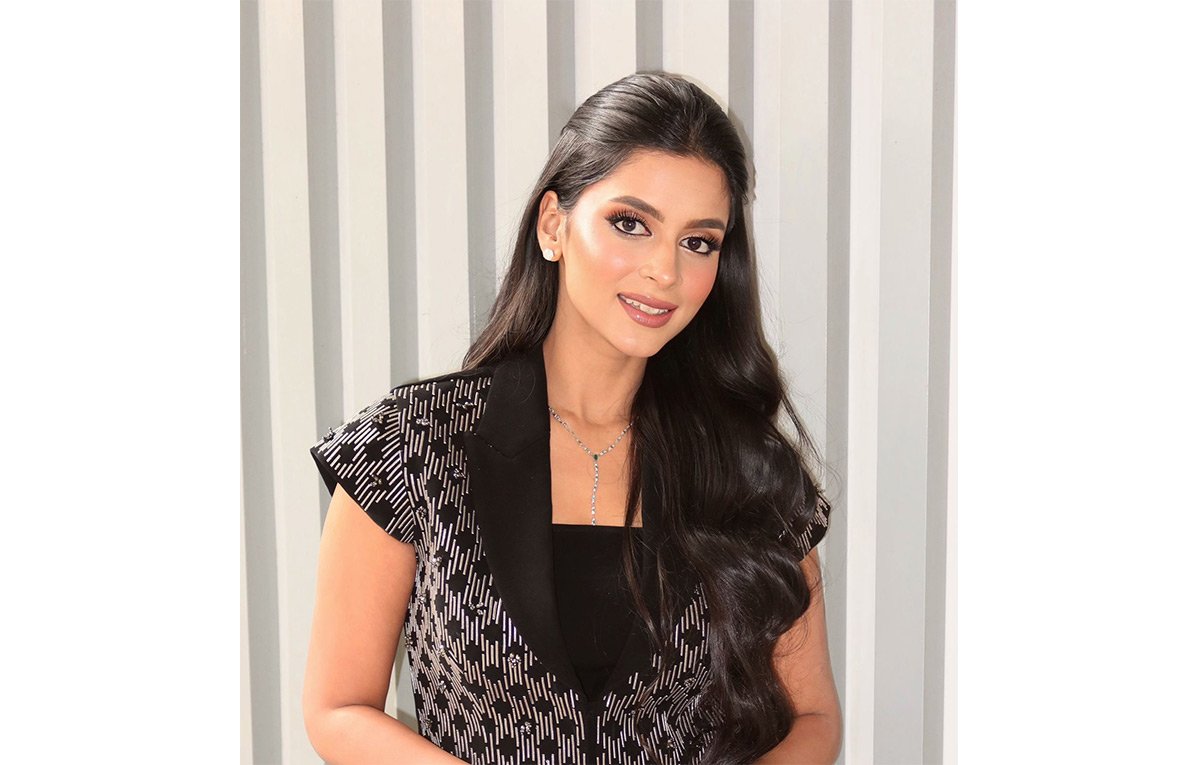
Entertainment is increasingly being consumed in quick, mobile-friendly bursts, and few formats have embraced this shift as decisively as microdramas. Built around bite-sized episodes designed for vertical viewing, the format has rapidly gained traction across India, particularly in Tier-2 and Tier-3 markets. TukTuki is one of the platforms driving this evolution, combining original storytelling with a business model tailored to India’s digital audience. In this interaction, Anshita Kulshrestha, Co-founder of TukTuki, discusses the rise of microdramas, the role of AI, data-driven storytelling, monetisation strategies and why she believes the format is far more than a passing trend.
EX: Microdramas have exploded over the past year. Is this a genuine shift in entertainment consumption, or are we simply witnessing another short-lived content trend?
AK: The market is past the stage where people ask if vertical drama brings in real money; they’re now asking how fast it scales. Industry estimates put India’s micro-drama market on track for roughly $5 billion by 2030, growing at a 50-60% CAGR. What has changed over the past year isn’t just sentiment; it’s evidence, as platforms now have enough robust usage data to underwrite serious valuations. We are seeing a real explosion in Tier-2 and Tier-3 markets, where audiences who previously felt underserved by mainstream OTT are discovering structured, family-oriented storytelling tailored directly to their mobile habits. Crossing 1 million downloads so early validates our deep conviction that this is a genuine shift in the entertainment landscape.
EX: How are platforms like TukTuki changing storytelling itself? Are writers now thinking in terms of retention curves and cliffhangers rather than traditional three-act narratives?
AK: We view this as a distinct storytelling discipline with its own economics. Because a 1-to-3-minute episode doesn’t need a 45-minute production budget, we maintain a highly structured narrative discipline to bridge the gap between training writers and actors to fit rich genres like relationship dramas, romance, and complex mythologies into a concise, vertical canvas. This requires a different approach where we invest in volume and consistency, releasing roughly 25 new titles every month.
EX: What’s the most surprising insight you’ve discovered about Indian viewing habits since launching TukTuki?
AK: The most striking insight is how uniquely price-sensitive Indian consumers are, meaning standard global playbooks do not translate directly here. We discovered that a ₹20 micro-payment to unlock an individual episode is a stronger commercial signal than a monthly subscription that might simply auto-renew. Additionally, it was surprising to see how quickly audiences in Tier-2 and Tier-3 cities pivoted toward family-oriented storytelling when it was delivered in a format that matched their mobile habits.
EX: Can AI help write, edit, or even generate microdramas, or do you believe human creativity will remain at the centre of this format?
AK: At TukTuki, AI is a co-pilot to human creativity, not a replacement for it. Our core strategy is not to use AI to generate synthetic characters or replace human actors, as our mass-market audience craves deep, authentic emotional connections that only real actors can deliver. Instead, we use AI to ruthlessly optimise the math of production, integrating it deeply into pre-production workflows, localisation, and versioning pipelines. This allows us to manage the high velocity of the “swipe” economy and release almost one new title every day.
EX: How do you use data without letting algorithms dictate creativity? Where do you draw the line between analytics and storytelling?
AK: We view scriptwriting and production as a deliberate blend of creative intuition and data science. While we use data to support our aggressive scaling targets and have shifted to an iterative, tech-enabled workflow, the storytelling itself remains focused on human connection. We use analytics to optimise our agile supply chain and production “math,” but we rely on human creators to handle genres like regional folklore and mythology that require authentic emotional resonance.
EX: How are you approaching monetisation without hurting the short-form viewing experience?
AK: We pivot on a subscription-first business model specifically tailored to India’s digital economy. We offer an accessible, ad-free subscription plan priced at ₹20, alongside a free, ad-supported tier for those looking to unlock episodes instantly. Our revenue mix is intentionally balanced: approximately 50% from subscriptions, 40% from advertising, and 10% from branded content and regional licensing. This diversified approach ensures that every type of user behaviour, whether it’s a casual viewer driving ad revenue or a paying subscriber, yields value without disrupting the experience.
EX: Microdramas are often criticised for being overly dramatic, formulaic or even ‘cringe’. Do you see that as fair criticism, or is it simply a case of audiences underestimating a format they secretly enjoy?
AK: There is certainly a perception challenge in convincing some that this is a distinct storytelling discipline rather than just “short-form content”. However, the format naturally rewards authentic, camera-comfortable performers over raw star power, which creates a different kind of engagement. The creative credibility of the format is also being validated by the industry; for instance, our original production Maidame won the Screenxx Award for Best Content in Short Form. As we bring in recognisable faces like Dushyant Kukreja and Karan Mehra, the category is maturing rapidly and gaining the respect it deserves.