

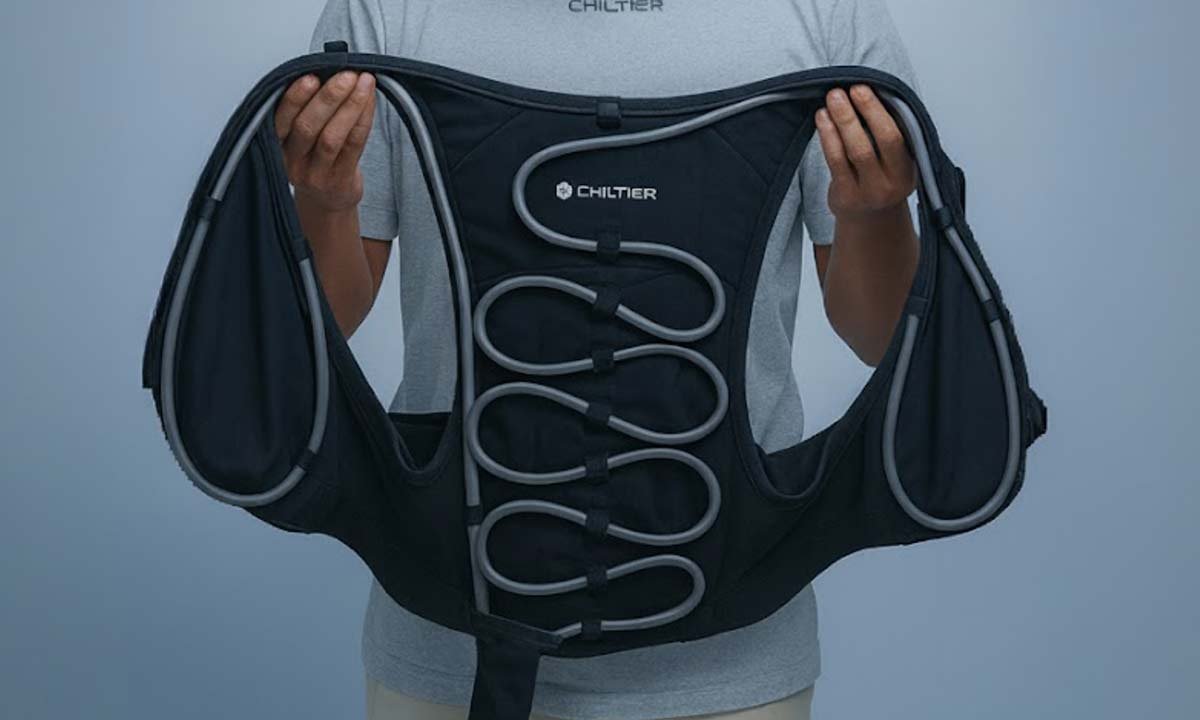
India’s hardware startup ecosystem sees plenty of ambitious ideas, but few that take on engineering-heavy challenges. Chiltier, a Made-in-India deep-tech startup, is attempting exactly that with a patent-pending wearable vest and pod system that can cool or heat the body on demand. The company is currently in its pre-launch phase, but its approach brings together thermoelectric (Peltier) technology, modular hardware, and a lightweight vest designed for people who spend long hours outdoors. Bikers are seemingly the main target, but this apparatus also sounds ideal for travellers and outdoor professionals who often face extreme temperatures.
The Core Idea
At the centre of Chiltier’s system is a compact pod that does all the heavy lifting after it’s connected to the jacket using a simple dual port connector. The vest itself contains discreet channels that distribute the cooled or heated liquid across the upper body. This approach is different from typical cooling jackets that depend on fans pushing ambient air inside, or industrial vests that use ice-based cooling packs.
Thermoelectric systems offer instant heating or cooling without consumables, but they come with engineering challenges around efficiency and heat management, challenges the company claims to have addressed through internal design improvements.
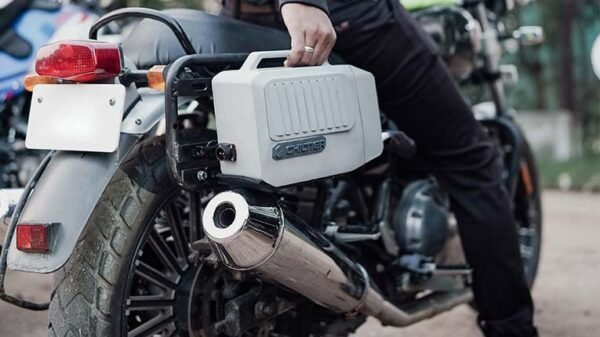
When I spoke with Mr. Kulpreet S. Sahni, Chiltier’s founder, he explained the intended use case more practically: the system is initially being positioned for bikers. In that use case, the pod is mounted to the motorcycle using a dedicated rig. The rig remains permanently installed on the bike, while the pod can be detached and carried. From a rider’s perspective, this means the vest stays lightweight while the heavier hardware sits on the motorcycle. For touring enthusiasts who ride in harsh heat or cold, this may offer a noticeable degree of comfort.
Made in India, Engineered for Real Conditions
Chiltier emphasises that the entire system is built in India, which is an important detail given the extremes of local climate for which it is being designed. India’s temperatures frequently cross 40°C in the summer, while northern regions can go below freezing in winter. For outdoor workers, delivery riders, and commuters, thermal discomfort isn’t just an inconvenience; it affects productivity and overall well-being. By manufacturing locally, the startup aims to adapt its thermal system to this climate variability instead of importing designs built for other weather conditions.
Design Decisions and Considerations
Wearable technology often struggles with comfort, ergonomics, and inclusivity. Chiltier has attempted to address these concerns at the design stage. One of the notable design decisions is gender sensitivity; the vest’s internal air-channel layout avoids covering the reproductive organ area for women, a detail that often goes overlooked in unisex thermal products. The vest remains compact and minimalistic, ensuring the pod shoulders most of the hardware load. The system is also modular. The vest can be used independently, and the pod can be detached for storage. For users who move between vehicles or outdoor environments, modularity becomes important for day-to-day practicality.
The Technology Behind It
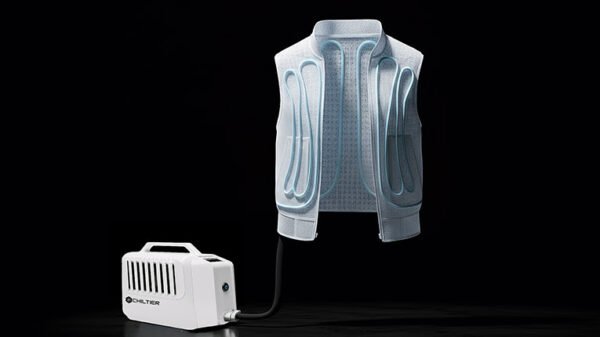
Thermoelectric cooling/heating through Peltier modules isn’t new, but shrinking it to a personal, daily-use format is difficult. These modules consume power, generate heat on one side, and require precise airflow management. Chiltier’s pod design integrates heat dissipation channels. The company claims the system runs silently, as it avoids compressor-based cooling mechanisms. Since it doesn’t use refrigerants, it may also appeal to buyers looking for environmentally safer alternatives to chemical cooling packs. However, as with any early hardware product, long-term reliability, real-world cooling efficiency, battery life, airflow consistency, and durability in Indian conditions remain aspects that users will ultimately evaluate once the product is commercially available.
Initial Target
India’s biking culture has expanded significantly over the last decade, with long-distance touring becoming more mainstream. Riders frequently deal with intense heat, especially on highways where temperatures can feel worse due to engine and road radiation. Sahni explained that this group is Chiltier’s first focus because they experience temperature fatigue more directly and consistently. With the pod mounted on the bike, riders get continuous airflow without carrying extra weight on their bodies. If the system works as intended, it could find a place in segments beyond biking, but for that to happen, the pricing needs to be right.
Sustainability and Long-Term Vision
One of the differentiators Chiltier highlights is the absence of refrigerants and disposable materials. Thermoelectric systems are solid-state, meaning fewer mechanical components and potentially simpler maintenance. Their modularity also ensures that only components that fail need replacement, rather than the entire vest. The company ultimately aims to position itself at the intersection of sustainable tech and high-function wearables. Whether the system achieves that ambition will depend on broader adoption, manufacturing efficiency, and affordability.
The Road Ahead
At this stage, Chiltier remains an early-phase deep-tech effort with significant potential but equally significant expectations. It is taking on a problem that affects millions of Indians daily and attempting to solve it using a technology typically seen in advanced engineering fields. The promise is clear: personal thermal comfort at the flick of a switch. The proof will arrive when the product reaches road-ready form and faces the realities of heat, dust, long rides, battery cycles, and day-to-day usability. For now, Chiltier stands out as an interesting Indian attempt to rethink personal climate control, not through gimmicks, but through engineering.