

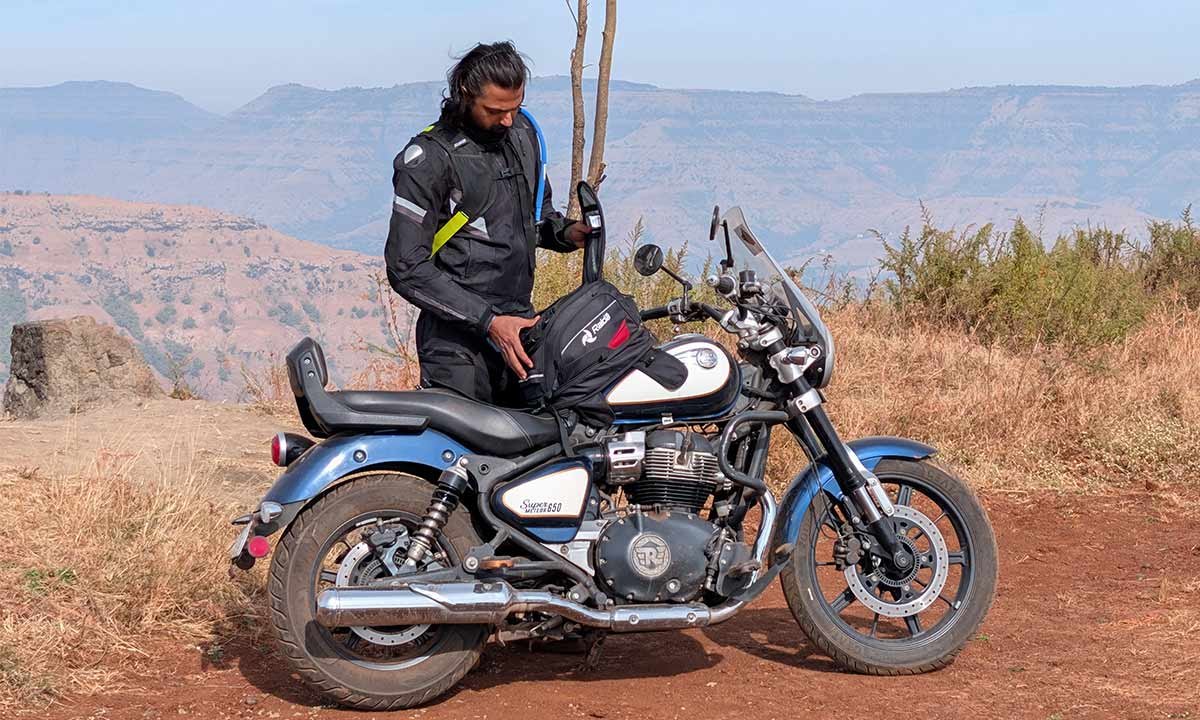
Motorcycle gear reveals its true character not in product shoots or spec sheets, but on the road, when conditions change, plans stretch, and fatigue quietly sets in. My ride from Mumbai to Panchgani for India Bike Week 2025 offered exactly that kind of test bed. Long highway stints, early-morning chill, afternoon heat, winding hill roads, and two full days of festival chaos made it the perfect environment to live with Raida’s touring-oriented gear rather than merely review it.
Over the course of the trip, three Raida products became constant companions: the Compass K16 Tank Bag, the Hydration Bladder paired with the Dryporter Waterproof Hydration Bag, and the Frigate Riding Jacket. Each served a distinct purpose, and together, they formed a surprisingly cohesive ecosystem for real-world riding, though not without a few small compromises that only show up after extended use.
RAIDA FRIGATE JACKET: Designed for Indian Riding Conditions
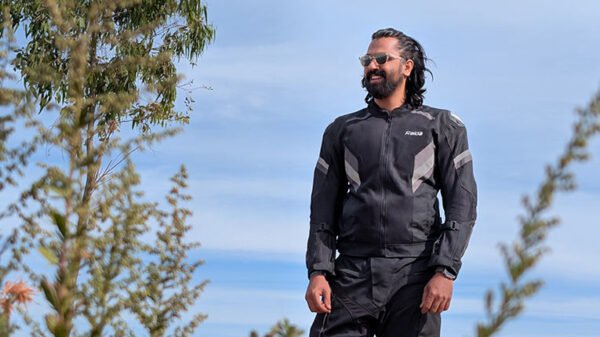
The Raida Frigate Jacket proved to be the most complex and perhaps most impressive piece of the kit. Indian riding conditions are rarely consistent, and the Frigate seems designed with exactly that reality in mind. Early mornings out of Mumbai and in Panchgani were distinctly chilly, while afternoons warmed up quickly. The Frigate managed this transition well. Ventilation panels allow airflow when temperatures rise, while the jacket’s structure retains enough warmth during cooler hours without feeling bulky. That said, in slow traffic under peak afternoon heat, the airflow is understandably limited, and you do begin to feel the heat build-up, reminding you that no touring jacket can fully replace a dedicated summer mesh jacket in such conditions.
Protection is reassuring without being overbearing. Armour placement feels natural, not restrictive, allowing long hours in the saddle without discomfort. However, the slightly stiff nature of the jacket when new means it takes a day or two of riding before it truly starts feeling broken in and supple.
Practicality is another strong point. Thoughtfully placed pockets make it easy to store small essentials, and the overall fit allows layering without compromising mobility. Some pockets, though, are positioned a little low, which makes accessing them while seated on the bike slightly awkward. After multiple days of riding and walking around IBW, the jacket never felt like something I was desperate to take off.
Also Read: Royal Enfield Phoenix Riding Jacket Review: A Premium Urban Tourer’s Second Skin
What stood out most across all three products was cohesion. The tank bag reduced back strain, the hydration system maintained energy levels, and the jacket handled shifting weather with quiet competence. None of these items screamed for attention, and that’s precisely the point. Good riding gear should disappear into the background, letting the ride and the experience take centre stage. There were moments of minor inconvenience — a stiff zipper here, a warm phone there, a slightly bulky hydration pack in crowds — but none of them were deal-breakers, and all were things you quickly adapted to on the move.
By the time I rode back from Panchgani, the Raida gear felt broken in, familiar, and trustworthy. That sense of confidence is hard to quantify but easy to recognise once you have it.
RAIDA COMPASS K16 TANK BAG: Thoughtful Utility Over Gimmicks
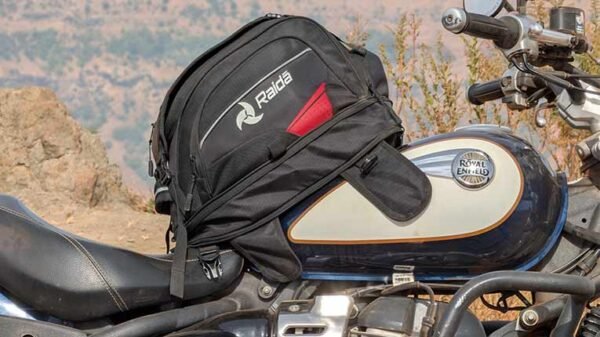
The Compass K16’s 16-litre capacity immediately places it in a sweet spot for touring. It’s not oversized to the point of feeling cumbersome, yet it offers enough space to genuinely reduce dependency on a backpack. Believe it or not, on this three-day trip, it was the only piece of luggage I carried.
A pair of comfortable shorts, three t-shirts, sunglasses, perfume, a pair of slippers (for which there’s a separate compartment at the bottom), some underwear, and a whole lot of other knick-knacks fit comfortably in this tank bag, without it ever feeling overstuffed. That said, once fully packed, the bag does sit slightly taller than expected, which can limit visibility of the instrument cluster on some motorcycles, especially when riding in a more tucked-in position.
What stood out was not just volume, but how intelligently the space is divided. Multiple compartments make organisation intuitive, allowing you to reach for items without emptying half the bag at fuel stops. Everything has a place, and after a day of riding, that kind of predictability matters more than you realise. The zippers, while sturdy, can feel a little stiff when the bag is fully loaded, requiring a firmer pull than ideal during quick access stops.
The design deserves special mention. The K16 sits securely on the tank, doesn’t interfere with steering inputs, and maintains its shape even when fully loaded. When the bike is parked, the ability to convert it into a backpack is genuinely useful, especially at events like IBW, where you’re constantly walking between stages, brand stalls, and food zones. The backpack straps, however, are clearly designed for short walks rather than extended use, and after longer stretches on foot, you do start wishing for a bit more padding.
The standout feature, however, is the front-mounted phone navigation pouch. Covered with a clear plastic window that fully recognises touch input, it allowed seamless use of Google Maps without removing the phone or fumbling with mounts. In unfamiliar hill roads and tight town sections around Panchgani, this proved invaluable. But there’s even a downside to this.
One afternoon, after having kept my iPhone in this pouch, I realised that direct heat from the sun severely overheated it. So much so that the iPhone was significantly throttling its performance, having become incredibly laggy. Lesson learned then: never use this pouch during afternoon rides, especially on bright, open highways.
HYDRATION BLADDER + DRYPORTER BAG: Small Addition, Big Impact
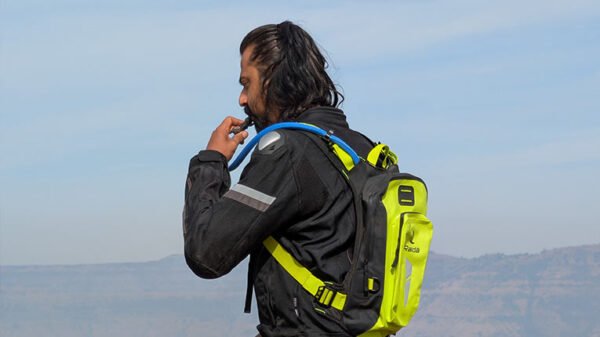
Hydration is often the most underestimated aspect of long-distance riding, especially in India’s mixed climates. Raida’s Hydration Bladder, paired with the Dryporter Waterproof Hydration Bag, quietly became one of the most practical elements of the trip. The 2-litre bladder itself is straightforward and effective, holding enough water to last extended stretches without frequent refills.
I filled it up once, and only used it during the big Mumbai to Panchgani and Panchgani to Mumbai rides, and it didn’t need any refill at all. It still had about 500 ml of water left in it after I was back home. The bite valve works well, though it does require a slightly firmer bite than some premium hydration systems, which can feel a bit awkward initially until you get used to it.
What elevates the experience is the Dryporter bag, which keeps everything completely dry and protected, even when the weather threatens otherwise. Worn over riding gear, the hydration setup never felt intrusive, though in slow-moving traffic or crowded parking areas at IBW, the bag does add a bit of bulk when manoeuvring through tight spaces. The drinking tube was easy to access, encouraging frequent hydration without needing to stop. On twisty ghat sections and long highway runs alike, this translated to reduced fatigue and better concentration, benefits you don’t fully appreciate until you experience them.
Equally important is the bag’s build quality. The Dryporter lives up to its waterproof promise and feels robust enough to survive repeated trips. The trade-off for that ruggedness is slightly firmer straps, which remain comfortable over riding gear but could benefit from a touch more flexibility for all-day wear. For riders who tour frequently or attend multi-day events, this combo still feels less like an accessory and more like essential equipment.
Built for Riders Who Actually Ride
Living with Raida’s touring gear over a real-world ride reinforced one thing: this is equipment designed by people who understand Indian motorcycling. The Compass K16 tank bag prioritises usability over flash, the hydration setup addresses fatigue before it becomes a problem, and the Frigate jacket adapts intelligently to varied conditions. It isn’t flawless, and a few design choices could be refined for comfort and heat management, but the fundamentals are solid and thoughtfully executed.
This wasn’t a controlled test. It was a ride with early starts, long hours, crowds, conversations, and changing weather. And the gear held up without complaint. For riders who tour, commute long distances, or simply want dependable equipment that works across scenarios, Raida’s lineup still makes a compelling case for itself.
1 Comment
Pingback: Axor x Apex Altor Review: A Bluetooth Helmet That Swipes Back