


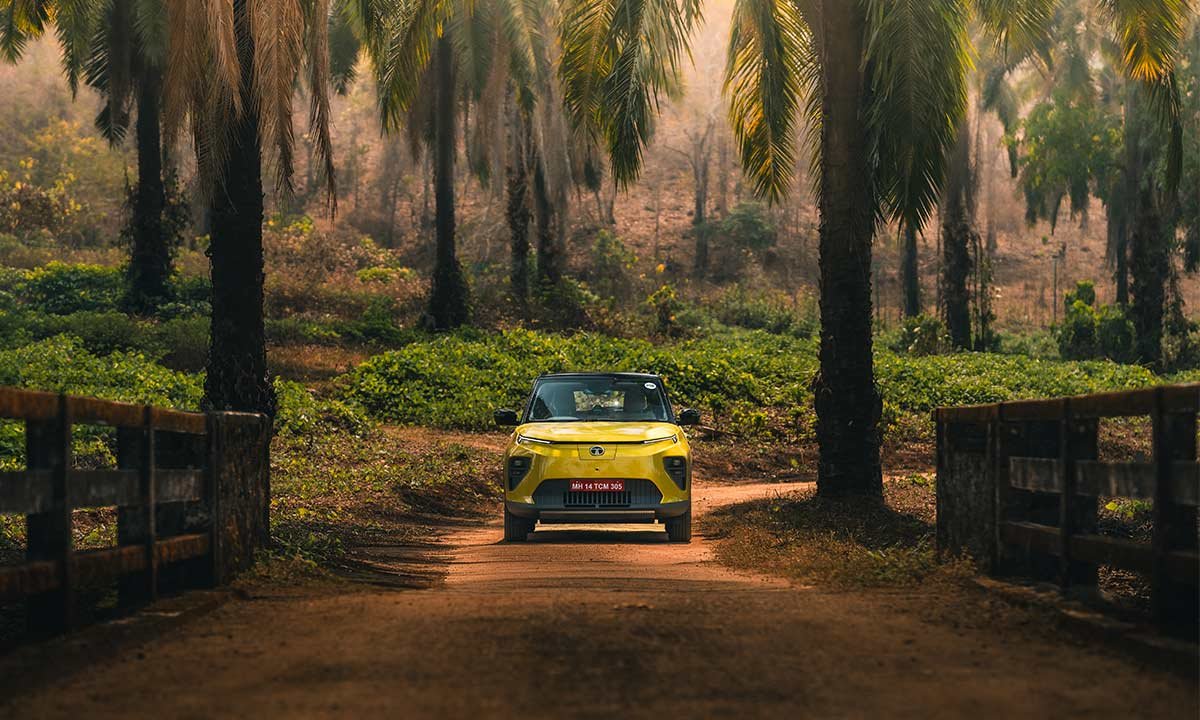
We rolled out of Edapally at first light, the kind of soft Kochi morning that makes you want to take the long road home. Instead of pointing the new Punch EV straight toward Athirappilly, we traced the quieter outskirts that were made of narrower state highways, patches of broken tarmac, and stretches of smooth open road. They were the sort of mixed-use environment that actually tests an EV beyond spec-sheet claims. By the time we found our serene stop near the fringes of the falls, the car had revealed both its strengths and its caveats.
Pricing That Deserves Credit
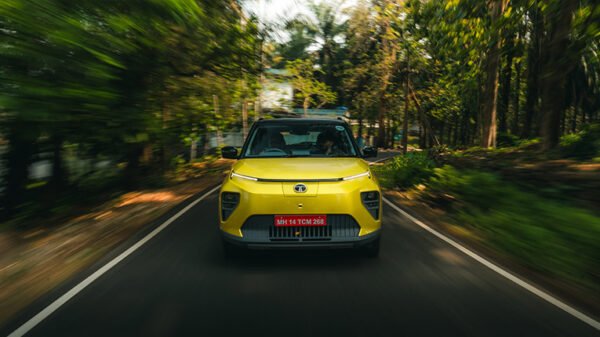
Let’s begin with what deserves clear praise. Tata Motors has meaningfully updated the battery pack while retaining aggressive pricing. The 30 kWh variant of the EV can be yours at ₹9.69 lakh (ex-showroom). That, in itself, is significant. Even more disruptive is the Battery-as-a-Service (BaaS) model that drops the acquisition price to ₹6.49 lakh, with usage billed at ₹2.6 per km. For urban buyers hesitant about upfront EV premiums, this is a sharp market play.
Range vs Reality
A key mechanical update lies beneath the floor. Tata has moved to higher-density cells, replacing the earlier battery options with new 30kWh and 40kWh packs. The result isn’t just a numbers bump on paper. It translates into genuinely improved usable range. The smaller pack is expected to deliver an MIDC figure in the high 300km bracket, with realistic everyday usage settling closer to the mid-200s. The larger 40kWh unit, officially rated at just under 470km on the MIDC cycle, should comfortably return something in the mid-300km zone in real-world conditions.
Those are strong figures for this segment. During our drive, which covered roughly 125km, the battery dropped from full charge to just over 40 per cent, with the range estimator still showing close to 190km remaining. What makes that more telling is how the car was driven. Sport mode was engaged for almost half the run, with the regen set at Level 2. By the end, the projected total range suggested that crossing the 330–350km mark would not require monk-like restraint.
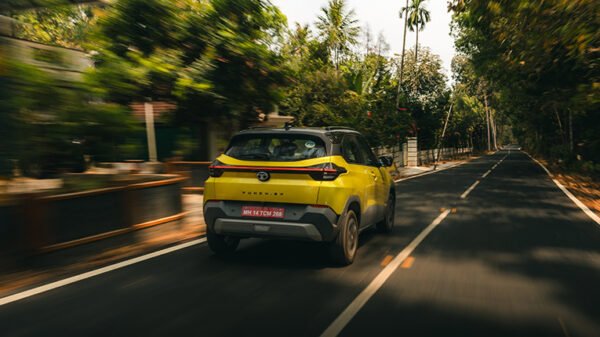
Drive it gently in Eco or City mode, and that number should become even more attainable. For a car that will spend most of its life in urban environments, that’s a healthy safety buffer. It’s more than enough for daily commutes, weekend errands, and the occasional longer stretch without range anxiety creeping in.
This is where I would exercise caution. While Tata is subtly positioning the updated Punch EV as a more capable intercity commuter, I wouldn’t recommend it primarily for that role. Yes, 355 km is doable. No, most buyers won’t drive it gently enough to consistently extract that number on highway runs. As a city car with occasional intercity usage? Excellent. As a dedicated highway shuttle? There are better-suited cars.
Driver’s Delight?
The steering is responsive and predictable, and that made it easy to place the car on narrow Kerala roads. Body control is composed over regular surfaces. However, on severely broken patches that you encounter once you veer off toward rural scenic spots, the suspension can feel slightly jagged. It’s not uncomfortable, but it isn’t plush either. On standard urban and highway roads, though, the ride quality remains well balanced.
Respectable Cabin Experience
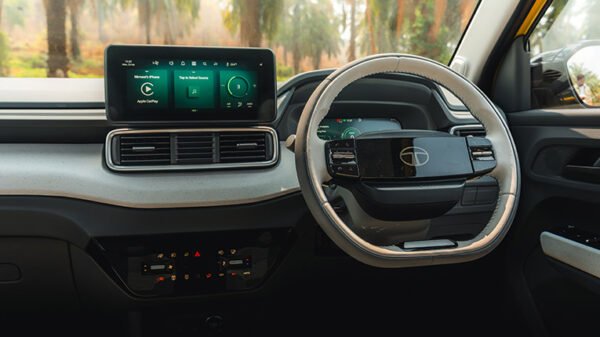
Inside, the cabin looks modern and upmarket for the segment. The 10.25-inch HARMAN infotainment system, fully digital cockpit, 360-degree camera, ventilated seats, and connected tech ecosystem elevate the perceived value significantly. However, I must call out one personal irritation in the form of capacitive controls on the dash. They look sleek, but usability suffers. At a time when many manufacturers are returning to physical switches for ergonomic clarity, touch-based climate toggles feel like regression, not progress.
What the Facelift Changes, and Why It Matters
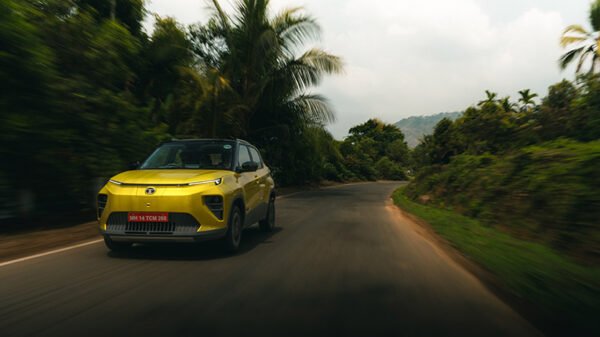
Beyond the battery update, this refresh brings substantive upgrades that strengthen its competitive position. The larger 40kWh option itself is a headline act, but so is the faster 65kW DC charging capability. The addition of a 360° surround-view camera and blind-spot view monitor meaningfully improves safety and urban manoeuvrability. These are features still uncommon at this price point. Six airbags are now standard.
The redesigned tech interface with embedded navigation in the digital cluster, OTA updates, and the Arcade.ev app suite positions it closer to compact SUVs, a segment above. Add the electronic parking brake with auto-hold (in the 40kWh variant), ventilated seats, and a premium-feeling centre console, and the Punch EV begins to blur traditional segment boundaries.
In isolation, none of these updates are revolutionary. Collectively, they make the Punch EV far more defensible against rivals like the Citroen E-C3 and even internal competition from the Tiago EV.
Bottom Line
The new Punch EV 40kWh is not pretending to be something it isn’t. It is still fundamentally a city-first EV, but now, only with stronger legs. Tata deserves credit for improving range, adding high-value tech, and keeping pricing disruptive. Just don’t expect it to be your default intercity cruiser. Treat it as a well-equipped, fun-to-drive urban EV that can stretch its legs when needed, and you’ll appreciate it for what it truly is.