

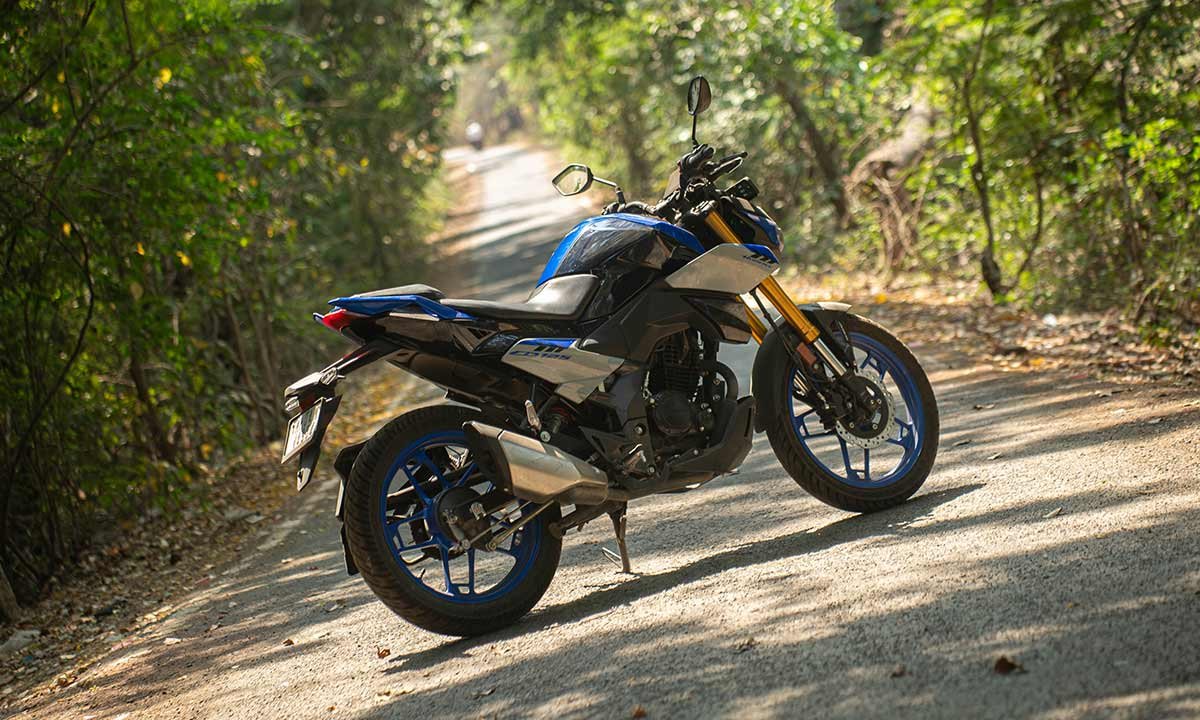
The 125cc segment in India has changed dramatically over the past few years. What was once a purely utilitarian category dominated by basic commuters is now filled with motorcycles that promise style, performance, and technology. Riders today want their daily commuter to look exciting, feel engaging, and still deliver the efficiency that small-displacement bikes are known for. The CB125 Hornet is Honda’s answer to that demand. I spent about a week using it as my daily commuter, riding it through the usual urban chaos involving a healthy dose of traffic snarls, tight lanes, unpredictable auto-rickshaws, and the occasional open stretch where you can finally let the bike breathe a little. Over the course of that week, the Hornet revealed both its strengths and a few areas where it could improve.
Design That Turns Heads
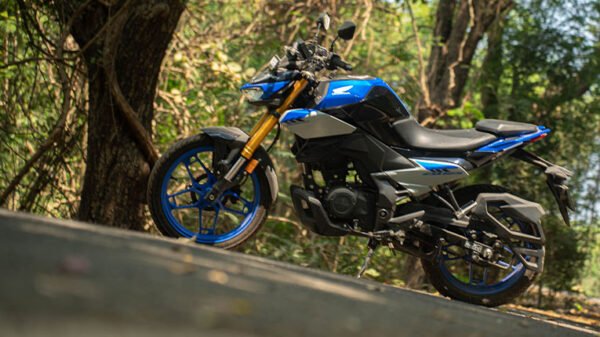
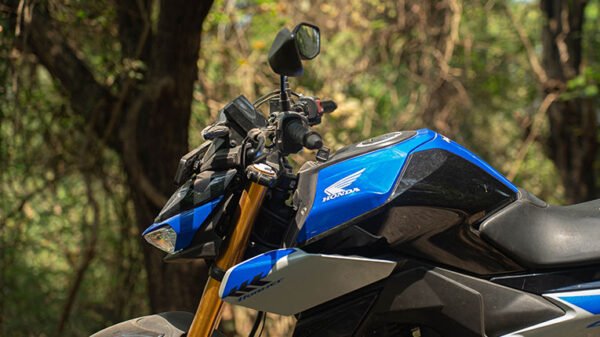
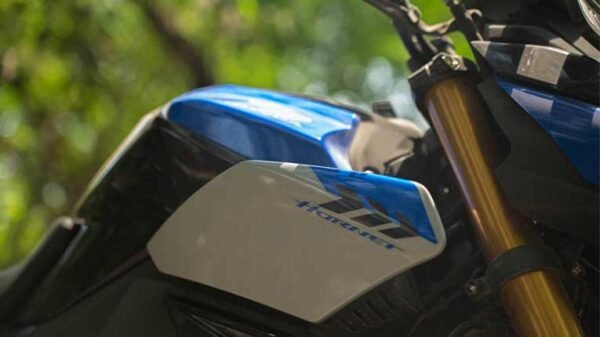
Let’s start with what the CB125 Hornet absolutely nails: its styling. For a 125cc motorcycle, the Hornet looks remarkably aggressive. The sharp tank extensions, angular bodywork, and sleek LED headlamp give it the presence of a much larger motorcycle. It doesn’t feel like a small commuter trying to look sporty, but it genuinely carries the attitude of a streetfighter. The tank design deserves special mention. It looks muscular and sculpted, and it visually anchors the bike well. Combined with the gold-finished upside-down front forks and sharp tail section, the Hornet manages to look far more premium than most bikes in its segment. Over the week I spent with the bike, it drew more attention than you’d expect from a 125cc machine.
Friendly Everyday Engine
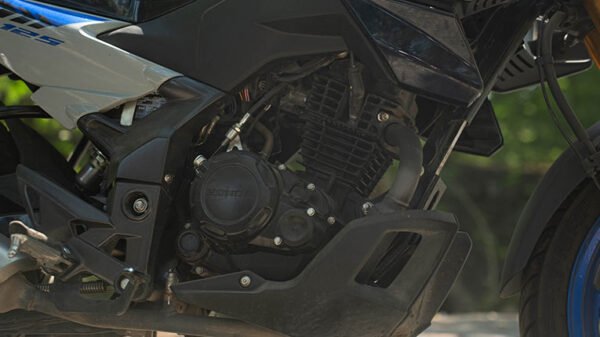
Underneath the aggressive styling sits a 123.94cc single-cylinder engine paired with a five-speed gearbox. On paper, it produces around 11 horsepower and just over 11 Nm of torque. In real-world riding, the engine feels smooth and predictable, which is exactly what you want from a commuter motorcycle. Throttle response is clean, and the engine pulls willingly in city traffic without feeling strained. It’s not a bike that encourages aggressive riding, but that’s not really the point here. The Hornet’s engine is tuned for usability rather than outright performance. In stop-and-go traffic, it feels relaxed and easy to manage. The gearbox is slick, and clutch action is light enough to keep fatigue at bay during longer commutes. What impressed me most was how refined the engine feels. Honda’s reputation for smooth motors is well deserved, and the Hornet continues that tradition.
Where It Falls Slightly Short
Despite its sporty looks, the Hornet isn’t the most agile bike in its class. During my week with it, I found that its manoeuvrability could have been better. Filtering through tight traffic or making quick direction changes didn’t feel as effortless as I expected. Part of this may be due to the way the bike is set up. The wider tank and slightly larger proportions give it a more substantial feel, but they also make it feel less nimble compared to some other lightweight commuters. It’s not difficult to ride by any means, but in extremely tight urban conditions, the Hornet doesn’t dart through gaps as naturally as some of its rivals. That said, once you’re moving at moderate speeds, the bike feels stable and planted. It just requires a bit more input when weaving through traffic.
The Moment ABS Proved Its Worth
This one time during the week I rode the bike, it reminded me exactly why safety features matter, even on small motorcycles. I was riding through typical city traffic when an auto-rickshaw driver ahead of me suddenly decided to swerve left and stop, all without any indication whatsoever. Anyone who rides in Indian traffic knows this kind of situation all too well. Instinctively, I grabbed the brakes. The front brake bit hard, but the single-channel ABS immediately kicked in, preventing the wheel from locking up. The bike slowed rapidly but remained stable, allowing me to steer slightly and avoid what could easily have turned into an unpleasant collision.
It was one of those moments that lasts only a few seconds but stays with you afterwards. Without ABS, the situation could have ended very differently. Instead, the Hornet stayed composed, and I rode away with nothing more than a brief spike in heart rate and a renewed appreciation for modern safety technology. For riders who spend most of their time in unpredictable city environments, ABS is not just a feature but a peace of mind.
Comfort and Everyday Usability
Over longer rides, the Hornet proves to be a comfortable machine. The riding position is upright and natural, making it easy to spend extended time in the saddle without discomfort. The seat is well cushioned, and the handlebar placement keeps your posture relaxed. It’s a bike that feels designed for real-world use rather than just showroom appeal. Fuel efficiency, as expected from a 125cc commuter, is another strong point. While exact figures will vary depending on riding style and traffic conditions, the Hornet should comfortably deliver the kind of mileage that makes small-displacement bikes so appealing in the first place.
Final Thoughts
After spending a week with the Honda CB125 Hornet, one thing is clear: this is a commuter that prioritises style and refinement. Its standout design gives it a strong visual identity, and the engine delivers the smooth, dependable performance that Honda is known for. The bike feels well-built, comfortable, and modern enough to appeal to younger riders entering the world of motorcycling. Its manoeuvrability could certainly be sharper, especially in dense city traffic, but it compensates with stability and an overall sense of solidity. And as my close call with that unpredictable rickshaw driver proved, the presence of ABS adds an important layer of safety to everyday riding.
4 Comments
Pingback: semaglutide compresse per dimagrire dosaggio
Pingback: semaglutide oral vs injection efficacy
Pingback: pepcid dosage gerd
Pingback: orlistat cost nz