

Technology is evolving at a relentless pace, with innovation cycles becoming shorter than ever. In this environment, businesses face constant disruption from emerging solutions. Continuous upskilling and reskilling are no longer optional but essential. At the heart of this transformation lies one critical enabler: seamless, high-quality communication.
As enterprises expand across geographies and time zones, large-scale learning through training programmes, workshops, and town halls has become the norm. In these settings, audio clarity is critical. Even minor disruptions can affect comprehension, engagement, and overall effectiveness. Reliable audio is therefore fundamental to meaningful knowledge exchange.
However, traditional communication systems often fall short. Complex deployments, extensive cabling, and ongoing management can turn sessions into logistical challenges rather than productive interactions. In hybrid environments, where participants join from varied locations, background noise, echo, and uneven sound quality further disrupt communication and reduce focus. For organisations managing multiple meeting and training spaces, maintaining consistency across locations becomes an additional challenge.
This is where audio intelligence is redefining the landscape. Audio intelligence refers to the integration of AI and advanced signal processing technologies that enable systems to automatically capture, optimise, and adapt sound in real time based on the environment and speaker dynamics. Unlike traditional setups that require manual configuration and constant oversight, these solutions dynamically adjust to deliver consistent performance.
AI-driven capabilities such as voice recognition, noise reduction, speech enhancement, and real-time processing are transforming how speech is captured and delivered. These technologies ensure that every participant is heard clearly while minimising unwanted noise. They also reduce listening effort and cognitive load, enabling better concentration, stronger participation, and improved knowledge retention, especially during longer or more complex sessions.
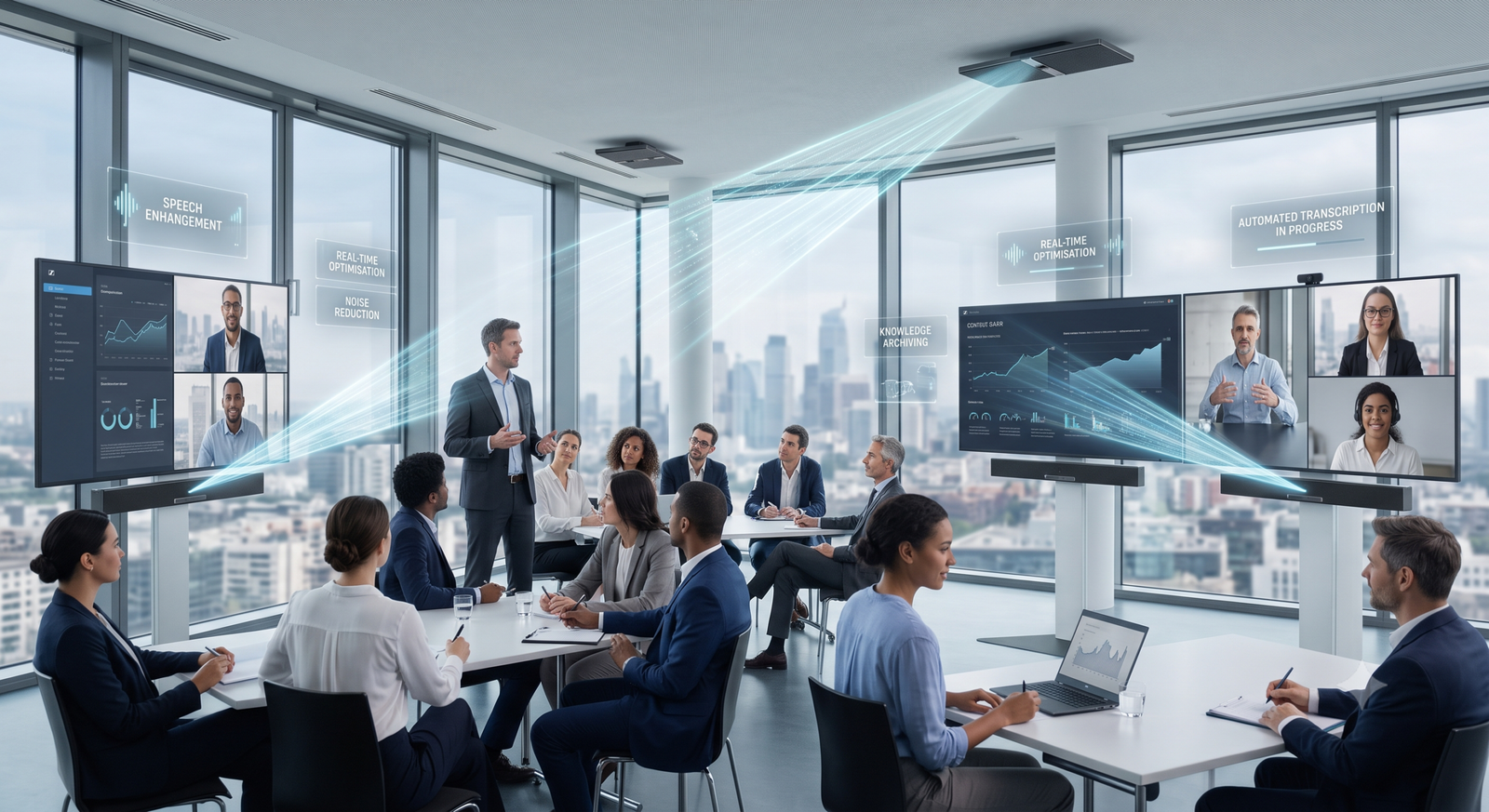
For organisations investing in workforce development, such innovations are particularly impactful. Solutions such as Sennheiser’s TeamConnect Ceiling microphones and TeamConnectBars demonstrate how intelligent beamforming can automatically focus on the active speaker, removing the need for handheld or tabletop microphones. This simplifies setup, reduces clutter, and allows sessions to run more smoothly without technical distractions.
With a one-time installation, these solutions support collaboration across meeting rooms, training spaces, and global offices. They also enable standardised experiences across locations, reducing the burden on IT and AV teams while ensuring reliability. The result is a seamless hybrid environment where technology fades into the background, allowing teams to focus on learning, collaboration, and decision-making.
Looking ahead, audio intelligence will become a core component of workplace infrastructure. Beyond meetings and training, it will enable automated transcription, create searchable knowledge archives, and deliver real-time insights. These capabilities will help organisations capture and reuse institutional knowledge more effectively, enabling faster, more informed decision-making.
In the near future, organisations will not evaluate collaboration spaces solely by their size or design, but by the intelligence of the systems that power them. Those that embrace audio intelligence early will be better positioned to improve efficiency, strengthen knowledge retention, and build a more agile, future-ready workforce.
By – Naveen Sridhara, Sales Director, Sennheiser India