

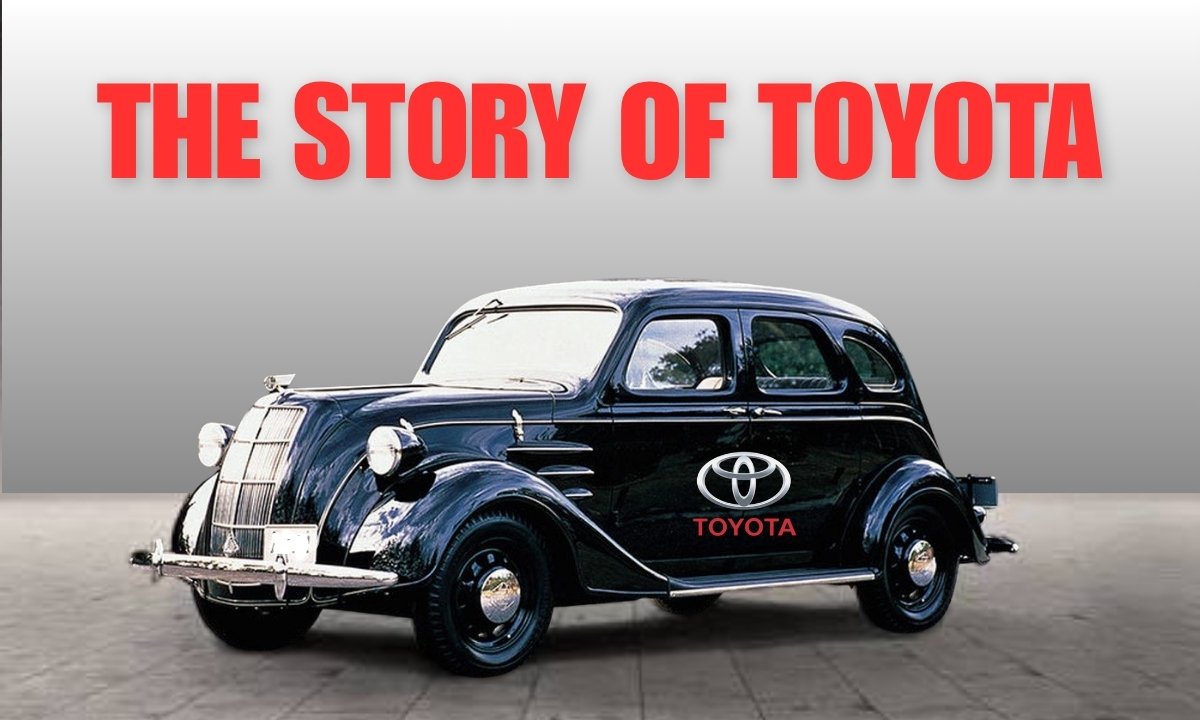
Imagine building a business so successful that it dominates its industry… and then deciding to walk away from it. Not because it’s failing, but because you believe the future lies somewhere completely different. Most entrepreneurs spend their lives protecting what they’ve built. Toyota chose to risk it all.
Long before it became the world’s largest automaker, Toyota was a textile company. The Toyoda family had built a thriving business manufacturing automatic looms, revolutionising Japan’s textile industry. In 1929, they sold the patent for Sakichi Toyoda’s revolutionary automatic loom to the British company Platt Brothers for £100,000, an enormous sum at the time and worth several million pounds today.
For most business families, that money would have gone into expanding an already successful textile empire. Kiichiro Toyoda had a different plan.
He believed Japan needed an automobile industry of its own. It sounded ambitious, almost reckless. Ford and General Motors already ruled global markets, and Japan had little experience designing or manufacturing cars at scale. On paper, the odds were stacked against him.
Yet Kiichiro wasn’t interested in competing for yesterday’s market. He wanted to build tomorrow’s.
Using the proceeds from the loom patent sale, he founded Toyota’s automotive division, a move that would eventually transform not just the company, but Japan’s industrial future. The early years were anything but easy. Resources were limited, competition was fierce, and the Second World War brought its own challenges. But Toyota persevered, constantly improving its manufacturing process, eventually pioneering what the world would come to know as the Toyota Production System, introducing concepts like Just-in-Time manufacturing and Kaizen that would become management case studies across industries.
Fast forward to today, and that bold decision has created one of the most admired companies in history. Toyota sells over 10 million vehicles annually, operates in more than 170 countries and remains among the world’s most valuable automotive companies, with a market valuation of roughly US$270 billion. From the dependable Corolla and the unstoppable Hilux to the legendary Land Cruiser, its vehicles have earned a reputation for reliability that few brands can match.
The irony is impossible to ignore. The company famous for building some of the world’s toughest vehicles exists because its founders were willing to abandon the business that made them successful in the first place.
Most businesses fail because they resist change. They cling to familiar markets, familiar products and familiar profits. Toyota reminds us that innovation often begins by questioning your biggest success. Sometimes the next billion-dollar opportunity isn’t an extension of your current business. Sometimes it’s an entirely different business altogether.
That is what separates companies that survive from companies that shape history.
The Indisciplined Playbook
The safest business can become the biggest trap. Don’t become so successful that you stop seeing what’s next. Kiichiro Toyoda didn’t protect a thriving textile empire. He used its success to fund an uncertain future. Every entrepreneur eventually faces this choice: defend yesterday or build tomorrow. History usually rewards the ones willing to let go.
Watch the full YouTube Shorts: https://www.youtube.com/shorts/NodHG0GVmQQ
1 Comment
Pingback: Indisciplined Leader: Timex - The 172-Year-Old Watch Brand That Refused to Grow Old