


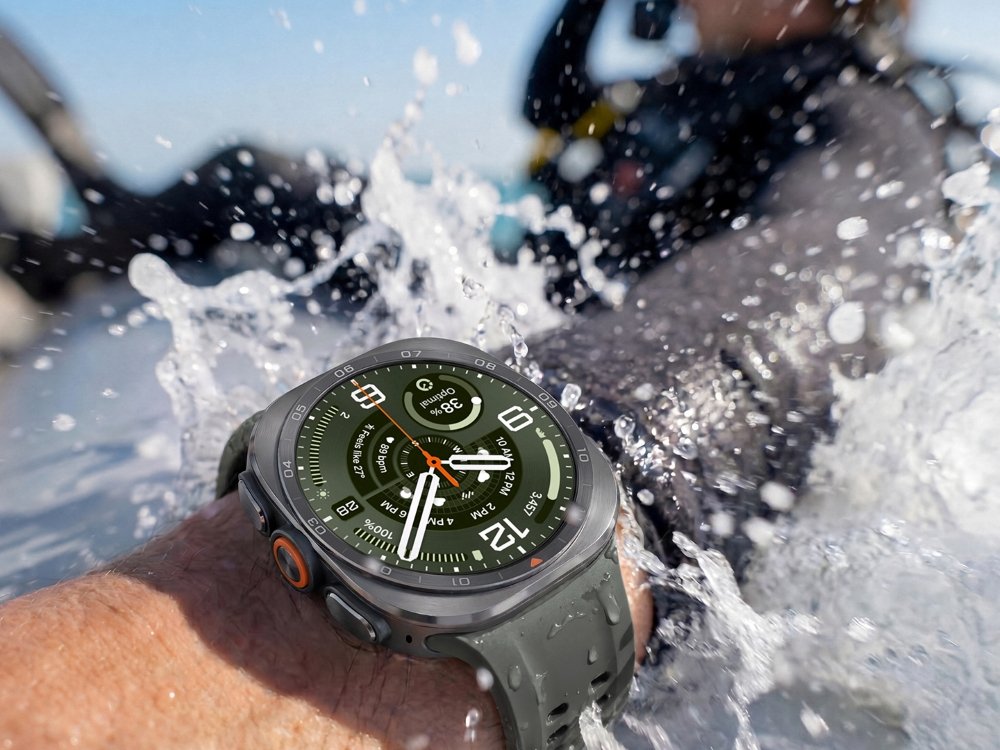
Samsung’s current top-tier smartwatch doesn’t hide what it is. The Galaxy Watch Ultra2 sits firmly in the premium range – expensive, heavily engineered, and marketed as a device tough enough for extreme conditions. Samsung has built it to handle heat, water, impact, and long stretches away from a charger. The real question after living with it is simpler: does that extreme capability actually justify the price, or is it more watch than most people need?
DESIGN & BUILD
The first thing that hits you is how different this feels from the original Ultra. That first-generation model was a tank, but it was a thick tank. Samsung clearly heard the complaints. The Ultra2 has been slimmed down to 10.7 millimetres. On the wrist, it sits noticeably lower and more balanced. I still get the same solid, no-nonsense presence, but it no longer feels like I’m wearing a small brick after a few hours.
Material choice continues the serious theme. This titanium body is dense and confidence-inspiring. It has that subtle brushed finish that hides scratches better than polished steel ever could. Where the Watch8 Classic leans into classic stainless-steel luxury and a proper rotating physical bezel, the Ultra2 prioritizes survival. The build is pure “titanium tank.” It carries an IP69K rating and official scuba-diving certification. I’ve taken it into chlorinated pools, salt water, and under a high-pressure shower without a second thought. The original Ultra already offered solid 10ATM water resistance; the Ultra2 simply raises the bar higher and makes you feel it.
The display is another leap. Samsung claims 5,000 nits of peak brightness. In bright Indian sunlight, the kind that turns most watch faces into mirrors, the Ultra2 stays perfectly readable. I tested it against both the original Ultra (rated around 3,000 nits) and the Watch8 Classic. The difference is obvious the moment you step outdoors. Text, maps, and workout metrics remain sharp. The always-on mode is usable even in harsh light, something I rarely trusted on previous models for long stretches.
Aesthetically, it’s still very much a tool watch rather than a dress piece. If your daily style leans formal, the Watch9 will feel more natural. If you want something that looks ready for a mountain trail or a dive boat, the Ultra2 is the one that matches the vibe.
PERFORMANCE
Under the hood sits the new Snapdragon Wear Elite chip. Everyday interactions feel snappier. Scrolling through apps, switching between workout modes, and launching the map or music controls happen with less hesitation than on the original Ultra. Samsung’s software has matured as well; notifications are better managed, the health suite is more polished, and the overall interface rarely feels sluggish.
Tracking has been reliable in my testing. Heart rate during runs and strength sessions stayed consistent. Sleep and recovery metrics matched what I was seeing from other devices I own. The Ultra2 doesn’t reinvent health tracking, but it executes the basics with the confidence you’d expect from a flagship. The extra processing power also shows up in smoother animations and quicker responses when you’re mid-workout and need to glance at data fast.
BATTERY
This is where the Ultra2 pulls ahead most dramatically. The original Galaxy Watch Ultra carried a 590 mAh battery. The Ultra2 jumps to a massive 800 mAh cell. In real use, that translates into genuine multi-day endurance rather than the “maybe two days if I’m careful” reality of many smartwatches.
With always-on display enabled, continuous heart-rate tracking, and regular GPS workouts, I consistently got well beyond two full days. Light days stretched comfortably into a third. That’s a meaningful improvement over the first Ultra. For someone who hates daily charging or heads out on multi-day trips, this is the single most practical upgrade.
VERDICT
The Galaxy Watch Ultra2 is Samsung’s most complete flagship smartwatch, featuring a thinner 10.7 mm profile that enhances comfort without compromising toughness. Its titanium construction, IP69K rating, and scuba certification provide confidence in extreme conditions. With a bright 5,000-nit display, a responsive Snapdragon Wear Elite chip, and an 800 mAh battery for multi-day endurance, it proves to be highly functional. Priced at 69,999 rupees, it may be expensive, but every upgrade, from its slimmer build to its robust materials, justifies the cost, making it a premium choice for serious users.