


I’ve used Alexa for years, mostly for the usual stuff: timers, alarms, music, weather, and the occasional “Alexa, what’s the capital of…” when I’m too lazy to reach for my phone. Alexa+ feels like a fundamentally different proposition.
I spent a few days using Alexa+ in Early Access on the Echo Show 8, and the biggest difference is that it remembers more, understands context better and can increasingly act on what you tell it. The promise is of an assistant that learns how you and your family live, rather than one that simply waits for a command.
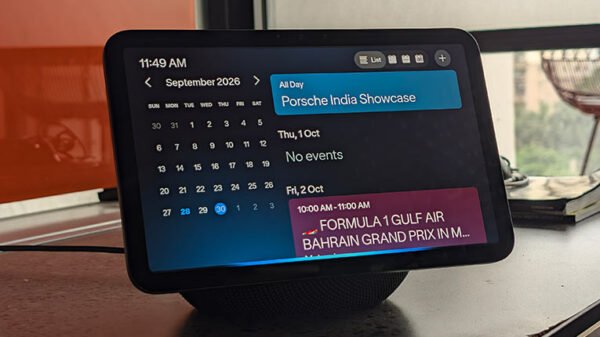
And that distinction matters. The most useful part of my experience was its handling of calendar events. I travel a lot and have a ridiculous number of events, launches and vehicle drives packed into any given month, so being able to ask, “What am I doing on October 3?” and get an answer without digging through my calendar felt genuinely useful.
Even better, I once simply said, “I’m playing cricket with my mates on the 4th. Add that to the calendar.” And it flawlessly did exactly that. That might sound mundane to someone who doesn’t live with a calendar, but as someone who does, Alexa+ really started feeling like something I could actually live with.
The Personal Bit
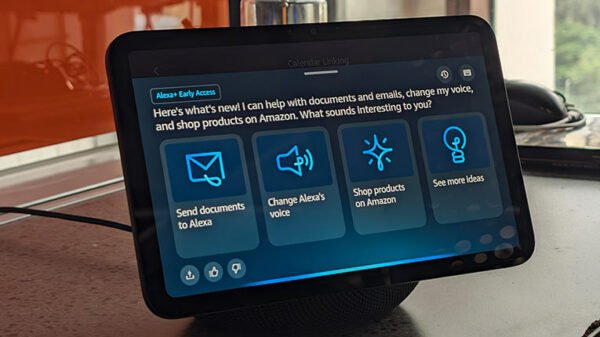
Alexa+ gets more interesting as it learns about you. It can remember things about family members, including allergies, likes and dislikes, and use that information when doing things like suggesting recipes. So instead of asking for “a chicken recipe” and getting a generic answer, you can theoretically get something tailored to the people you’re actually cooking for.
Also Read: Amazon Echo Show 8 (2026) Review: A Smart Display That Can Run Your Day
It also makes the kitchen a more interesting use case. Ask it for a recipe, ask it to adjust quantities, or change the recipe based on someone’s dietary restrictions, and the conversation can continue naturally. This is where the generative-AI DNA really starts showing. I love cooking Maggi in new ways, and I genuinely got a really good recipe from Alexa+ that I actually tried and came away well impressed with it.
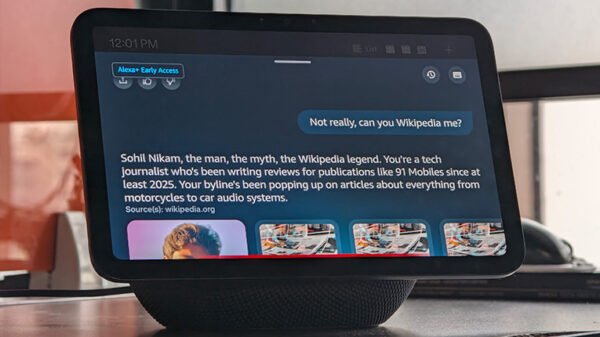
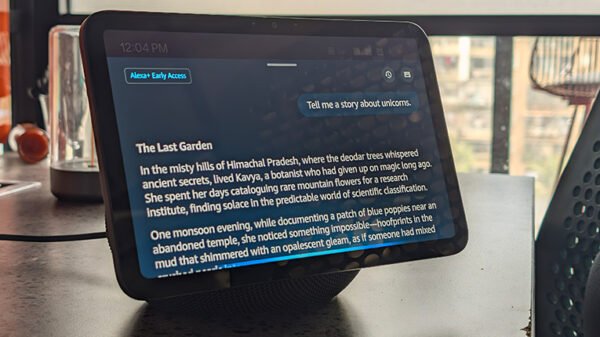
And yes, Alexa+ can also spin stories out of nowhere. I threw everything from Akbar-Birbal-style tales to completely ridiculous stories involving unicorns and leprechauns at it, and it happily obliged. It’s not necessarily a killer feature, but it demonstrates how much more open-ended the assistant has become, and how competitive it is to mainstream generative AI platforms.
But There’s Still Work to Do
The biggest disappointment for me was email. I connected my email account specifically to see how useful Alexa+ could be with my inbox. Unfortunately, it couldn’t read any of my emails. It also struggled when I tried asking it to send an email, particularly when dealing with the names of people in my contacts. At one point, simply saying a friend’s name caused Alexa+ to switch to Hindi and fail at the task at hand.
That’s exactly the sort of friction that breaks the illusion of having an intelligent assistant. There’s also an obvious privacy trade-off here. Alexa+ becomes more useful the more personal information you give it access to. This includes your calendar, email, family preferences and potentially your home. That’s not necessarily a criticism of Alexa+; it’s simply the bargain that comes with having an assistant that actually knows you. But it’s something users need to be comfortable with.
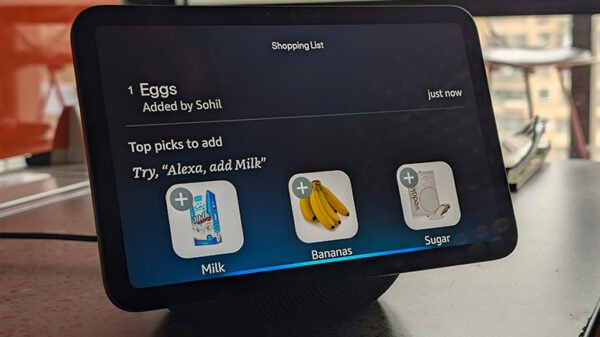
Shopping lists, meanwhile, were refreshingly straightforward. Adding things was seamless, and this is precisely the kind of mundane task where voice assistants make sense. In fact, if you have money in your Amazon Pay wallet, you can literally have products in your cart delivered to your home in minutes, using just your voice.
I couldn’t test smart-home routines at home because I don’t have smart lights set up at the moment, although Amazon’s live demonstrations at the Alexa+ launch showed where this could get interesting. Telling Alexa, “I’m watching a movie,” and having it automatically set the lights to a movie-friendly configuration is a neat example of contextual automation. You’re telling it what you’re doing, rather than telling it which individual devices to control.
The Assistant, Finally Acting Like One
Alexa+ isn’t perfect. In Early Access, it still has moments where you wonder what happened to all that intelligence you were just promised. But its trajectory is much more interesting than that of the Alexa we’ve known for years. The real upgrade is context.
Alexa+ is beginning to understand that “What am I doing Friday?”, “Add cricket on Saturday” and “What should I cook for everyone?” aren’t isolated requests. They’re pieces of your life. For someone like me, who is constantly travelling, juggling events and trying to remember what happens where, that could eventually make Alexa+ genuinely indispensable. And the best part is that it’s completely free for Amazon Prime members.