


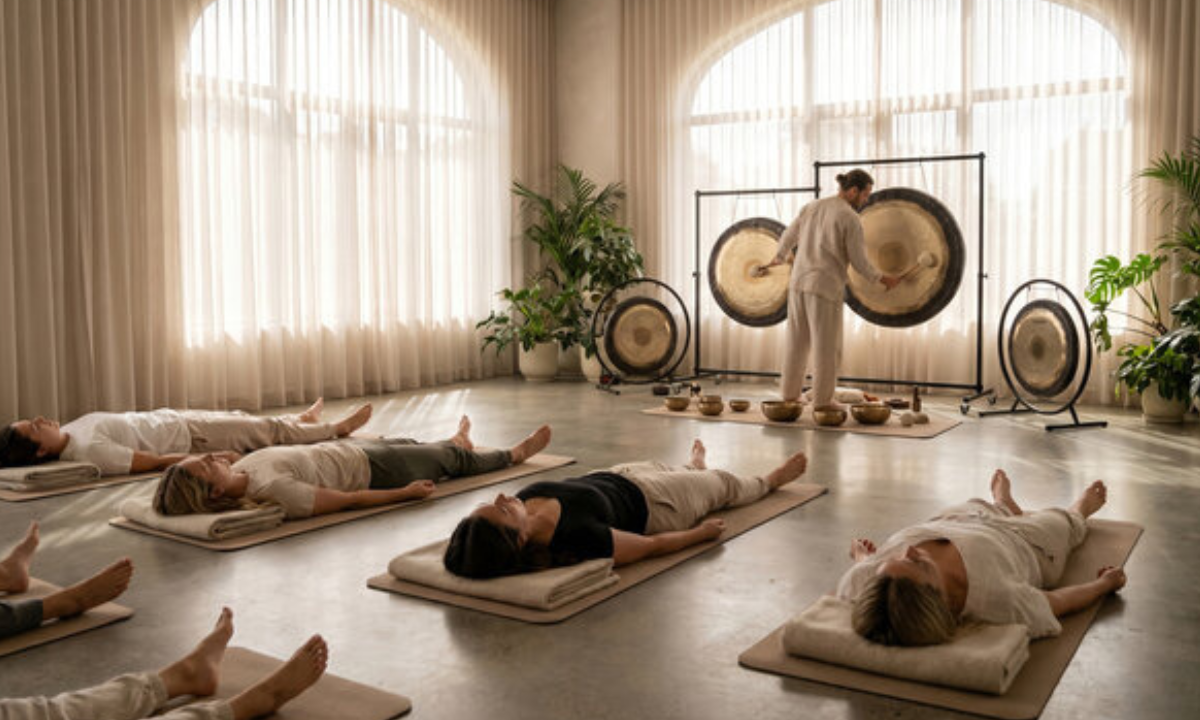
In a world filled with constant notifications, traffic noise, endless scrolling and thoughts that refuse to switch off, finding a moment of calm can feel surprisingly difficult. While some people turn to meditation or yoga, others are exploring a different way to unwind : sound healing.
From crystal singing bowls and Tibetan metal bowls to gongs, chimes and carefully designed soundscapes, sound healing uses sound and vibration as part of a relaxation experience. The idea is to quiet the mind by force, you allow yourself to slow down and focus on what you hear
A typical sound bath involves lying down comfortably while a practitioner plays different instruments around the room. The sounds can range from soft, lingering tones to deep, resonant vibrations. Participants are encouraged to relax, breathe naturally and pay attention to the sounds rather than their everyday thoughts. Despite the name, there is usually no water involved.
So, what makes the experience appealing? One reason may be that listening gives the mind something specific to focus on. Much like music can influence our mood, slow and soothing sounds may help some people feel more relaxed and less caught up in their thoughts. The experience can also offer a welcome break from screens, conversations and the pressure to be constantly productive.
Sound healing is often associated with claims about balancing energy, releasing emotional blockages and restoring the body’s natural frequencies. However, these claims are not all supported by strong scientific evidence. Some early research suggests that sound-based relaxation practices may help reduce feelings of stress and improve mood, but larger, better-designed studies are needed to understand their effects. Sound healing should therefore be viewed as a complementary wellness practice rather than a replacement for medical or mental health treatment.
What makes it interesting is how accessible the experience can be. You do not need to know how to meditate, follow a particular belief system or learn a complicated technique. You simply need a quiet space and a willingness to pause for a while. Even listening to calming music mindfully at home can be a gentle way to take a break, although it is not the same as a guided sound bath.
Perhaps the appeal of sound healing lies less in the promise of a miraculous transformation and more in the opportunity to slow down. In a culture where silence is often filled with another notification or playlist, giving yourself time to listen without doing anything else can feel like a luxury in itself.
Sound may not solve everything on your mind, but sometimes, a little space to breathe and be present is a good place to start.