



Google’s Pixel phones are the latest victims of the global smartphone price squeeze triggered by the memory crisis. Google had already warned that soaring memory costs would force price adjustments, and the Pixel 11 generation is where that pressure becomes visible.
The result is a lineup that feels very much like a basic upgrade. Prices are up while hardware changes are incremental. Moreover, there is still no move to silicon-carbon battery technology, and the Pro models also make a compromise on RAM despite the ₹10,000 price rise.
In India, the Pixel 11 starts at ₹89,999 for 12GB RAM and 256GB storage, while the 512GB version costs ₹1,04,999. The Pixel 11 Pro starts at ₹1,19,999 for 12GB/256GB, with the 16GB/512GB model at ₹1,34,999. The Pixel 11 Pro XL starts at ₹1,34,999 for 12GB/256GB and goes up to ₹1,49,999 for 16GB/512GB. All three now begin with 256GB storage, doubling the base capacity on the standard Pixel 11 and Pro.
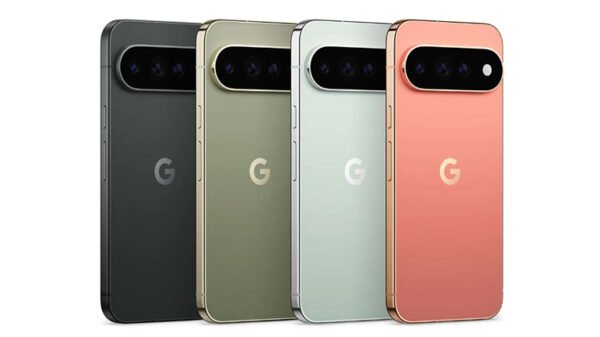
That RAM configuration is noteworthy. The Pixel 10 Pro range standardised 16GB RAM, but the entry Pro and Pro XL variants of the new generation drop to 12GB despite the higher prices. Google says it is working to make Android and on-device AI more memory-efficient, but the change remains an unusual trade-off at the premium end.
The hardware itself is more polished than radically different. All three phones retain the distinctive camera bar, while the Pixel 11 gets a 40% thinner version. The Pro and Pro XL feature Super Actua displays reaching 3,600 nits, with a new anti-scratch coating. The lineup also introduces Pixelsnap magnetic accessories and 25W Qi2.2 wireless charging on the Pixel 11 and Pro, while the Pro XL gets 45W wired charging.
Also Read: Google Pixel 9a Review: Affordable Flagship Marvel
The biggest silicon upgrade is Tensor G6, paired with the Titan M3 security chip. Google claims 25% faster web browsing, 15% quicker app launches and 50% more TPU compute, with local AI processing up to 3.5 times faster and more power-efficient. The cameras also get revised sensors, with the Pro models gaining a new main sensor, a 48MP 5x telephoto and up to 100x Pro Res Zoom.
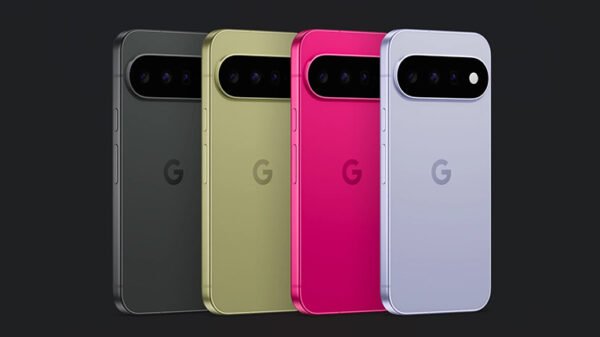
The most conspicuous new feature is HiLight: LEDs around the rear camera flash glow in custom patterns for notifications, contacts and Gemini.
If the hardware changes on the Pixel 11 series are relatively measured, Google has gone considerably further with AI. The new Gemini Intelligence layer is designed to make the phone more proactive rather than simply waiting for commands. Gemini can understand context across apps and conversations, surface relevant information and suggest actions, with processing split between on-device models and Google’s cloud-based Gemini models.
One of the more interesting additions is Magic Capture, which uses on-device intelligence and Gemini to analyse hundreds of frames while you are shooting, automatically selecting the best moments and producing a polished collection of photos. It can also apply edits such as cropping and unblurring, while allowing photos and video to be captured together.
Google is also making Gemini more deeply embedded into everyday interactions. The AI can draw context from Messages and other parts of the phone to offer suggestions or take actions, while HiLight adds a physical layer to these interactions by using the LEDs around the camera bar to signal Gemini activity or calls from selected contacts. The broader idea is clear: Google is trying to turn Gemini from an app you open into an intelligence layer that sits across the Pixel experience.
Also Read: Google Pixel 9 Pro Fold Review | Best Foldable Smartphone by Google
Completing the lineup is the Pixel 11 Pro Fold, Google’s book-style foldable and the most expensive device in the new range. It is priced at Rs. 1,86,999 in India, for a single configuration with 16GB RAM and 512GB storage. The foldable gets an 8-inch 120Hz inner OLED display and a 6.5-inch 120Hz cover display, with Google powering it with the same Tensor G6 platform as the rest of the Pixel 11 family. Its camera setup comprises a 48MP primary sensor alongside two 10MP-class cameras, while the 4,806mAh battery supports wired and wireless charging. At 239g, it remains a substantial device, but Google has given it an IP68 rating and seven years of OS and security updates.

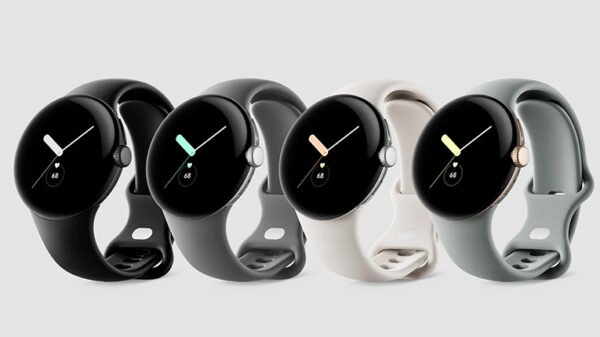
Alongside the phones, Google has launched the Pixel Watch 5 in India. It continues with the familiar circular design and is available in 41mm and 45mm sizes, priced at Rs. 42,900 and Rs. 45,900 respectively. The 3,000-nit Actua 360 display remains, but Google has put greater emphasis on health and AI, with Health Guardian, improved GPS tracking, proactive Gemini suggestions and Raise to Talk. Battery life is rated at up to 30 hours on the 41mm and 40 hours on the 45mm with always-on display.
So, while the Pixel 11 series is a substantial software and imaging upgrade, its hardware story is defined as much by the memory crisis as by new silicon.