


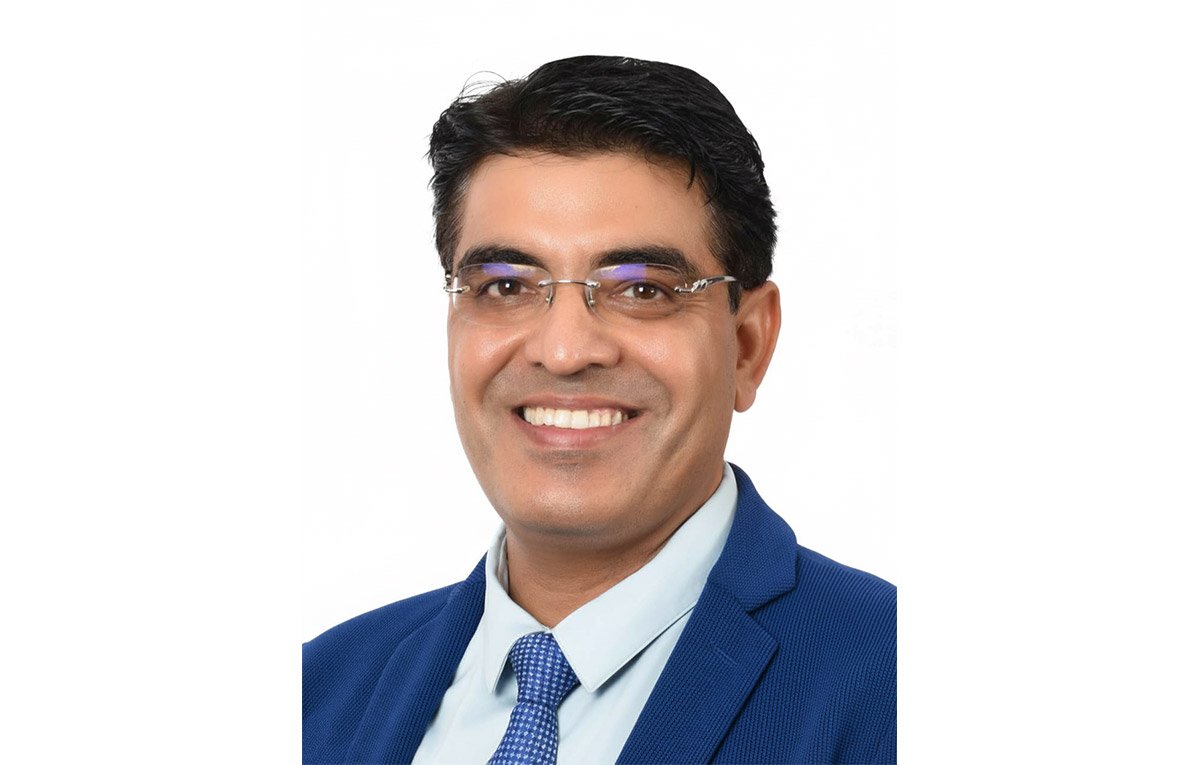
For Pankaj Rana, CEO of Hisense India, leadership isn’t defined by playing it safe; it’s about making difficult decisions, staying the course when uncertainty sets in, and building organisations that outlast individuals. Having helped scale businesses from the ground up, Rana believes technology should solve real problems, not simply chase the latest buzzwords. In this edition of Tech Titans, he shares his views on AI, leadership, Gen Z, financial literacy, and why developing people may ultimately be a leader’s greatest achievement.
What’s a personal habit or ritual that quietly shapes how you make big decisions?
I write things down. I now use a reMarkable tablet for this, and it has become a genuine ritual. Not in any elaborate system, just the key variables, the risks, the best and worst outcomes. There is something about the act of writing by hand that forces honesty. You cannot hand-wave when you are physically forming the words. My leadership coach Mr. Gulraj Singh Shahpuri was the one who pushed me to start this practice, framing it around goal-setting and manifestation, and it stuck. Whether it is a big business call or a personal decision, writing it out changes how I see it.
The other thing I do is sit with a decision for at least one night before committing. I tend to be an execution-first person, which is a strength, but fast decisions and good decisions are not always the same thing. Sleeping on it has saved me from myself more than once.
What’s one childhood incident that shaped who you are today?
Cricket. When I was representing Haryana State as a fast bowler, there was a match where I was bowling well but the team was losing badly. I remember thinking that my individual performance meant very little if the team did not win. That feeling stayed with me. It is probably why, even now, the achievements I am most proud of are collective ones: building a team from scratch at Panasonic, creating processes that outlasted individual contributions. Individual excellence matters, but team outcomes are what actually move things forward.
What are your thoughts on Gen Z work culture, and how do you shape your work style to align with them?
Gen Z has made work more honest, and I mean that genuinely. They ask questions that earlier generations swallowed: why are we doing it this way? What is the point of this meeting? Does this work actually matter? Those are not disrespectful questions; they are good questions that most organisations never had to answer before.
Where I think the conversation gets complicated is around the long game. Building something meaningful, whether a career or a business, requires absorbing some discomfort in the short term. My job, as someone who leads a team with many younger professionals, is to be honest about that without being dismissive of what they bring. I try to give them context, not just instructions, and real ownership rather than the illusion of it. If they understand why something matters, they tend to bring far more to it than if they are just executing a brief.
What’s the biggest lie the industry is telling itself about AI right now?
That it is a feature. Companies are adding AI to product descriptions the way they once added “smart” or “connected”, as a badge rather than a real capability. The ones that are doing it well are the ones where AI is genuinely changing what the product does for the user, not just what the marketing says about it.
In consumer electronics specifically, the honest question to ask is: does this AI feature actually make the user’s life easier in a way they notice and value? If the answer is no, it is just noise. We have to be disciplined enough to ask that question before we ship, not after.
What problem in the world still frustrates you enough to keep you awake at night?
Financial literacy. I have seen, up close in my own life and in the lives of people I respect and care about, how the absence of basic financial knowledge quietly limits people’s options for years at a time. Earning well is not enough if you do not understand how to make money work for you over the long term. It is one of those skills that schools do not teach, families do not always model and most people figure out too late.
I talk about this with my team constantly. It is one of the four pillars I come back to when I mentor people: know your strengths and weaknesses, be future-ready, manage your finances and take care of your health. The finance piece is the one where the gap between knowing and doing tends to be widest.
What’s a decision you made that looked risky at the time but turned out?
Joining Hisense India. I will be honest, I did not do as much due diligence as I should have before accepting the role. When I arrived, I realised I was walking into an organisation that needed to be built almost from the ground up: team structure, processes, channel relationships, brand awareness. Most people with 22 years of industry experience would have walked out of that room and said this is not what I signed up for.
I stayed, and we started building. It has been the steepest learning curve of my career. The risk that everything could go wrong is still there, but the process of building something from nothing is also where I have done my best work, at Panasonic with smartphones and now here. I think I work best when the stakes are real and the outcome is not guaranteed.
What brands of gadgets do you use every day?
For fitness tracking, I use both an Oura Ring and a Whoop Band, which gives me a fairly detailed picture of recovery, sleep quality and readiness. I find that data genuinely useful, particularly given how much travel and back-to-back schedules are part of this role. On the phone, I am on Apple. At work, I run an HP laptop. And for writing and note-taking, I have recently moved to a reMarkable tablet, which has replaced a lot of what I used to do on paper.
When people look back at your work decades from now, what do you hope they say you changed?
I hope they say I helped people grow, more than I helped companies grow. The business outcomes matter and I work hard for them, but what I think about more is whether the people who worked with me are in better places because of it. Do they have more skills, more confidence, better financial habits, a clearer sense of their own potential? That is the ledger I actually care about.
For Hisense India specifically, I would like people to say we turned an emerging brand into a trusted one, not by spending the most on advertising but by being genuinely consistent in our product quality, our customer relationships and the way we treated every partner in our ecosystem.
What’s harder: taking a bold decision or sticking with it when things go wrong?
Sticking with it. Taking a bold decision carries a certain energy and adrenaline. The hard part is the six months after, when the early results are messy, when people around you are questioning it and when the original confidence you had in the idea starts to feel like stubbornness rather than conviction. That is where most people fold.
The select and focus approach I use at Hisense India is a good example. We are not chasing every category and every channel simultaneously. In a market this competitive and this noisy, that restraint looks slow from the outside. But I know our infrastructure, I know what it can support and I know that building sustainably is the only way to build something that lasts. Holding that line when the pressure is to move faster is genuinely harder than making the call in the first place.
What part of AI genuinely excites you, and what part quietly worries you?
What excites me is personalisation at scale. The idea that a product can learn the habits and rhythms of an individual household and adapt to them, without anyone having to manually programme anything, is genuinely transformative. In our category, this means appliances that make life measurably easier and more energy-efficient in ways that accumulate quietly over years. That is a real improvement in quality of life, not a marketing story.
What worries me is the pace relative to our ability to govern it. Not in a dystopian sense, but in a very practical one: the people and organisations making decisions about AI deployment are often moving faster than their understanding of the second-order effects. In consumer electronics, that might mean products that collect and process household behavioural data in ways users have not meaningfully consented to or understood. The technology is ahead of the norms, and the norms take time to catch up. That gap is where the real risk sits.
Rapid fire
- Books you swear by: Rich Dad, Poor Dad by Robert Kiyosaki
- Current car: Mercedes GLC
- Dream car or bike: Mercedes Maybach GLS
- Fitness gadgets you use every day: Oura Ring
- Go-to AI tool: ChatGPT, Claude, Perplexity
- Quote you live by: Go big or go home
- Podcast recommendations: TED Talks (rediscovered during the pandemic).