

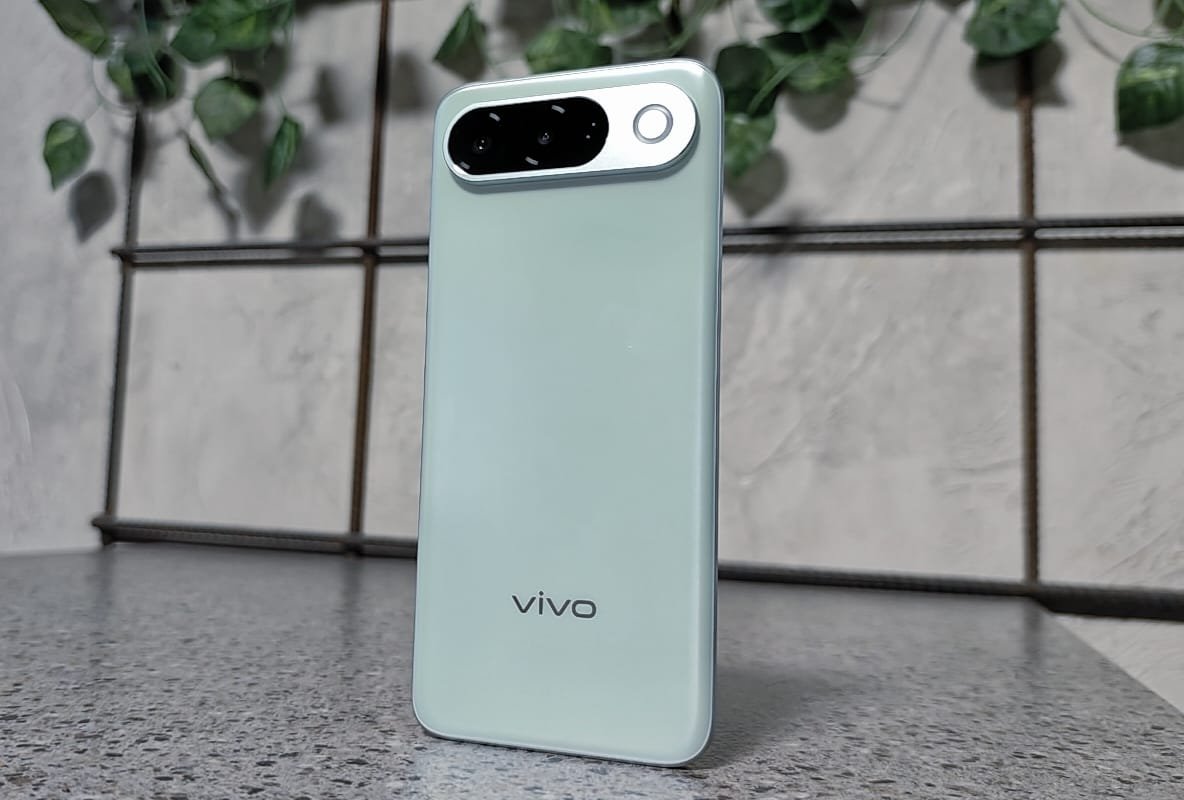
I’ve spent the past week living with the Vivo T5, using it as my primary phone for commuting, BGMI gaming sessions, late-night YouTube, work notes, photos of friends and food, and the usual daily chaos. The big question hanging over every mid-range launch is simple: does this phone actually disrupt the crowded ₹35,000–₹50,000 space, and is it the best option available right now? Let’s find out.
Build & Design
The first thing you notice when you pick up the T5 is how slim and light it feels. At 7.99 mm and 199 g, it is genuinely one of the slimmest phones carrying a 7,000+ mAh battery. The 6.83-inch 1.5K 144 Hz 3D curved AMOLED is the star of the design. Curved edges give it an edge-to-edge look and a smooth hand-feel that flat panels lack. After a week I still notice how immersive videos and games feel. Brightness is excellent, with 2,000 nits HBM and a claimed 3,000-nit peak, making outdoor use comfortable even under the harsh Delhi sun. Colours stay punchy thanks to DCI-P3 support, and the SGS certifications for low blue light and low flicker are welcome for long reading sessions. A 93.82 screen-to-body ratio and 449 PPI keep the picture sharp.
Build quality feels solid. The plastic composite back and middle frame keep weight down without feeling cheap. The camera island is compact and aluminium-edged, so it doesn’t dig into your palm. IP68 and IP69 ratings plus military-grade durability testing (MIL-STD-810H) give real peace of mind. I deliberately used it with wet hands after washing dishes and once left it near a splash; no issues.
The in-display optical fingerprint is quick and reliable. Overall, the T5 feels like a phone designed for everyday comfort rather than pure specs bragging rights. It slips easily into a jeans pocket and never becomes a burden during long hours of use.
Performance
Under the hood sits the MediaTek Dimensity 7500 Turbo, a 4 nm octa-core chip (2.6 GHz + 2.0 GHz) with an 8th-gen NPU 850. Apps open instantly. Multitasking with Chrome, WhatsApp, Instagram, and a music app running in the background stays smooth. Origin OS 6 (based on Android 16), powered by the Origin Smooth Engine, does a good job of keeping things fluid even after a full day of use. I experienced no thermal throttling during normal tasks and only mild warmth after 45–50 minutes of continuous BGMI at high settings.
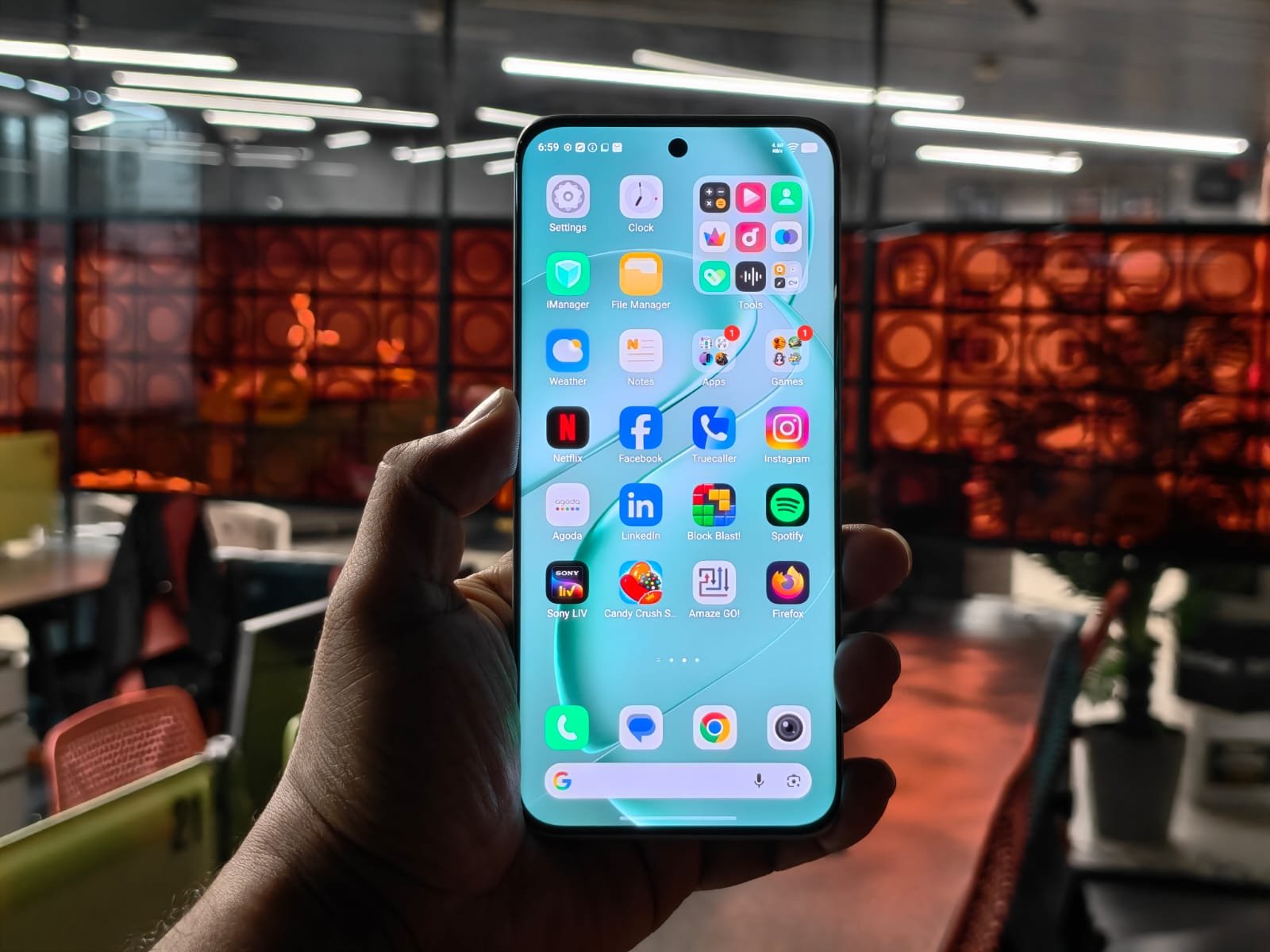
Gaming is where the 144 Hz display and improved GPU shine. BGMI at 120 FPS (where supported) looks and feels buttery. Overlay notifications stay out of the way, Ultra Game Mode and 4D vibration add immersion, and dual stereo speakers with the VEQ algorithm deliver surprisingly rich bass even at lower volumes, handy for late-night sessions without disturbing others. Frame rates stayed consistent; I never felt the phone struggling.
AI features are practical rather than gimmicky. AI Creation helps polish messages and summarise notes. Circle to Search 2.0 is genuinely useful for quick lookups. AI Captions and Transcript Assist turned a few voice notes and meeting recordings into searchable text without fuss. Office Kit features screen mirroring, drag-and-drop file transfer, Super Clipboard and notes continuity, which worked seamlessly when I connected the phone to my laptop.
Storage options go up to 12 + 256 GB with expandable RAM up to 12 GB via software. UFS 3.1 keeps load times low. After a week of heavy use, the phone still felt as responsive as day one. Software support includes three major Android upgrades and five years of security updates, respectable for the segment.
Camera
The rear setup is a 50 MP Sony IMX882 primary with 4-axis OIS paired with an 8 MP ultrawide (115° FOV). Daylight shots are detailed, colours are natural with a slight Vivo signature warmth, and dynamic range is solid. OIS + EIS keeps handheld video steady. I shot 4K at 30 fps on both the front and rear; results look clean for social media and casual sharing.
Portrait mode is a highlight. Multifocal options plus swirly and bubble bokeh effects let you play with different looks. Background separation is competent in good light; edges stay reasonably clean. Ultrawide is usable for group shots and landscapes once you accept mild distortion at the extremes.
Night mode does a decent job of recovering detail without excessive noise, though it can’t match dedicated flagship sensors in very low light. The 32 MP front camera produces sharp selfies with good skin tones and an 84° FOV that feels natural, not stretched.
Battery
The 7,050 mAh cell is the real disruptor here. Despite the slim chassis, battery life is excellent. On a mixed day of social media, navigation, a few calls, one hour of gaming, and two hours of YouTube, I consistently ended the evening with 35–40% left. Heavy gaming days still delivered 7–8 hours of screen-on time. Standby drain is minimal.
Charging is 44 W. From 1%, I reached about 17% in 10 minutes and roughly 44% in 30 minutes, which is enough to get through a couple of hours of use quickly. A full charge takes a bit over an hour. Five-year battery health claims (1,600 cycles with ≥80% capacity remaining), plus software protections (overnight charging limit, bypass charging, high-temperature protection), suggest longevity has been thought through.
Verdict
The Vivo T5 stands out as a reliable daily driver, offering a bright and immersive display, a slim and lightweight design with great battery life, solid performance for gaming and multitasking, competent cameras, and impressive durability with IP68/IP69 ratings. Origin OS 6 provides useful AI features without being overwhelming, adding long-term value. While it may not excel in areas like camera versatility or extreme gaming longevity compared to other high-end options, its balanced performance, premium feel, and massive battery make it a strong contender in the mid-range segment. Overall, I’m impressed enough to keep it as my everyday phone.