


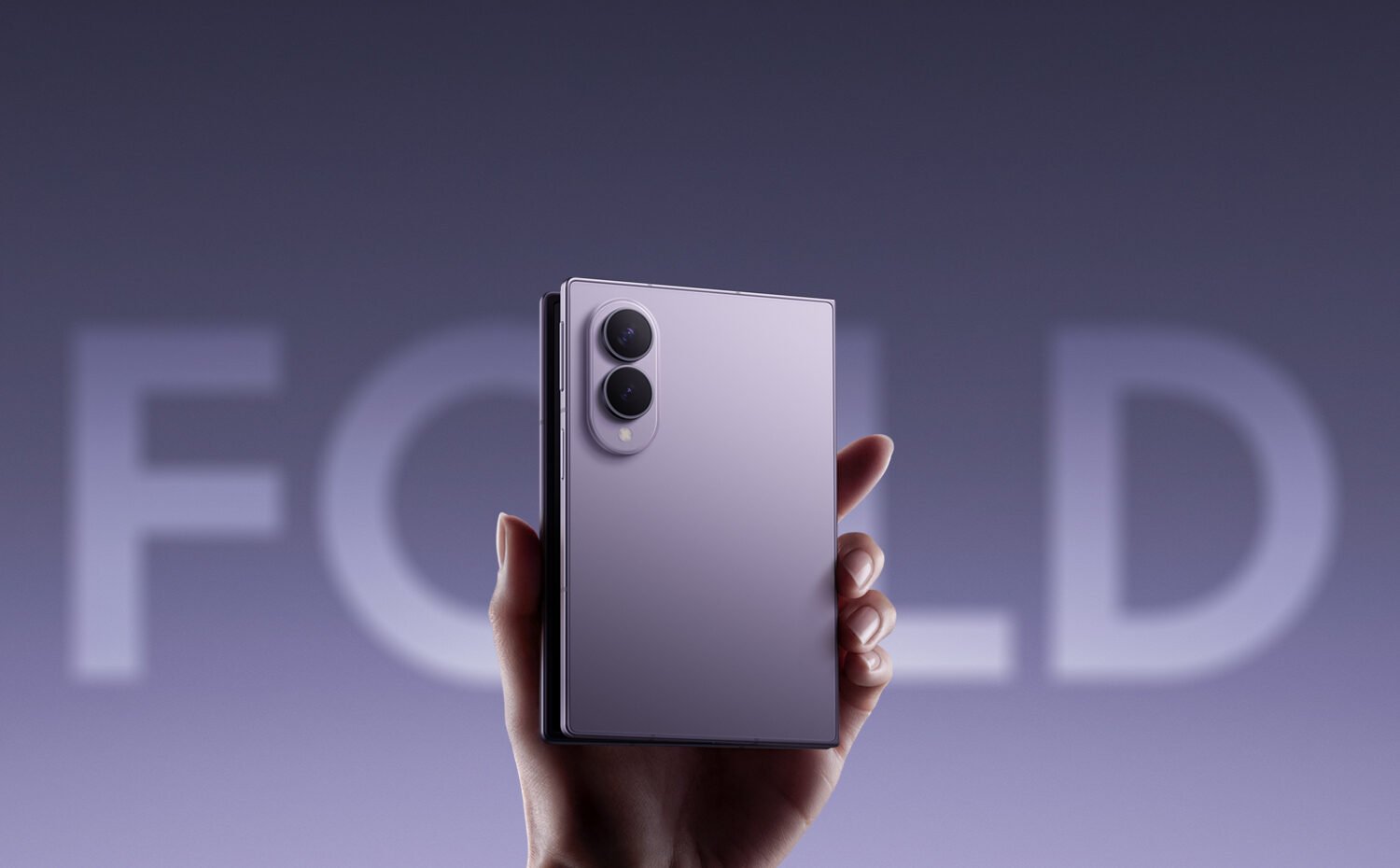
Samsung has finally changed the fundamental shape of the Galaxy Z Fold, and that is probably the biggest story with the Fold8. It is shorter, wider, lighter and considerably easier to live with than the previous generation. At 201g and 4.5mm when unfolded, it feels impressively slim for something that turns into a 7.6-inch tablet. The 5.5-inch cover screen and 4:3 inner display also make the Fold8 feel less like a conventional smartphone that happens to fold and more like a device designed around two distinct experiences.
But there is a catch. The new shape is not instantly intuitive. If you have spent years using a conventional 6.5-inch or 6.7-inch smartphone, the wider, squarer cover screen feels unusual at first. It took reviewers several days to adjust to it, particularly when typing and reaching for controls near the edges. One-handed use can also be less comfortable because the cover display is wider than the tall, narrow screens we have become accustomed to. This is not a deal breaker, but it is something you should know before spending nearly ₹1.8 lakh on the phone.
The camera compromise is difficult to justify
This is where I have the biggest problem with the Fold8. Samsung has given the phone a 50MP main camera and 50MP ultra-wide, but there is no dedicated telephoto camera. Instead, Samsung relies on its 2x optical-quality crop from the main sensor. The photographs from the main camera are good, and the ultra-wide is useful, but that is not really the point. The question is why a phone costing ₹1,79,999 should compromise on a camera that you would expect to be standard equipment at this price.
And Samsung cannot really hide behind the excuse that a telephoto camera is impossible in a thin foldable, because the Fold8 Ultra exists. That model gets a dedicated 10MP 3x telephoto, along with a much more ambitious 200MP main camera. So Samsung has clearly decided that buyers of the standard Fold8 can live without those cameras. I don’t agree. At this price, the camera system should have been complete. If you are paying flagship Ultra money, you should get an Ultra-level camera setup, especially when the Fold is positioned as Samsung’s most advanced smartphone experience. Independent comparisons also show the lack of optical zoom becoming obvious once you move beyond 2x.
For normal photography, the Fold8 is still perfectly capable. The main camera produces detailed, colourful images and Samsung’s processing does a good job in difficult lighting. Video is also a strong point, especially with features like Dual Recording. But this is one of those situations where “good” isn’t good enough. The Fold8’s camera system should have been exceptional, not merely competent.
The shape is better, but not automatically better at everything
Samsung deserves credit for trying something different with the aspect ratio, and I actually prefer the new shape once the initial adjustment period is over. The wider cover screen makes typing less cramped, while the 4:3 inner display is fantastic for reading, browsing, documents and multitasking. Open the Fold8 and the whole experience suddenly makes sense.
But the change also comes with compromises. Some apps still don’t make full use of the unusual screen dimensions, and transitions between the cover and inner displays can feel awkward. Android has improved dramatically for foldables, and Samsung’s One UI does a lot of the heavy lifting, but third-party app optimisation remains inconsistent. This is particularly noticeable when switching between displays or orientations. There is also a strange psychological adjustment. With a conventional flagship, you don’t think about whether you should open the phone. With the Fold8, you constantly have to decide. Do I reply on the cover screen or open it? Do I watch this video outside or unfold it? Do I read this article on the small display or turn it into a tablet? After a few days, it becomes natural, but the Fold8 introduces a new layer of interaction that a regular smartphone doesn’t have.
And then there is the camera bump
The Fold8 is wonderfully thin, but Samsung has not completely solved the physical awkwardness of the design. Put it flat on a table and the raised camera module makes the phone rock. It is a small thing, but it is surprisingly irritating when you are typing on a desk. A case can reduce the problem, but then you are putting a case on a phone whose entire selling point is how thin and light it is.
This is one of those details that won’t appear on a specification sheet but becomes noticeable after living with the phone. That’s exactly why reviews matter.
No S Pen, still
Samsung’s Fold line has long flirted with the idea of being a productivity machine, but the Fold8 still doesn’t offer built-in S Pen support. For a device with a huge internal display, this feels like a missed opportunity. If Samsung wants the Fold to replace a tablet for professionals, creators and executives, pen input should be part of the proposition rather than something you simply have to live without. The absence is even more noticeable when Samsung’s own Ultra phones continue to offer stylus functionality.
Battery is good, but don’t expect a revolution
The battery experience is respectable and should get most users through a day, which is impressive considering how thin the Fold8 is and how much screen real estate it offers. The move to a silicon-carbon battery and 45W charging helps, but Samsung is still not leading the category on charging speeds. At this price, I would have liked faster charging, especially since foldable buyers are likely heavy users who spend plenty of time on that 7.6-inch display.
The real problem is value
And this is where the Fold8 becomes complicated. At ₹1,79,999, this isn’t a phone you buy because it offers the best specifications for the money. You are paying for the engineering, the foldable display, Samsung’s software ecosystem and the convenience of carrying a phone and mini tablet in one device.
That proposition is compelling, but Samsung needs to be careful about what it compromises. The camera is the obvious example. If the Fold8 were a ₹1.2 lakh phone, I would be much more forgiving. At nearly ₹1.8 lakh, I expect fewer compromises, not more.
Verdict
The Galaxy Z Fold8 is probably the most usable Fold Samsung has ever made. The new proportions are a genuine improvement, the lighter body makes a difference, the crease is less distracting, the inner display is brilliant, and Samsung’s multitasking software remains one of the strongest reasons to buy a foldable.
But this is not a perfect flagship, and Samsung should be called out for that. The missing telephoto camera is the biggest disappointment. The unusual cover-screen shape requires an adjustment period. Some third-party apps still haven’t completely figured out foldable displays. The camera bump makes the phone wobble on a table; there is still no S Pen support, and charging could be faster.
The irony is that Samsung has arguably solved the biggest problem with the Fold while creating a few smaller ones. The Fold8 finally has the shape I wanted from a foldable. Now Samsung needs to give it the hardware package that its ₹1,79,999 price deserves.
Exhibit Verdict: 8.5/10
What works: Excellent new form factor, 201g weight, superb inner display, much better cover-screen usability, excellent performance, strong multitasking, improved crease and genuinely useful foldable experience.
What doesn’t: No telephoto camera, expensive, new cover-screen proportions take getting used to, inconsistent third-party app optimisation, no S Pen support, the camera bump makes the phone rock on flat surfaces, and charging still isn’t class-leading.
The bottom line: The Fold8 is the most convincing argument yet for owning a foldable, but it isn’t the most convincing argument for spending ₹1.8 lakh on one. Samsung got the shape right. I wish it had been less conservative with the rest of the hardware.