


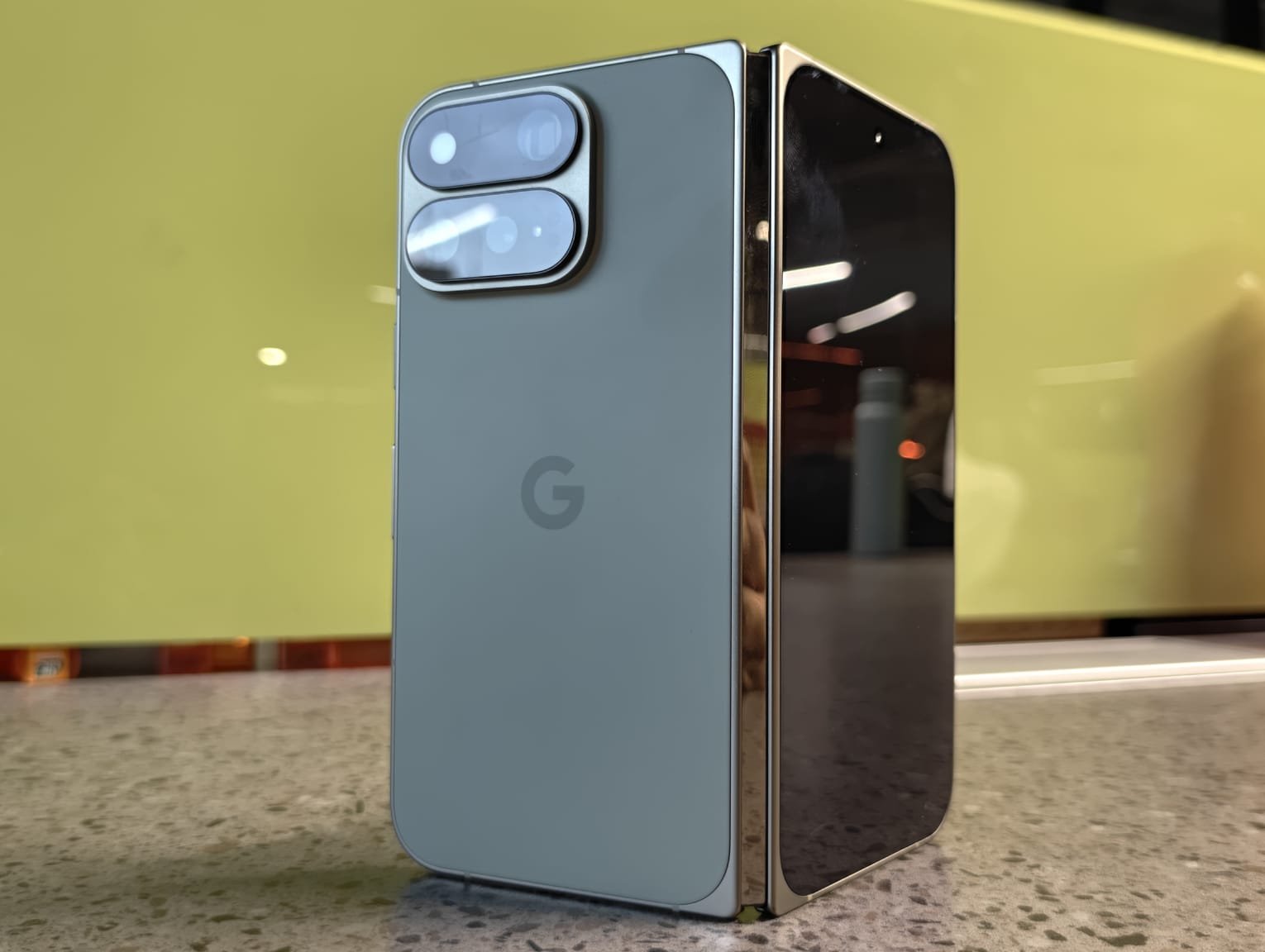
The Google Pixel 11 Pro Fold feels less like a revolutionary hardware leap and more like a polished software-first refinement of the foldable formula. After living with it for a couple of weeks since its launch, that impression has only grown stronger. Google didn’t reinvent the book-style foldable this year; the dimensions, overall look, and core experience sit very close to the Pixel 10 Pro Fold. Instead, the company doubled down on thinner-and-lighter tweaks, durability claims, the new Tensor G6, deeper Gemini Intelligence integration, and incremental camera and display improvements. The question is whether that software-rich approach is reason enough to buy it in a market where Samsung’s Z Fold series and other rivals push harder on pure hardware ambition. Let’s dig into the real-world experience.
Build and Design
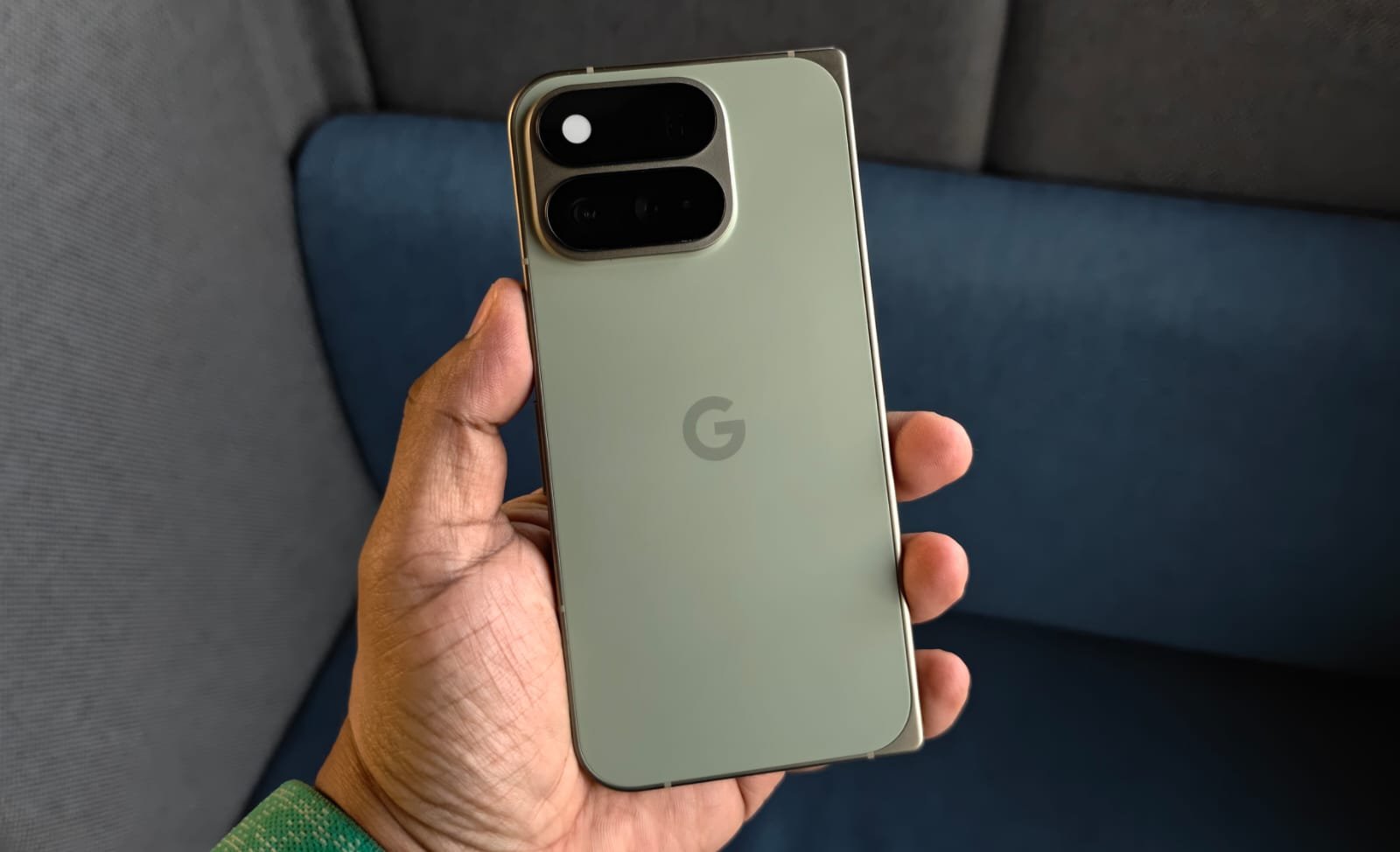
Unboxing the Pixel 11 Pro Fold, the first thing that hits you is familiarity. Folded, it looks almost identical to last year’s model: the same rectangular proportions, the same dual-camera pill arrangement on the back, and the same overall Pixel design language of clean lines and minimal branding. It comes in Obsidian (a deep black) and a new Olive that adds a subtle pop without shouting. In the hand, it feels robust and premium. The aluminium frame has solid heft, the glass-fibre composite back (claimed nearly unbreakable) has a refined matte texture that resists fingerprints better than pure glass, and the Super Actua ceramic cover glass on the outer display adds durability.
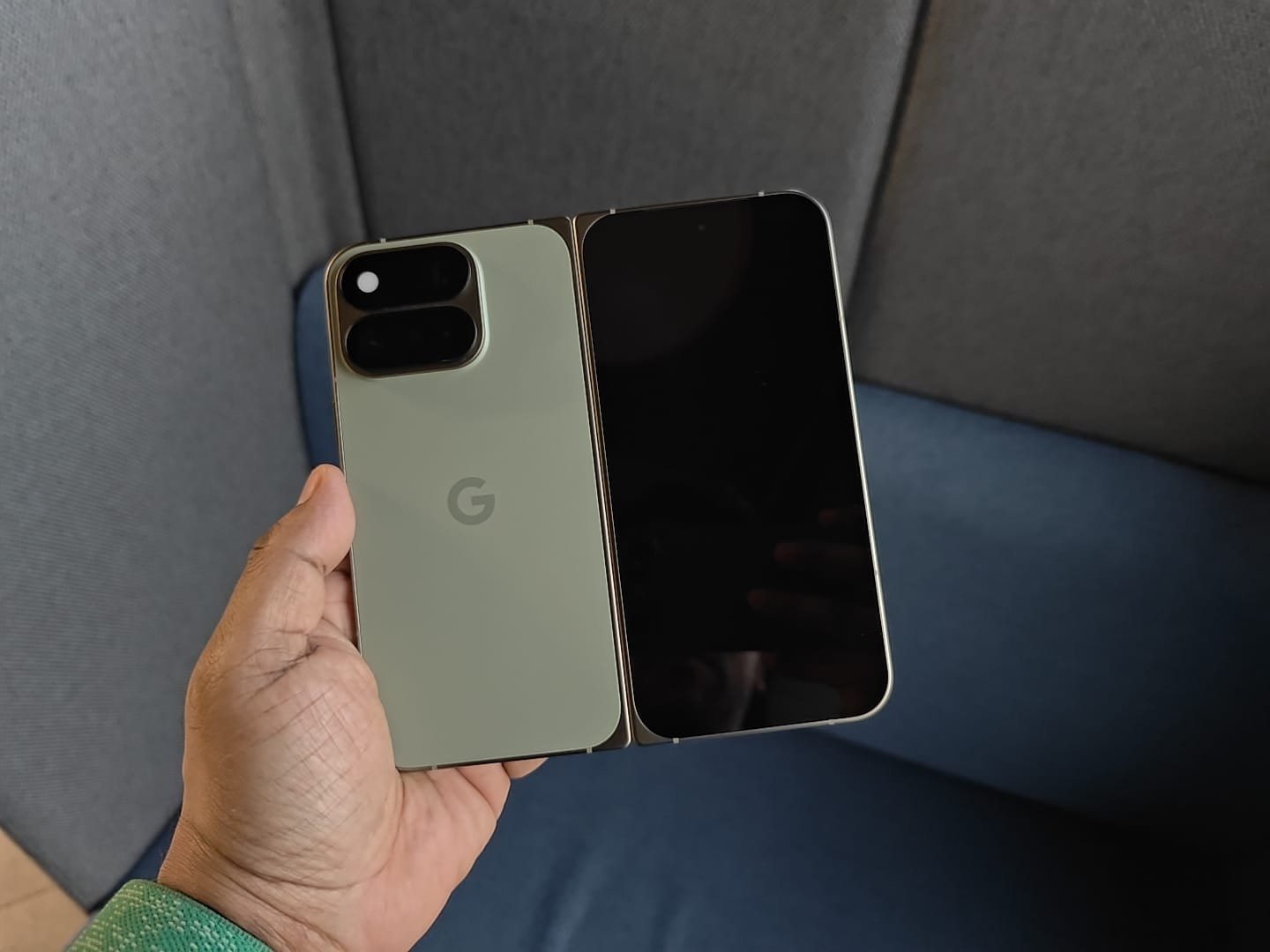
The Pixel 11 Pro Fold is nearly 10% lighter (239 g versus the previous 258 g) and about 1 mm thinner when folded (10.1 mm). Those numbers translate into noticeable everyday gains. While it is still not the lightest or thinnest foldable on the market, Samsung’s latest version is sleeker and no longer feels like a brick in your jeans pocket. The redesigned gearless hinge is smoother and quieter, with a larger bend radius that makes the crease on the inner display less prominent than before. After daily open-and-close cycles, it still feels precise, with no wobble. IP68 rating provides real peace of mind for a foldable; I didn’t hesitate to use it near sinks or in light rain. The aesthetic remains true to Pixel, which is understated, functional, and premium, without the flashy elements of competitors. If you liked the previous Pro Fold’s design, this one refines it without making you relearn the form factor.
Performance
This is where the “software-rich” pitch starts to shine. Powered by the Tensor G6 (with 16 GB of RAM across configurations) and running Android 17 out of the box with the promise of seven years of updates, the Pixel 11 Pro Fold delivers the clean, fluid Pixel experience. Everyday tasks feel instantaneous: app launches, scrolling, switching between the outer and inner displays, and multitasking across split-screen or floating windows. The dual-screen handoff is seamless; open an app on the cover display, unfold, and it expands without lag or awkward rescaling. Gemini Intelligence is more deeply woven in than ever. On-device and cloud-assisted features feel proactive rather than bolted on, with real-time translation that leverages both screens, smarter photo-editing suggestions, agentic tasks that can handle multi-step requests, and contextual help that actually anticipates what you’re trying to do. Google’s full stack advantage is obvious here; the AI doesn’t feel like a third-party overlay.
Gaming performance is solid for a foldable. Demanding titles run at high settings with stable frame rates on both displays. After about 30 minutes of continuous play, the phone does get mildly warm along the hinge and rear, but never uncomfortably hot or throttled in a way that kills the experience. Multitasking remains buttery: I routinely ran a game on one half of the inner screen while checking maps or messaging on the other, with no visible stutter. The combination of the new chip’s efficiency claims and Pixel’s software optimization keeps the experience feeling refined rather than raw-power focused. If you live in the Google ecosystem and value clean software plus practical AI over peak benchmark numbers, this phone rewards that preference daily.
Camera
Pixel phones earn their reputation on computational photography, and the 11 Pro Fold continues that tradition with a clear upgrade on the main sensor. The new 48 MP wide camera (larger 1/1.56-inch sensor, f/1.7) produces the sharp, natural, beautifully processed images that define the brand. Daylight shots are detailed with excellent dynamic range and true-to-life colours. Low-light performance remains a highlight; noise is controlled, highlights are preserved, and the computational magic still makes average scenes look intentional. The ultrawide delivers the expected wide field of view with solid macro capability, and overall colour science stays consistent across the system.
The telephoto, however, was the one clear disappointment in my testing. The 10.8 MP 5x periscope lens (with Super Zoom claims up to 30x) produces results that often look soft or processed in a way that reminds me of older lower-resolution phone cameras rather than modern optical excellence. Detail falls off more than expected, especially in less-than-ideal light, and the output doesn’t match the sharpness or confidence of the main camera. It’s usable for casual zoom, but not the reason you’d choose this phone if long-range photography is a priority. Video performs well in 4K with good stabilization and the typical Pixel processing strengths, but still falls short of the absolute best flagship devices in some scenarios.
Battery
The battery performance tells a more mixed story. With a capacity of 4,806 mAh, I found that during mixed usage like messaging, browsing, photography, some video, and moderate use of Gemini, I typically managed to get through a full day with some battery left to spare by the time I went to bed. Heavy days that mixed gaming, continuous camera use, and lots of inner-display time pushed it closer to needing a top-up in the evening. Efficiency from the Tensor G6 helps, and the brighter 3,600-nit peak displays don’t drain as aggressively as stressed when adaptive refresh and brightness management kick in.
Charging remains modest by 2026 standards with 30 W wired and 25 W Qi2.2 wireless. A full charge takes longer than many rivals, so overnight or opportunistic charging is the practical rhythm. The thinner body clearly forced some battery trade-offs, and while real-world endurance is acceptable for a foldable of this size, it doesn’t feel class-leading. Power users who demand two full days or ultra-fast top-ups may find themselves more conscious of the battery than on bulkier competitors.
The Pixel 11 Pro Fold is a improved version rather than a completely redesigned device, featuring a thinner, lighter, and more durable design, along with an excellent software experience marked by clean Android and deep Gemini Intelligence integration. While the camera performs reliably and daily use is smooth, hardware upgrades are mostly evolutionary, with a familiar design and a telephoto camera that underwhelms. Priced at ₹1,86,999, it competes with other premium foldables but excels in the Google ecosystem, making it ideal for users who value software experience and durability over sheer specs. While it doesn’t reinvent the category, its thoughtful approach may appeal to those who prioritize experience in their foldable choice.
-
Build & Design
-
Performance
-
Camera
-
Battery
1 Comment
Pingback: Matcha, Ube and Hōjicha are taking over Indian drink searches