


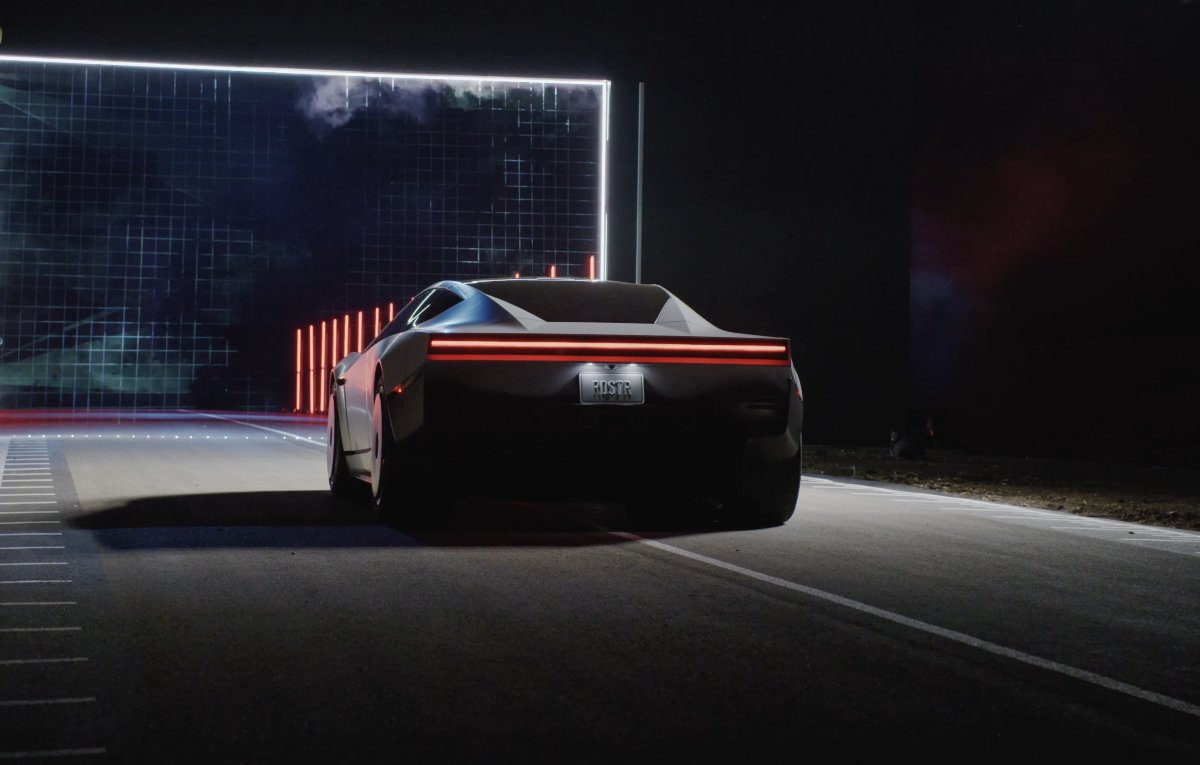
Defying gravity and smoky launches, Tesla’s next-generation Roadster just took things to another level by driving upside down, launching into the air, and flipping mid-air. The car actually did a kickflip. And the technology behind it is pretty clever.
Showcased at a live demonstration in Texas, the electric sports car combines a fan-powered suction system with SpaceX-inspired cold-gas thrusters. Together, these technologies make the Roadster look more like a sci-fi movie car rather than a conventional EV.
How Does the Roadster Drive Upside Down?
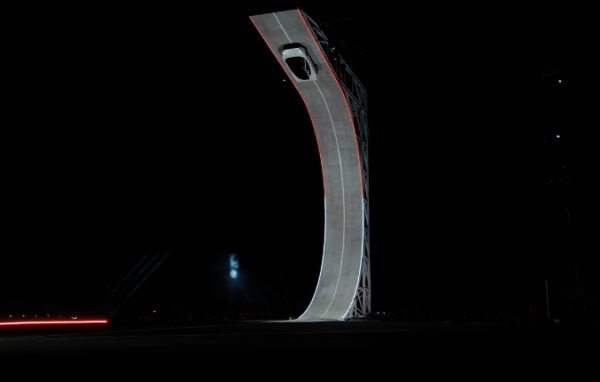 Fans in the rear diffuser pull air out from under the car. This presses the car onto the surface. The same idea powered the Brabham BT46B fan car in 1978. The Roadster adds two modes. At low speeds, the fans pull the car down for traction. At high speeds, the front and rear sections open to increase airflow.
Lars Moravy, Tesla’s vice president of vehicle engineering, claims the system pulls up to 2G. On the ramp, a display showed 4,700 kg of downforce.
Also Read: Tesla’s Cybercab Finally Hits the Road, Federal Audit Follows Soon After
How Does It Perform a Kickflip?
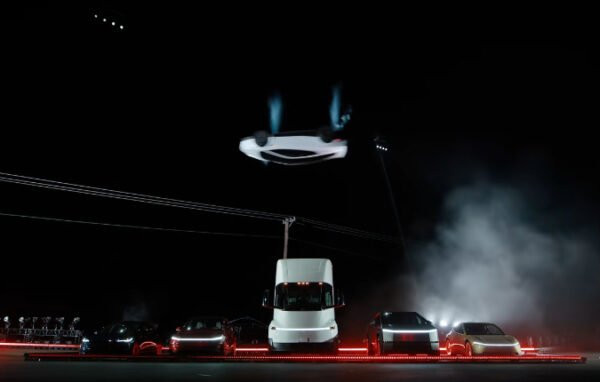 Cold-gas thrusters handle the aerial work. Nothing burns. Compressed air sits in two carbon-fibre pressure vessels. They hold 600 litres, or about 250 kg of air. Tesla says it packed them into every usable space in the car.
When a valve opens, air rushes out through 10 nozzles. Tesla says working in air, instead of a vacuum, required new hardware and controls. SpaceX helped develop them.
How Does It Hit 60 mph in 0.81 Seconds?
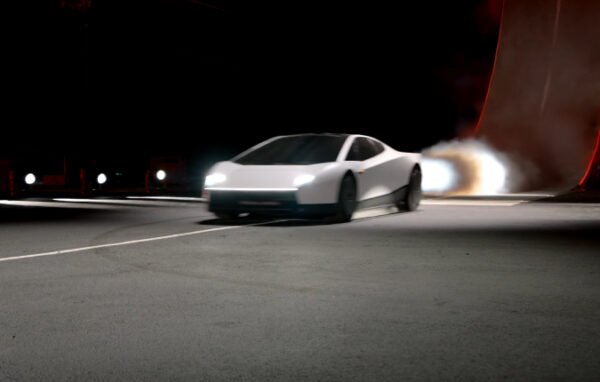 Tyre grip normally caps how fast a car can accelerate. The Roadster skips that limit. Rear thrusters push the car forward directly. Tesla claims this thrust is four to five times what the tyres can handle. In the demo, it claimed 0.81 seconds to 60 mph (97 km/h).
Tesla also claims each expected version of the Roadster gets different hardware and performance targets. The Performance model claims a 0–60 mph time under 1.6 seconds, while the Thrust version brings that figure below 0.9 seconds by adding rear-mounted thrusters. At the top of the range, the Rocket version claims to achieve the same sprint in under 0.59 seconds.
For comparison, the Rimac Nevera reached 1.74 seconds.