

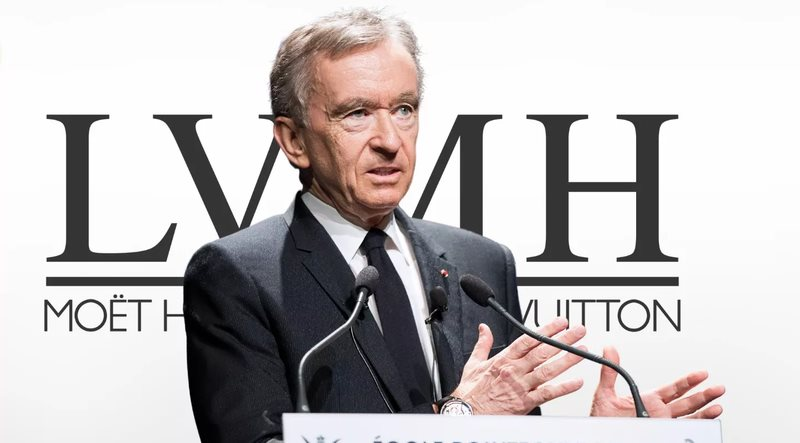
Most entrepreneurs dream of creating the next big brand. Bernard Arnault took a completely different route. Instead of building luxury brands from scratch, he built an empire by acquiring the very best. Today, LVMH is valued at close to $300 billion, owns more than 75 of the world’s most prestigious brands, and has made Arnault one of the richest people on the planet. But the journey didn’t begin with Louis Vuitton or Tiffany & Co. It started with a struggling textile company that almost everyone else had written off.
Back in 1984, Arnault spent around $60 million to acquire the bankrupt French textile conglomerate Boussac Saint-Frères. To most investors, it looked like a terrible deal. The company was drowning in debt and its textile business had little future. Arnault, however, wasn’t interested in textiles. Hidden inside the acquisition was one forgotten jewel, Christian Dior. Once the deal was complete, he sold almost every other part of the business, keeping only Dior. That single decision became the cornerstone of what would eventually become the world’s largest luxury conglomerate.
Rather than creating new luxury labels, Arnault focused on bringing together iconic brands with rich histories. Over the years, LVMH assembled an extraordinary portfolio that spans fashion, watches, jewellery, wines, spirits, beauty, hospitality and retail. Today, its maisons include Louis Vuitton, Christian Dior Couture, Fendi, Celine, Loewe, Givenchy, Kenzo, Marc Jacobs, Emilio Pucci, Berluti, Loro Piana, Rimowa, Patou, Tiffany & Co., Bulgari, TAG Heuer, Hublot, Zenith, Chaumet, Fred, Repossi, Hennessy, Moët & Chandon, Dom Pérignon, Veuve Clicquot, Krug, Ruinart, Château d’Yquem, Château Cheval Blanc, Glenmorangie, Ardbeg, Belvedere Vodka, Sephora, Parfums Christian Dior, Guerlain, Benefit Cosmetics, Fresh, Make Up For Ever, Acqua di Parma, Maison Francis Kurkdjian, Le Bon Marché, DFS Group, Cheval Blanc Hotels, Bulgari Hotels & Resorts and many more. Each acquisition wasn’t simply about adding another logo to the portfolio. It was about preserving heritage while investing in craftsmanship, creativity and long-term brand value. Arnault understood something many business leaders overlook. Luxury isn’t driven by discounts or quarterly sales. It’s built on desirability, exclusivity and timeless storytelling.
Watch the full YouTube Shorts: https://www.youtube.com/shorts/HRmflfPLt5Q
Perhaps Arnault’s greatest strength wasn’t simply identifying great brands. It was identifying great people. He backed creative leaders and gave them the freedom to redefine heritage brands for a new generation. One of the finest examples was Virgil Abloh, whose appointment as Artistic Director of Louis Vuitton Men’s transformed the brand’s cultural relevance. Virgil blurred the lines between luxury, fashion, music and streetwear, attracting an entirely new audience without losing the brand’s prestige.
His influence extended beyond fashion. Mercedes-Benz collaborated with Abloh to reinterpret the iconic G-Class before unveiling Project MAYBACH, one of the boldest concept vehicles in recent years. Following his passing, Mercedes honoured his legacy with the limited Mercedes-Maybach S-Class Virgil Abloh Edition, proving that great creativity can transcend industries. Arnault’s willingness to empower visionary talent allowed LVMH to remain culturally relevant while protecting the heritage that made its brands iconic in the first place.
Bernard Arnault didn’t build the world’s largest luxury empire by chasing trends or trying to reinvent every brand he acquired. He found hidden value where others saw failure, preserved what made each brand special, and surrounded himself with extraordinary talent capable of writing the next chapter. It’s a reminder that the greatest leaders aren’t always the loudest innovators. Sometimes they’re the quiet architects who recognise potential long before everyone else does.
The Indisciplined Playbook
Don’t judge an opportunity by its current condition. Hidden inside struggling businesses, overlooked assets, or forgotten brands could be the one idea capable of changing everything. The smartest entrepreneurs don’t just build businesses. They recognise value before the rest of the world does.
1 Comment
Pingback: Indisciplined Leader: Leonardo Del Vecchio - The Orphan Who Built a €100 Billion Eyewear Empire