


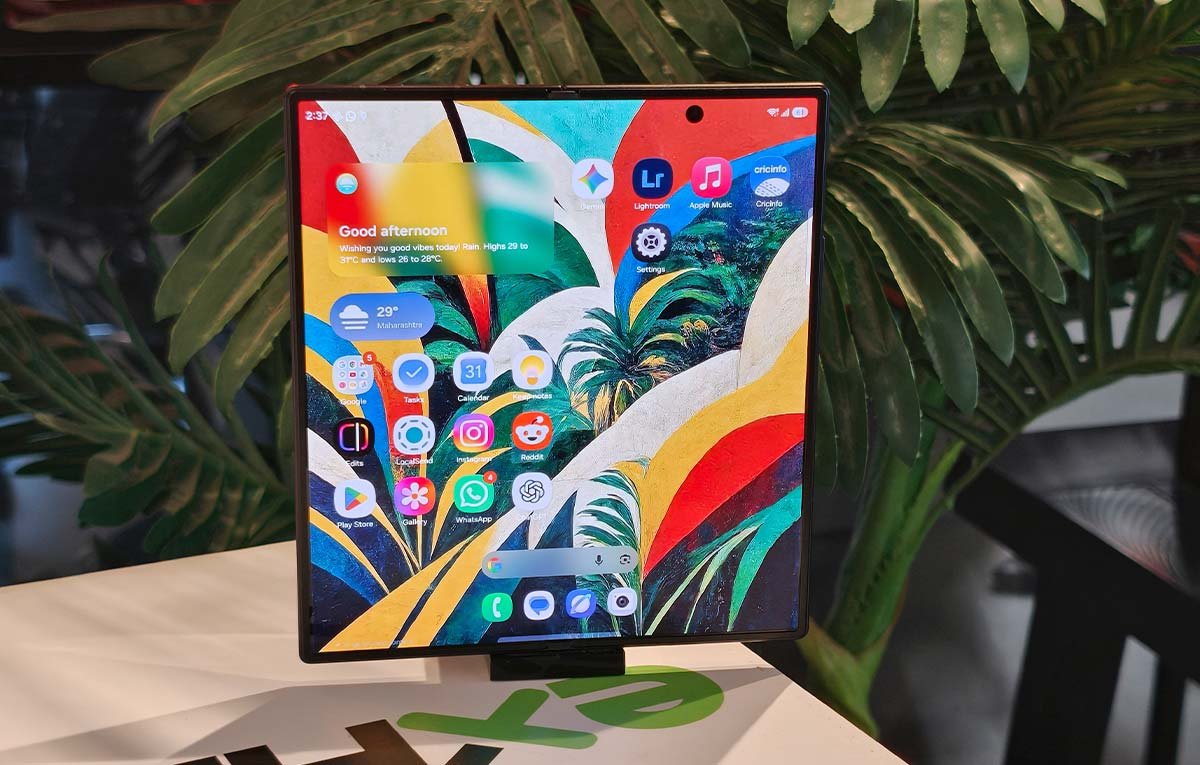
If you have been waiting for the festive season to finally make the jump to a premium smartphone, particularly a foldable, the usual strategy of waiting for the biggest sale of the year may need a rethink. Industry sources indicate that prices of foldable smartphones could rise by up to 14 per cent by the first week of September, making the next couple of weeks an interesting window for buyers who have already decided to upgrade.
The timing is significant because the Indian market has just received a fresh wave of premium foldables. Samsung’s latest Galaxy Z lineup is now on sale, bringing the Galaxy Z Fold8, Galaxy Z Fold8 Ultra and Galaxy Z Flip8 to consumers, while Google has also entered the latest cycle with the Pixel 11 Pro Fold. Samsung’s new foldables start at ₹1,19,999 for the Flip8, ₹1,79,999 for the Fold8 and ₹1,99,999 for the Fold8 Ultra. Google’s Pixel 11 Pro Fold, meanwhile, starts at ₹1,86,999 in India.
That gives buyers an unusually broad choice at the very top end of the smartphone market. It also makes the possibility of a price correction more consequential. A 14 per cent increase on a ₹1.8 lakh smartphone would mean roughly ₹25,000 more, while a similarly priced premium foldable could cross the ₹2 lakh mark much sooner than expected.
Also Read: Samsung Galaxy Z Fold8 Ultra Review: Refinement Wears an Ultra Badge
The pressure behind the expected increase is less about foldables themselves and more about what sits inside them. The smartphone industry is dealing with a sharp increase in memory costs as chipmakers divert capacity towards high-bandwidth memory required for AI data centres. That is putting pressure on the cost of conventional RAM and storage components used in smartphones.
The broader Indian smartphone market is already showing signs of this pressure. The source material points to an 11.1 per cent year-on-year decline in smartphone shipments in Q2 2026, even as the average selling price climbed 14.4 per cent to a record $315. Consumers are buying fewer phones, but the phones they are buying are becoming more expensive.
Foldables are particularly exposed to this equation because they already occupy the premium end of the market. Their manufacturing involves expensive flexible displays, sophisticated hinge mechanisms, flagship processors and generally higher memory configurations. Rising component costs therefore have greater potential to influence their final retail prices.
There is another reason the current moment is worth considering. Foldables are no longer a niche experiment confined to a handful of early adopters. Counterpoint Research expects global foldable shipments to grow 21 per cent in 2026, with premium book-style models continuing to drive the category. Samsung’s latest generation also recorded more than 271,000 pre-orders in India within 72 hours, with 45 per cent coming from Tier 2 cities and beyond.
That momentum makes the potential September price increase particularly relevant. Buyers who have already settled on a foldable may want to consider current pricing rather than assuming that the festive season will automatically produce the better deal. A future discount may still exist, but it would have to be substantial enough to offset a higher underlying price.
This is not a recommendation to buy a phone simply because prices might rise. For anyone who is already planning to purchase a premium foldable, however, waiting until September could carry a different kind of risk. With the Galaxy Z Fold8 series and Pixel 11 Pro Fold already available, the latest generation is here. If industry estimates around the impending price movement hold, locking in today’s price could prove more valuable than waiting for a festive-season sticker discount.
In other words, this year, the smartest smartphone deal may come before the sale begins.