


For the past few years, the tech world has been intrigued by the wonder of conversational AI. We have a chatbot that could write poetry, debug code, and answer obscure trivia. But as the dust settled on the generative AI explosion, a lingering question remained: Okay, it can talk, but what can it actually do?
At Google I/O 2026, CEO Sundar Pichai delivered the answer loud and clear. Standing on the stage at the Shoreline Amphitheatre in Mountain View, California, Pichai declared that we have moved past the phase where AI simply assists us in writing or brainstorming. We have officially entered the “Agentic Gemini Era”, a paradigm where AI agents autonomously navigate complex, multi-step workflows across our digital lives.
Here is a deep dive into the biggest announcements from Google I/O 2026 and how the tech giant plans to transform its AI from a passive chatbot into an active, independent collaborator.
The Brains of the Operation: Gemini 3.5 and Antigravity 2.0
At the heart of Google’s agentic push is the newly announced Gemini 3.5 series of models, headlined by Gemini 3.5 Flash. Google positioned this model in a “league of its own,” highlighting its frontier-level intelligence combined with unprecedented speed. It operates four times faster than comparable frontier models, making it the perfect engine for agents that need to process information and take action in real time.
But an engine is only as good as the vehicle it powers. For developers, that vehicle is Antigravity 2.0, Google’s agent-first development platform. Antigravity allows developers to spin up specialized “subagents” to tackle massive, complex workflows. Imagine an app where one agent handles data retrieval, another manages security, and a third generates the user interface, all working in concert.
Google is also heavily leaning into “vibe coding.” With new integrations in Google AI Studio, developers can now build and launch full-stack Android and web applications directly within the studio using natural language, significantly lowering the barrier to entry for software development. As one executive noted on stage, thanks to these tools, “now anyone can be a builder.”
Omni: The Ultimate Creative Machine
While OpenAI’s Sora grabbed headlines in previous years, Google is making a massive play for the throne of generative media with Gemini Omni. Billed as a multimodal world model, Omni is designed to “create anything from any input.”
Google kicked off Omni’s rollout by focusing heavily on video generation. Gemini Omni Flash is already available for AI Plus, Pro, and Ultra subscribers, integrating directly into the Gemini app, YouTube Shorts, and Google Flow.
The updates to Google Flow, the company’s AI moviemaking tool, are particularly striking. With Omni, creators can change a scene’s setting, add complex visual effects, or introduce entirely new characters and voices using simple text prompts. You can even ask the AI to generate a custom musical score for your video. It is a powerful and controversial step forward for synthetic media. However, Google was quick to highlight its expansion of SynthID and C2PA Content Credentials to ensure AI-generated content remains easily identifiable.
In perhaps the most mind-bending creative demo of the keynote, Google showcased the evolution of Project Genie. By connecting the generative capabilities of Genie with nearly 20 years of Google Street View imagery, users can now generate and explore entirely new, interactive virtual worlds anchored in real-world geography.
Docs Live: The End of the Keyboard?
One of the most practical and immediately impactful announcements was Docs Live. If you have ever felt constrained by having to type out the “perfect prompt” to get an AI to write a document, Docs Live is the antidote.
Powered by leap-forward audio models, Docs Live allows you to interact with Google Workspace using natural, continuous speech. During the keynote, a demonstrator showed how you could pace around a room and simply talk to your computer to prepare for a presentation. The user asked Gemini to pull talking points from an old resume in Google Drive and combine them with event details from Gmail. There was no typing, no strict formatting, just a fluid conversation that resulted in a fully formatted document. It feels less like using software and more like dictating to a highly competent human assistant.
Agentic Commerce: Your AI Personal Shopper
Perhaps the most ambitious vision for the agentic era lies in e-commerce. Google envisions a near future where you don’t just search for products; you deploy an agent to buy them for you.
To facilitate this, Google introduced two new foundational protocols:
- Universal Commerce Protocol (UCP): Designed to do for agentic commerce what HTTP did for the web, providing a common language so agents can seamlessly handle product research, checkout, and shipment tracking.
- Agent Payments Protocol (AP2): A system that allows users to set strict guardrails. You can tell your agent exactly which brands it is allowed to buy from and set hard spending limits before sending it off to hunt for the best deals.
Tying this all together is the Universal Cart, a persistent, intelligent shopping hub that follows you across Google Search, YouTube, the Gemini app, and Gmail. If you see a product in a YouTube video, your agent can add it to your Universal Cart and check out automatically using your AP2 parameters.
The Return of Smart Glasses: Android XR
For years, the tech industry has been trying to make smart glasses happen. At I/O 2026, Google proved it is still fully committed to the vision of face-mounted computing, offering a sneak peek at its upcoming “intelligent eyewear.”
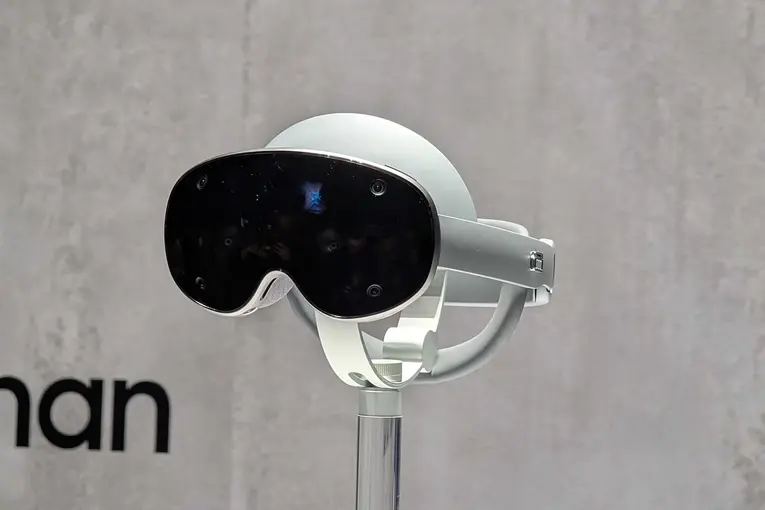
Built on the Android XR platform in partnership with Samsung, the new glasses will arrive later this year with designs from traditional eyewear heavyweights Warby Parker and Gentle Monster.
Google is splitting its approach into two form factors:
- Audio Glasses: Sleek frames that act as a direct line to your Gemini agent. A live demo showed a Google product lead using the glasses to identify her surroundings, play entrance music (Charli XCX, naturally), and seamlessly order a cold brew at a local coffee shop, all without pulling out a phone.
- Display Glasses: A more robust option that beams visual information, directions, and text messages directly into your field of view.
Also, by integrating the proactive intelligence of Gemini agents with the hands-free convenience of smart glasses, Google hopes to crack the code for wearable augmented reality finally.
The Search Revolution Continues
Google Search, the company’s bedrock product, is not being left behind in the agentic shift. AI Overviews has now surpassed a staggering 2.5 billion monthly active users, but Google is pushing further.
The company teased a massive revamp of the traditional search box. Instead of simply predicting your next word, the new search experience is designed for an ongoing, back-and-forth dialogue. Furthermore, Google is rolling out Information Agents this summer.