


Fujifilm has long mastered the art of blending analog charm with modern convenience, and the Instax Mini Evo Cinema Hybrid Instant Camera takes this philosophy to cinematic new heights. In an era dominated by smartphone photography and endless digital scrolls, Fujifilm is bringing back memories, literally by evoking the visual styles of every generation, from the 1930s grainy black-and-white footage to the polished digital aesthetics of the 2020s.
But is this the camera you want to truly experience nostalgia with? Or is it more of a fun, gimmicky novelty that shines in concept but reveals limitations in daily use? Priced around 35000, it positions itself as a premium hybrid device that shoots stills, records short videos, and prints instant Instax Mini photos- all while directing Super 8 movie camera vibes.
Design & Build
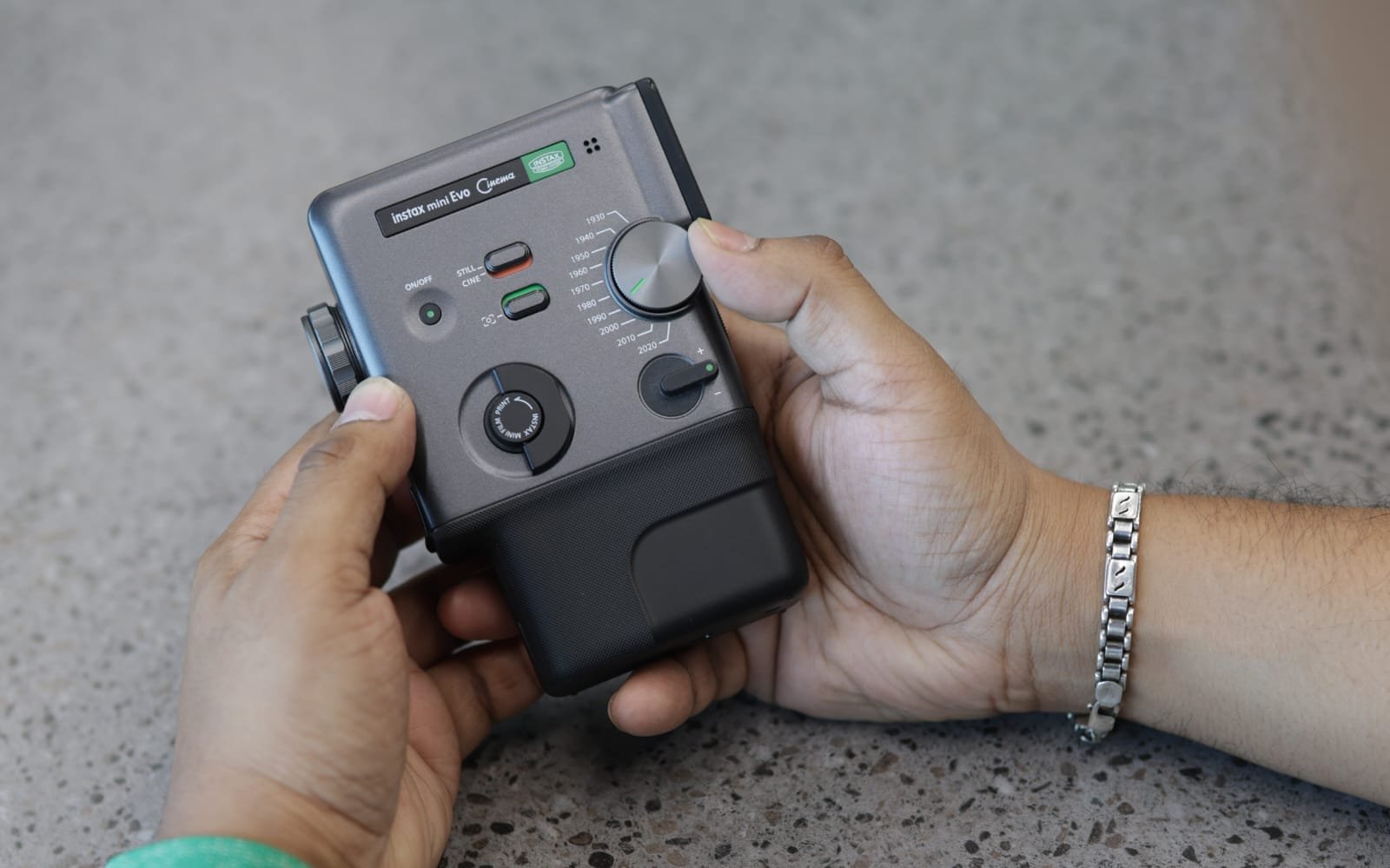
The Fujifilm Instax Mini Evo Cinema boasts a very retro design with a modern finish that immediately screams “vintage cinema gear.” Modelled after classic Super 8 cameras, it features a tall, slim profile (roughly 39 x 133 x 100mm and weighing about 270g) that’s surprisingly portable yet substantial in hand. The body combines sleek black plastics with subtle green accents and tactile, analog-inspired controls, a print lever with a satisfying click, and a prominent shutter button that feels purposeful.
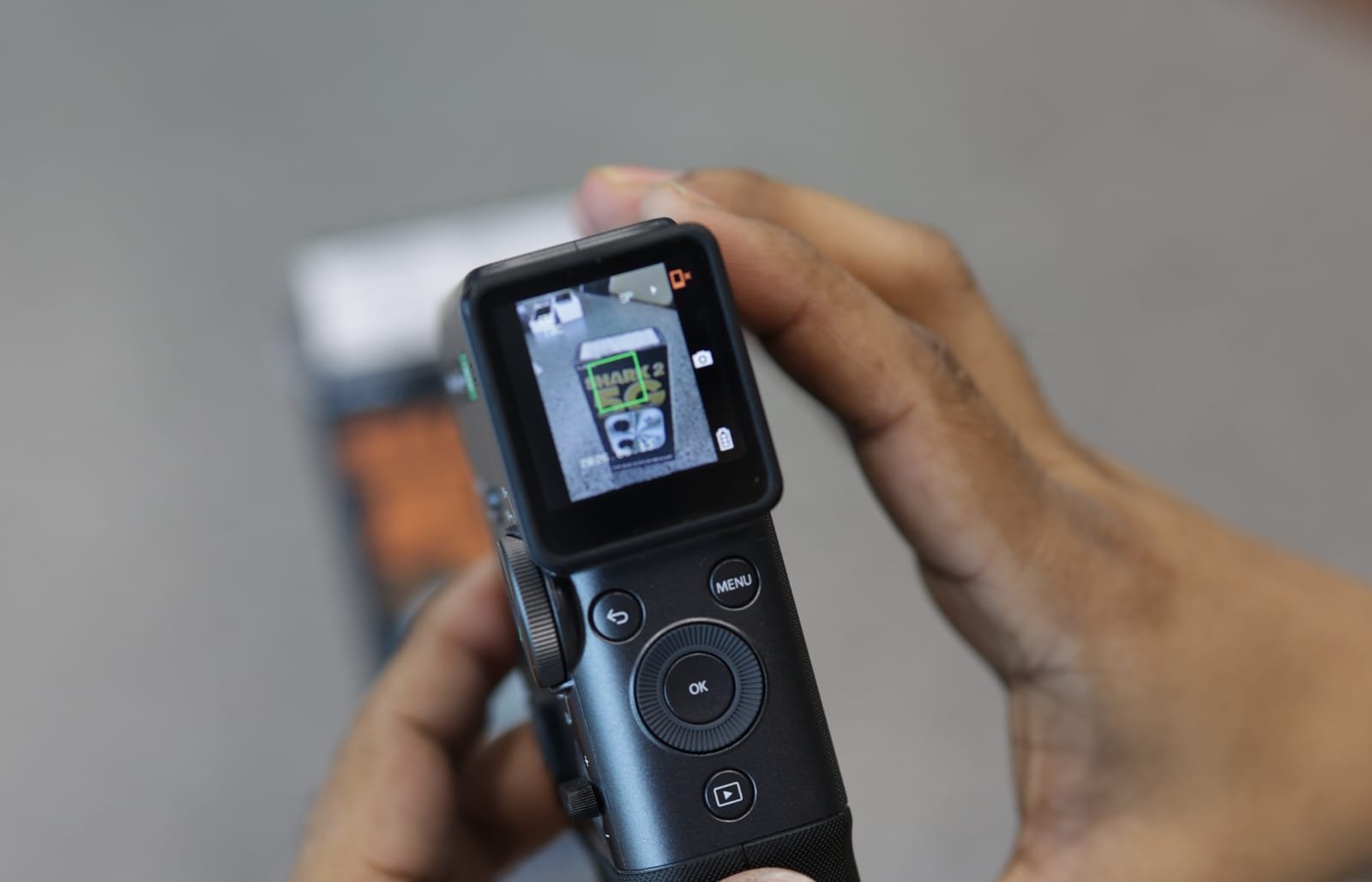
It comes with thoughtful attachments, such as an eyepiece viewfinder, a grip, and a hand strap, enhancing the “handled cinema gear” feel. The build quality is solid for its category, premium enough to turn heads at parties or on trips, though some note that the plastic shell feels a bit less robust than that of higher-end mirrorless bodies. A small 1.54-inch LCD (around 170,000 dots) provides previews, though it’s on the pixelated side, especially in bright light. There’s a built-in selfie mirror, self-timer, USB-C charging, a microSD slot for expanded storage (internal memory holds about 50 shots or 10 clips), and even a microphone/speaker for video audio.
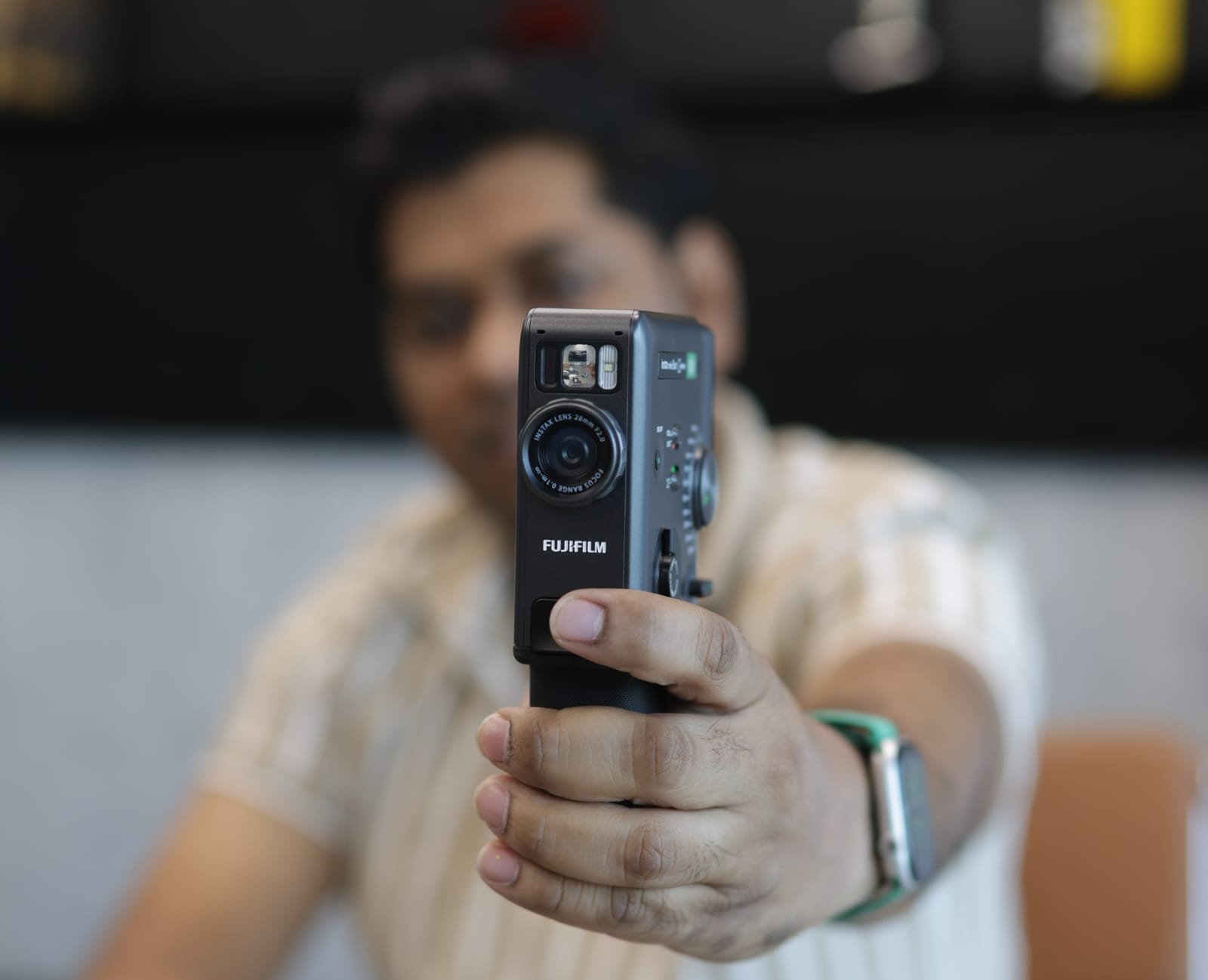
Functionally, it houses a 5MP 1/5-inch CMOS sensor paired with a fixed 28mm equivalent f/2.0 lens (fixed focus from 1m to infinity). It accepts Fujifilm Instax Mini film packs, delivering those iconic credit-card-sized prints that develop in about 90 seconds. The camera supports both Cine and Still modes via a switch, enabling seamless transitions.
One major caveat is that the instant prints are expensive. A pack of 10 Instax Mini films typically costs ₹800 (around 85₹ per print), which adds up quickly if you’re shooting and printing. While the hybrid nature helps mitigate waste (more on that later), film costs remain a significant ongoing expense for enthusiasts.
Features & Performance
The Evo Cinema’s standout appeal lies in its hybrid versatility as a 3-in-1 device: digital stills camera, short-form video camcorder, and Instax printer. The most impressive feature is the no-waste workflow. You shoot digitally first, then review on the LCD or via the companion app. Then decide to print only your favourites. This extends to printing directly from your smartphone’s photo gallery via Bluetooth, turning any image into a tangible Instax keepsake.
The Gen Dial is the star: 10 eras spanning roughly from the 1930s to the 2020s. Each era applies film-like effects such as grain, colour shifts, contrast, vignette, and even audio processing to videos, to emulate the look and “sound” of that decade’s media. A Degree Control Dial lets you fine-tune intensity from subtle tints to full-on retro immersion (10 levels per era).
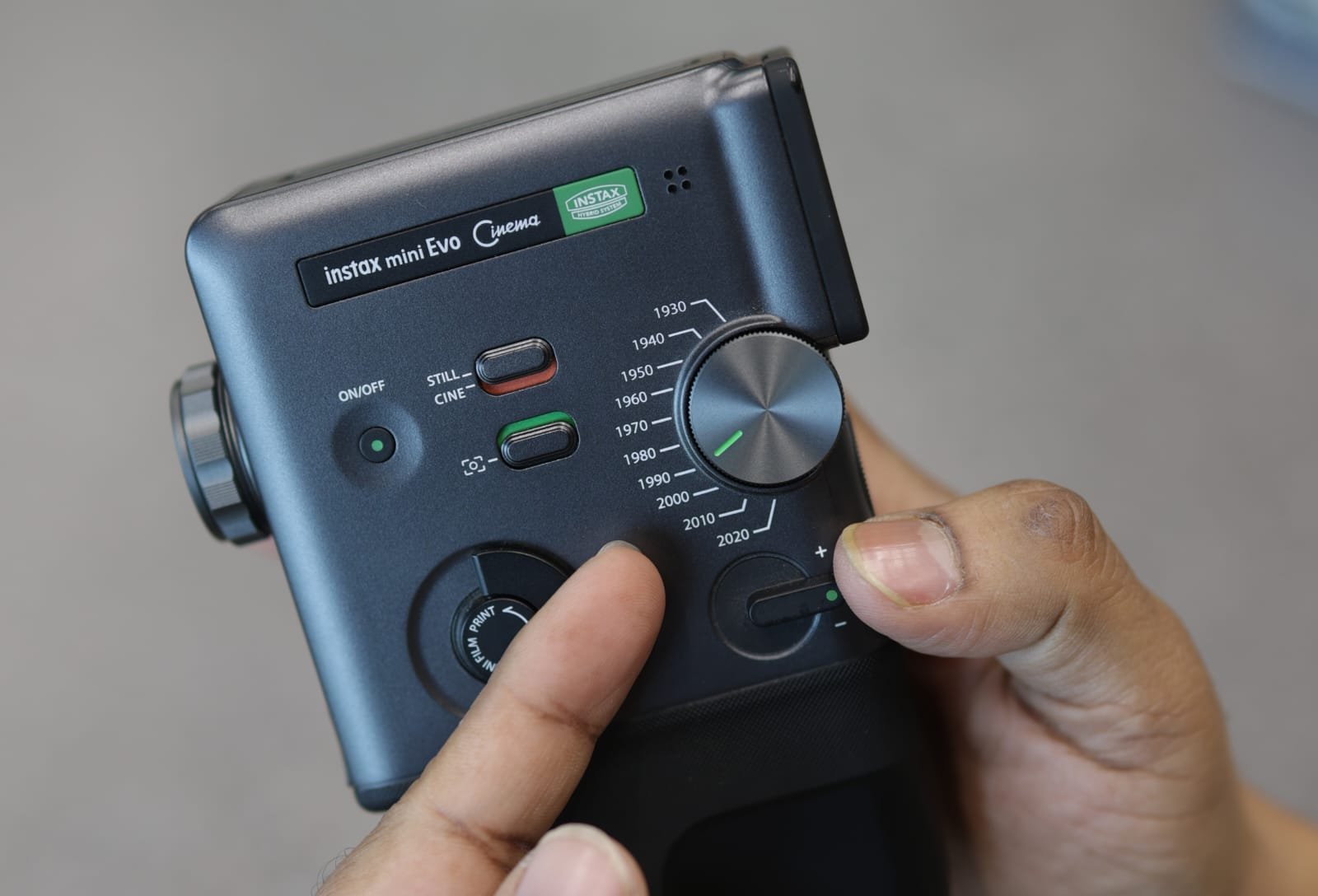
In Cine mode, it records up to 15-second clips (stitchable onboard; app extends to 30 seconds with editing). High-quality mode (2020 era only) bumps resolution to 1080×1440 at 24p, but standard is lower (800×600). Videos get era-specific treatments, complete with built-in continuous LED light and stereo mics. The app allows trimming and reordering clips, adding opening/ending sequences, posters, and QR codes to prints that link to the full video (stored for 24 months).
Stills are 2560×1920 resolution. Image quality is adequate for Instax prints but underwhelming digitally, expect softness, limited dynamic range, and noise in low light, typical of small-sensor hybrids. Prints look vibrant in Rich mode or natural in Natural mode at 318 DPI, though the film format inherently limits sharpness. Zoom is digital and can pixelate quickly.
Performance has mixed reviews. Startup and mode switching can feel sluggish, with some lag when changing eras (the camera “boots” the look). The battery life is a significant weakness; it is short for extended sessions and cannot be removed. The small screen and low-res output disappoint for critical viewing, but the fun factor compensates for casual users.
While i was doing hands-on testing, deleting pictures from the camera can be a bit tedious. Images must be deleted one by one rather than offering a “select all” or bulk option, which slows down cleanup after a busy shoot. The app helps with organization and sharing but requires Bluetooth/Wi-Fi transfers and doesn’t always make saving raw files to your phone seamless.
Other features include exposure compensation (±2 EV), auto ISO (100-1600), flash, self-timer, remote shooting via app, and tripod mount. It shines for social, creative, or family use like parties, travel, vlogging short nostalgic clips; but isn’t a tool for serious videography or high-res photography.
The Fujifilm Instax Mini Evo Cinema is a fun, retro-inspired hybrid instant camera that combines nostalgia with modern convenience, allowing users to create "cinematic" keepsakes from everyday moments, complete with QR-coded video prints for sharing. While it offers a unique experience for creative hobbyists, families, and influencers, its premium price, low resolution, sluggish performance, and short battery life might deter those seeking higher quality. It's perfect for parties and vacations but may not satisfy users prioritizing image quality or value, as cheaper Instax models or smartphones could work. Overall, it’s a delightful addition for those who appreciate tangible memories, provided you're ready to adopt its quirks.
The Good
- Hybrid device: camera, video recorder, printer.
- No-waste printing: select favorites to print.
- Nostalgic film effects.
- Bluetooth printing from smartphones.
The Bad
- High cost for Instax film.
- Limited image quality.
- Slow performance.
- Short battery life.
-
Build & Design
-
Performance
-
Battery