

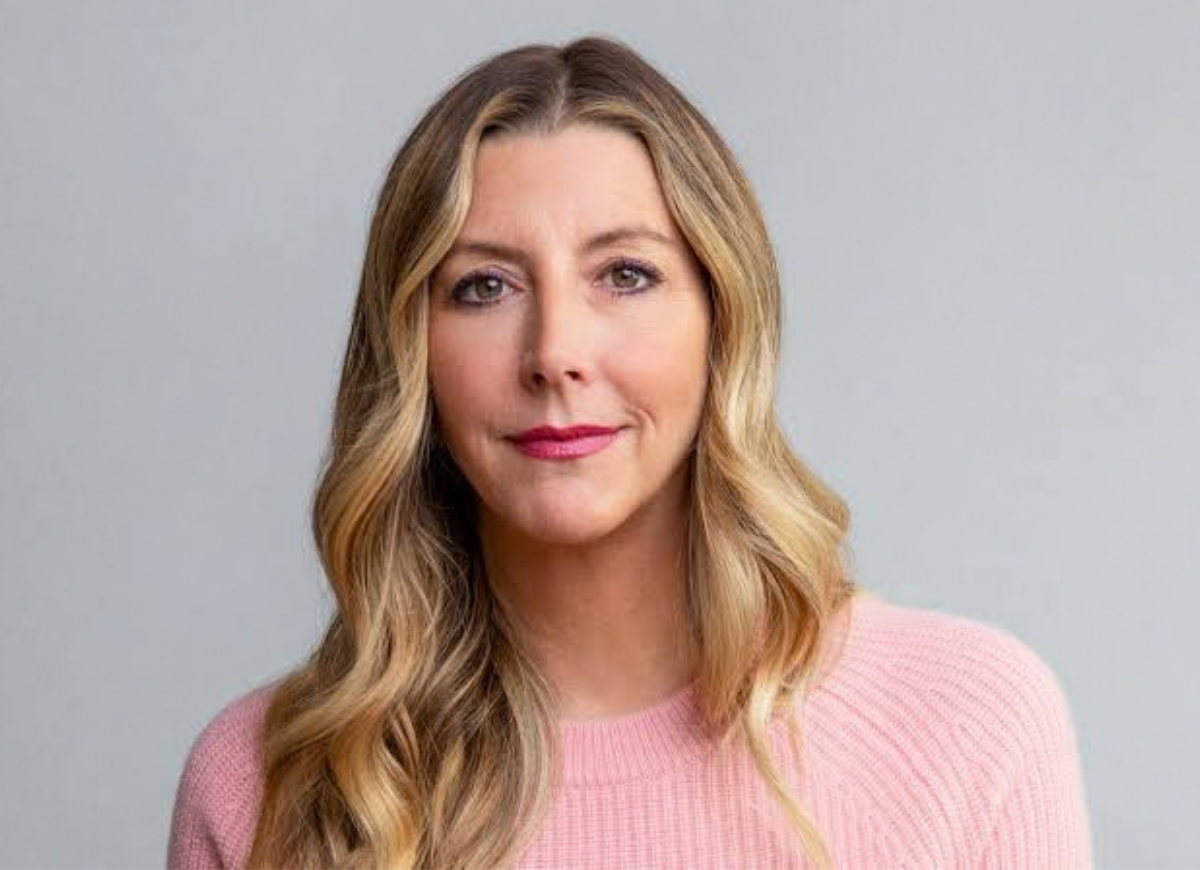
You may not know much about shapewear, but chances are you have heard of Spanx. The brand became one of the world’s best-known names in shapewear, but the story behind it starts with a 27-year-old woman, a pair of white trousers, a pair of scissors and just $5,000. Sara Blakely had no fashion background, no experience in manufacturing and no investors. She was selling fax machines door-to-door. Yet within two decades, that tiny idea would become a company valued at $1.2 billion.
In 1998, Blakely was getting ready to go out and wanted to wear white trousers. The problem was that she didn’t like how conventional underwear looked underneath them. So she took a pair of high-waisted shaping stockings, cut off the feet and created her own solution. It worked. But the more interesting moment came afterwards. Instead of simply moving on, she asked herself a question that would eventually become the foundation of Spanx: Why doesn’t this already exist?
That question turned into two years of work. Blakely spent 1998 to 2000 developing prototypes, learning about fabrics and manufacturing, researching patents and trying to figure out how to turn her improvised solution into an actual product. She put her entire $5,000 savings into the business. She didn’t raise venture capital, hire a large team or walk into the fashion industry with years of experience behind her. In fact, she continued selling fax machines while developing Spanx.
And that lack of experience became part of the advantage.Blakely wasn’t the first person to think about shaping the body through clothing. Girdles, control garments and shaping hosiery had existed for decades. The opportunity was not in inventing shapewear itself. It was in looking at an established category and asking why the product had to be uncomfortable, complicated or hidden behind old-fashioned positioning.
Also read : Bret Taylor: The Man Who Refused to Stop at Success
Spanx launched in 2000, and Blakely became its first salesperson. She personally pitched retailers and demonstrated the product, trying to convince buyers that consumers would understand and want something they hadn’t necessarily been searching for by name. Neiman Marcus became one of the early major retailers to carry Spanx.
Then came the kind of exposure that can change a young brand overnight. In 2000, Spanx was featured on The Oprah Winfrey Show after being selected as one of Oprah’s favourite products. For a company that did not have the advertising budgets of established apparel brands, the exposure was enormous. Suddenly, consumers who had never heard of Spanx were being introduced to the product by one of the most influential television personalities in America.
But Oprah wasn’t the entire story.The bigger question was why established competitors couldn’t simply catch up. After all, the basic concept was not protected by some magical force field. Other companies could manufacture shapewear. Other brands could introduce products designed to smooth and shape the body. The real advantage was everything Blakely built around the product.
She focused heavily on product design, fit, branding, packaging, retail presentation and customer education. She demonstrated the products herself and worked closely with retailers. She also built the brand through publicity and word of mouth rather than simply trying to outspend larger competitors on advertising.In other words, the product could be copied, but the entire playbook was much harder to copy.
Then Blakely made another decision that went against the conventional startup model. She didn’t take outside investment. Spanx grew without venture capital for roughly two decades, allowing Blakely to retain control and make decisions without investors pushing for a particular growth rate or exit.By 2012, Blakely had become a billionaire and was recognised by Forbes as the world’s youngest self-made female billionaire at the time.
Then came the billion-dollar moment.In 2021, Blackstone announced that it had acquired a majority stake in Spanx at a valuation of $1.2 billion. Blakely retained a significant stake in the company and became Executive Chairwoman.
The numbers tell a remarkable story.
$5,000 in 1998.a
Spanx launched in 2000.
Billionaire by 2012.
$1.2 billion valuation in 2021.
But the more interesting story isn’t the money.
It is the fact that Blakely didn’t enter the market with an obvious advantage. She didn’t have industry experience. She didn’t have investors. She didn’t have a huge marketing machine. She entered an established category and questioned the assumptions everyone else had accepted.That is what makes Sara Blakely an Indisciplined Leader.
The Indisciplined Playbook
Start with a problem you actually understand. Blakely wasn’t conducting market research looking for a billion-dollar category. She experienced the problem herself and became obsessed with finding a better solution.
Don’t let expertise become a blind spot. Because Blakely wasn’t from fashion, she wasn’t conditioned to accept the industry’s existing assumptions. Sometimes an outsider sees opportunities that insiders have stopped noticing.
A product isn’t the whole business. Competitors could make shapewear, but Spanx had already built a recognisable brand, strong retail relationships, customer loyalty and word of mouth around it.
You don’t have to raise money just because you can. Blakely’s decision to remain self-funded for roughly two decades allowed her to retain control and build the company on her own terms.
Question what everyone else has accepted. The biggest breakthrough wasn’t cutting the feet off a pair of stockings. It was asking why a better solution didn’t already exist.
Key Takeaway: The biggest opportunities aren’t always hidden inside brand-new ideas. Sometimes they’re sitting inside products and industries that everyone thinks are already figured out. The entrepreneur who asks the uncomfortable question, challenges the accepted solution and then executes relentlessly can create an entirely new standard.
Sara Blakely didn’t invent shapewear.She made people look at it differently.And that may be the most indisciplined thing an entrepreneur can do: walk into an established category and refuse to believe it can’t be better.