


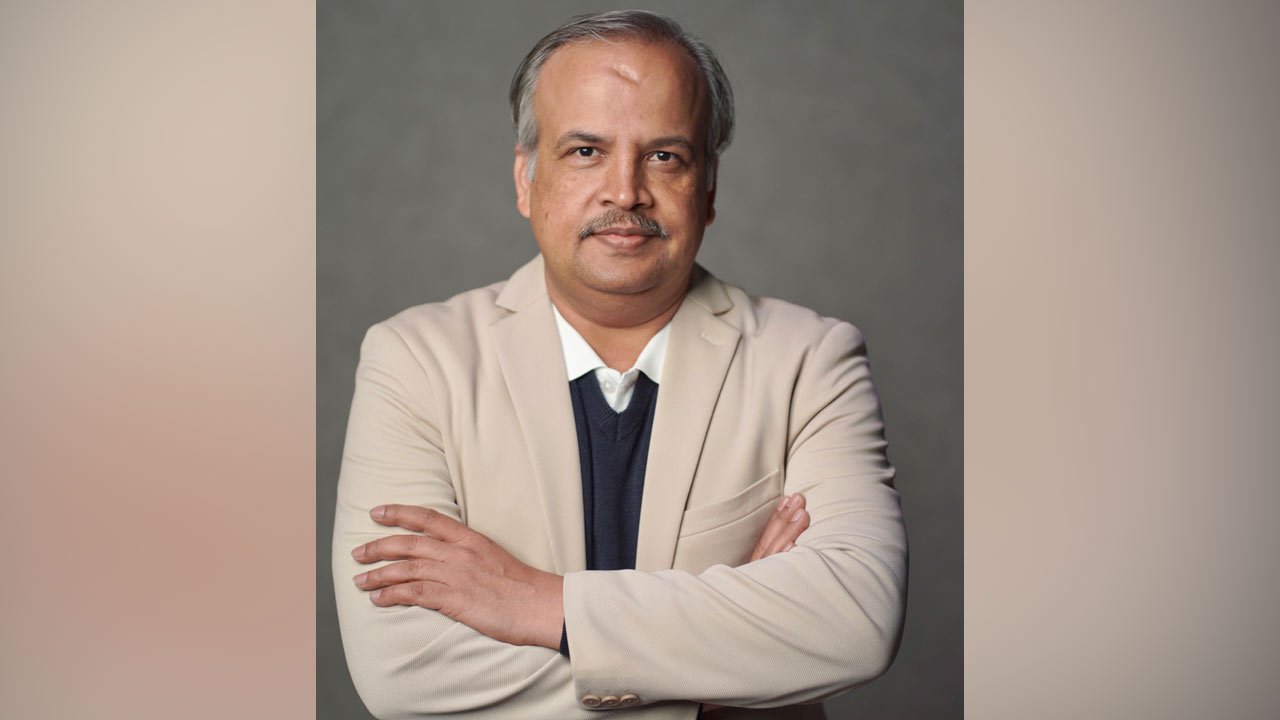
With the Sierra EV, Tata Motors is attempting to redefine what that icon stands for in the electric era. While the original Sierra earned cult status for its distinctive glasshouse design and adventurous spirit, the new version arrives with a far more ambitious brief: to blend nostalgia with cutting-edge EV technology, connected experiences and everyday usability. Built on Tata’s latest EV architecture, the Sierra EV promises more than just impressive range and performance; it represents the company’s vision of the software-defined SUV, where capability, intelligence and comfort coexist seamlessly. Ahead of its launch, we sat down with Anand Kulkarni, Chief Products Officer, Head of HV Programs and Customer Service, Tata Passenger Electric Mobility Ltd., to understand the philosophy behind bringing the Sierra back to life.
EX: What was the brief for the Sierra EV? What were the non-negotiable attributes, and what did the team want to deliver for today’s EV buyer?
AK: There were two equally important aspects. First, we were bringing back a legend; an icon that people associated with freedom, flexibility and endless possibilities. That emotional connection had to be preserved. Second, we had to combine that legacy with what customers expect from a modern electric vehicle.
The result is a vehicle that blends premiumness, performance, capability, refinement, comfort and advanced technology while retaining the Sierra’s sense of versatility and possibility.
Also Read: Faster, Safer, Smarter: Anand Kulkarni on the Evolution of the Tata Tiago EV
There were three key pillars we didn’t want to compromise on. The first was performance and capability, enabling people to explore more and travel with confidence. The second was genuine go-anywhere ability through excellent traction, dynamics, power and control. The third was creating a connected, feature-rich and comfortable cabin that functions as a “living space on the move.” Those pillars shaped every engineering decision throughout development.
EX: The original Sierra was known for its glasshouse design and openness. Beyond styling, how have you translated that philosophy into the modern cabin?
AK: The glasshouse was certainly iconic, but the original Sierra was equally known for its lifestyle appeal. It represented an outdoorsy spirit and encouraged people to travel, explore and enjoy the journey.
Today’s Sierra builds on that philosophy with technologies that simply weren’t possible earlier. We now offer Quad Wheel Drive, delivering significantly greater capability and performance. Combined with terrain modes, traction management systems and intelligent torque distribution, it enables the car to tackle a much wider variety of driving conditions.
Inside, we’ve reimagined the cabin as a living space. There are three displays; a driver’s display, the central infotainment screen and a dedicated passenger display. The passenger screen isn’t just for entertainment; it also supports AirConsole gaming, allowing occupants to use their smartphones as controllers and play games during journeys.
Technology also works intelligently in the background. Take ADAS, for example. Modern cars generate enormous amounts of data, but showing everything to the driver creates cognitive overload. Our philosophy is to surface only relevant information when it’s actually needed, allowing technology to assist rather than constantly intervene.
EX: With the dual-motor Quad Wheel Drive system, is the Sierra EV intended to be a serious off-roader or more of a performance-focused SUV?
AK: We deliberately call it Quad Wheel Drive instead of a traditional 4×4 because this isn’t intended to be a hardcore off-road vehicle.
The objective is to provide additional traction, confidence and capability in situations where a conventional two-wheel-drive vehicle may struggle—whether that’s steep gradients, slippery surfaces or challenging weather conditions. It’s about expanding the vehicle’s capability rather than creating an extreme off-roader.
EX: Buyers today look beyond range numbers. During development, what were the biggest priorities—technology, comfort, performance or practicality?
AK: All of them.
We never approached development by choosing one attribute over another. Instead, it was always “this and that” rather than “this or that.”
Charging, for example, is one of the most frequent interactions customers have with an EV. That’s why we’ve introduced a circular illuminated charging interface. It uses different colours to communicate charging status; white when ready, blue while charging, green when charging is complete and red if charging is interrupted. It’s a small feature, but it immediately communicates information without requiring the user to check an app or screen.
We’ve also enabled 1.6C fast charging, allowing the battery to go from 20 to 80 percent in around 25 minutes. The Sierra EV offers an MIDC-certified range of 665km and over 500km on our C75 cycle. During a typical 25-minute tea or rest stop, customers can recover roughly 300km of usable range. That’s the kind of real-world convenience that matters most.
EX: If you’re trying to deliver everything rather than compromising, how do you keep pricing competitive?
AK: A large part of that comes from our technology strategy.
Rather than developing entirely new systems for every vehicle, we’ve built a common technology stack. The Sierra EV shares numerous components with the Harrier EV, which already has high domestic value addition.
That localisation gives us greater control over both the supply chain and the value chain. As we continue building on the same platform, we benefit from economies of scale while keeping costs under control. Ultimately, our objective is to democratise EVs and make them accessible to a larger audience.
EX: As EVs become increasingly software-defined, are there any features customers may not immediately appreciate but will grow to value over time?
AK: I think AirConsole gaming is one example because it’s a new way of interacting with the vehicle.
Another is DrivePay, which debuted on the Harrier EV and continues to evolve. Since it’s deeply integrated into the vehicle architecture, it can recognise your route and proactively alert you if your FASTag balance is running low.
For example, if you’re driving from Pune to Mumbai, the system knows how many toll plazas you’ll encounter. If your balance isn’t sufficient, it can suggest topping it up by a specified amount. You simply approve it through voice, and the transaction is completed because the payment ecosystem is already connected.
Features like these eliminate friction. There’s no need to switch between apps or manually check balances. Initially, people may think they’re unnecessary, but over time these seamless experiences become things you naturally depend on. That’s how technology builds trust with customers.
1 Comment
Pingback: Tata Motors Sierra EV Gets In-built 5G Connectivity