


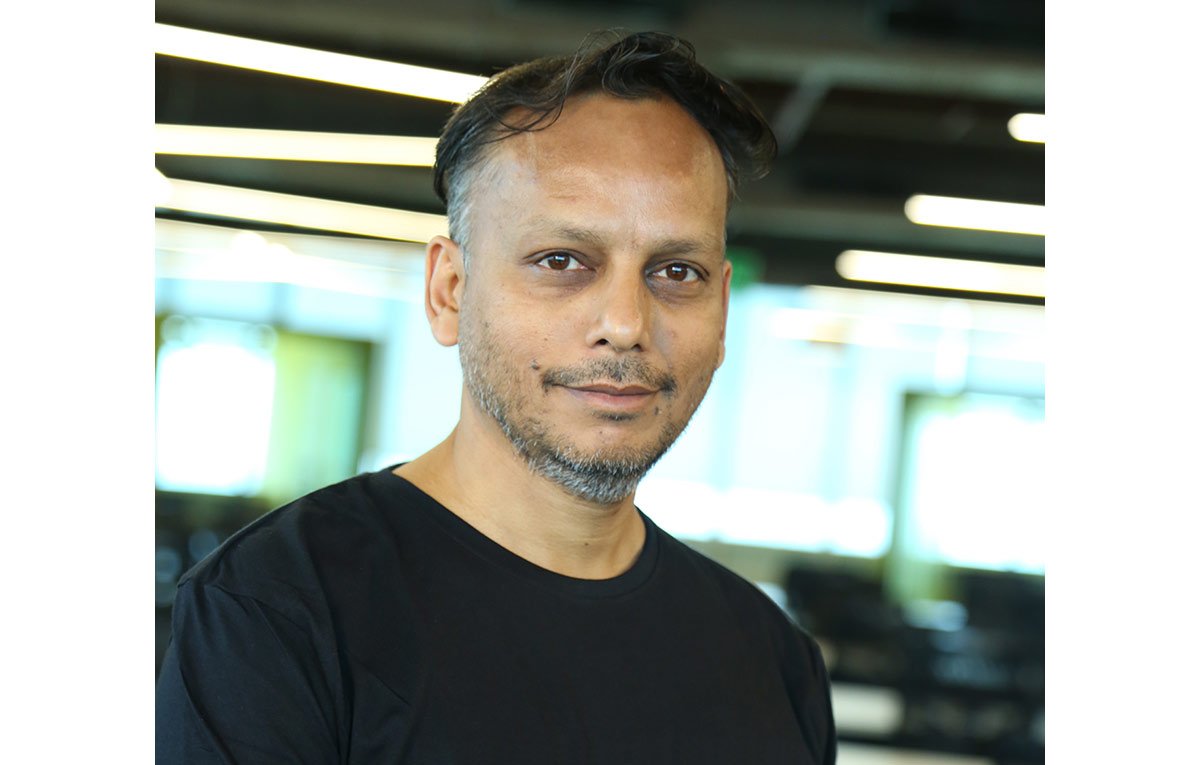
Short-form video has evolved far beyond entertainment, becoming a powerful medium for regional expression, community building and digital entrepreneurship. As India’s creator economy expands beyond the metros, platforms like ShareChat and Moj are playing a pivotal role in shaping how millions of users discover, consume and create content in their own languages. We caught up with Nitin Jain, Chief Technology Officer at ShareChat, to discuss the rise of vernacular communities, the explosive growth of microdramas, AI’s role in empowering creators, and what the next chapter of India’s digital content ecosystem looks like.
EX: ShareChat and Moj have always had a strong regional focus. How has content consumption in Tier-2 and Tier-3 India evolved over the last few years?
NJ: The evolution has been incredibly significant. A few years ago, users from Tier-2 and Tier-3 India primarily came online for entertainment and social connections. Today, they are active participants in the digital economy, consuming and creating content across a much broader set of interests.
We’ve seen users become far more intentional in their consumption patterns. Along with entertainment, there is an increasing demand for content around learning, entrepreneurship, finance, local news, and lifestyle. More importantly, audiences are increasingly seeking content that reflects their own language, culture and lived experiences.
What has also changed is the way content is discovered. Users are spending more time on feed-based, personalised experiences where content surfaces organically based on their interests rather than active search. This has created tremendous opportunities for regional creators and communities that may have previously been underserved on global platforms.
For other players and us with state-of-the-art recommendation systems, this reinforces a long-held belief: India’s next wave of internet growth will be driven by regional communities and creators who deeply understand user interests, cultural and linguistic context and aspirations.
EX: Which Indian language or regional communities are growing the fastest today?
NJ: We’re seeing particularly strong momentum across South Indian languages, with Tamil, Telugu, Malayalam and Kannada emerging as some of our fastest-growing language communities.
What’s exciting is not just the growth in consumption, but also the rise of highly engaged creator ecosystems around these languages. We’re seeing communities form around regional entertainment, local culture, hyperlocal conversations and shared identities that are deeply rooted in their linguistic and cultural context.
This trend reinforces a belief we’ve had from the beginning that India’s digital future will be increasingly vernacular and community-driven. As internet adoption deepens beyond the metros, users are actively seeking content that feels personal, culturally relevant and reflective of their everyday experiences.
Building for this diversity has always been central to our strategy. We’ve built our products specifically for Indian languages, regional communities and local creators, with a strong focus on enabling deeper engagement beyond the metros. Today, ShareChat and Moj together reach around 200 million monthly active users, while QuickTV has over 3 million paying subscribers. As internet adoption deepens across smaller towns and cities, we believe regional content and creator-led communities will remain one of the biggest drivers of India’s next phase of digital growth.
EX: What content trends are you seeing that most people haven’t noticed yet?
NJ: One trend that is still underappreciated is the rise of hyperlocal storytelling. Audiences increasingly want stories that feel close to home—whether it’s content around local culture, community issues, regional humour or everyday experiences that reflect their own realities.
Another major trend is the emergence of microdramas as a mainstream content category. We believe this format is still in its early stages, but it is already demonstrating enormous potential. Across our platforms, users are consuming more than 750 million microdrama episodes every day.
The success of microdramas is rooted in changing consumption behaviours, especially in Tier-2 and Tier-3 India. Nearly 75% of microdrama consumption on our platforms comes from these markets, where users are increasingly mobile-first and prefer content that is easy to consume in short bursts throughout the day.
Unlike traditional OTT, which requires significant time commitment and active content selection, microdramas are discovered organically through the feed. Users encounter stories while browsing, and compelling narratives encourage them to continue watching episode after episode. This dramatically reduces discovery friction and creates a highly engaging consumption experience.
We’re also seeing growing adoption of this format from non-traditional categories such as finance, insurance and healthcare. For these sectors, storytelling offers a powerful way to simplify complex subjects, build trust and create deeper emotional resonance with audiences.
EX: What’s the next big AI feature you believe creators will actually use every day?
NJ: The next wave of AI adoption will come from tools that make creators more productive rather than replace creativity itself.
We believe creators will increasingly rely on AI for ideation, editing, multilingual dubbing, dialect-sensitive translation and content optimisation. In a country as linguistically diverse as India, these capabilities can dramatically expand a creator’s reach and help them connect with audiences beyond their primary language.
We’re also actively exploring generative AI for content creation and creator support. AI has the potential to lower production barriers, make storytelling more accessible and enable entirely new forms of content creation.
The AI features that will become everyday tools are the ones that save creators time, simplify workflows and help them focus on what they do best, telling authentic stories and building communities.
EX: How do you decide which features to build and which trends to ignore?
NJ: Our approach has always been deeply rooted in data, experimentation and user behaviour.
At ShareChat and Moj, we operate at a significant scale, with millions of users and billions of content interactions. That gives us a unique understanding of how people discover, consume and engage with content, enabling us to help unlock incremental value for our customers.
Whenever we evaluate a new feature or trend, we ask ourselves a few fundamental questions. Does it solve a real user or creator problem? Does it improve accessibility, discovery or engagement? And can it create sustainable value over the long term?
We strongly believe in experimenting quickly and learning quickly. But we’re equally disciplined about focusing our efforts on trends that align with our long-term vision of building for India’s diverse, multilingual internet. Ultimately, the features that succeed are the ones that make content creation and discovery more inclusive, more personalised, and more meaningful for our users and creators.
EX: If you could leave India’s creators with one piece of advice as AI reshapes content creation, what would it be?
NJ: AI will democratize content creation in ways we’ve never seen before, but authenticity will remain the biggest differentiator.
Technology can help creators ideate faster, edit smarter, localise content and reach new audiences. But it cannot replicate lived experiences, cultural understanding or genuine storytelling. For regional creators, this moment represents an enormous opportunity. Audiences are increasingly looking for content that reflects their identities, languages and communities. The creators who will thrive are the ones who use AI as an enabler while staying deeply rooted in their unique voice and perspective.
As AI lowers the barriers to creation, the value of originality and authenticity will only become more important.