

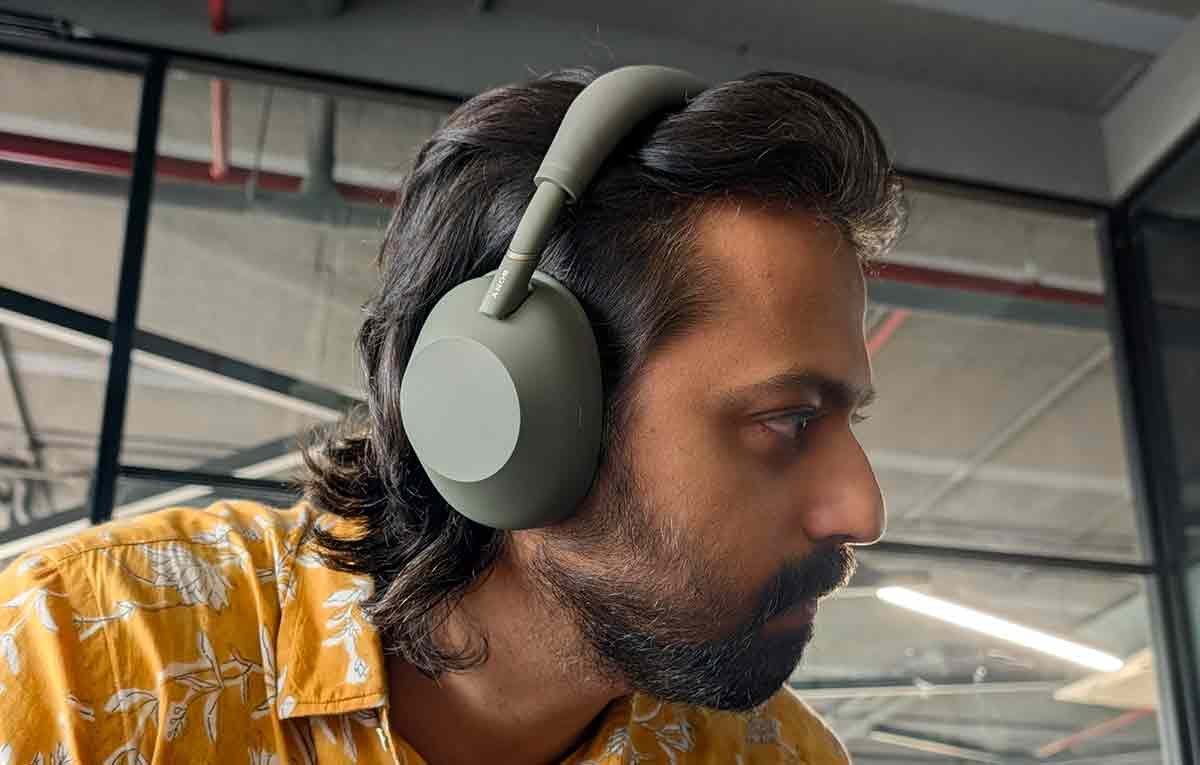
I’m a bit embarrassed to admit this, but until now, I had never actually used a pair of Sony WH-series headphones. The reason is fairly simple: I’ve always been perfectly happy with my AirPods Pro 2, while for studio monitoring and serious listening at home, I’ve relied on my wired Audio-Technica ATH-M50X. I review a lot of headphones and audio gear in between, but somehow a pair of Sony’s WH-series headphones had never found its way onto my desk.
Until now. So, naturally, I was quite excited to finally see what all the fuss was about. And, thankfully, the WH-1000XM6 didn’t disappoint. In fact, after spending a good amount of time with them, particularly on flights, I’ve started to understand why this particular line of headphones has built such a reputation.
Design

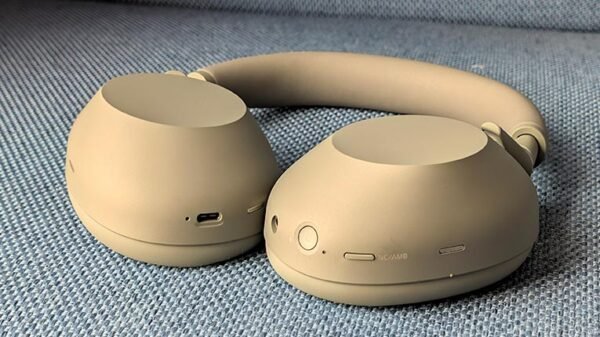
The WH-1000XM6 don’t exactly scream for attention. Sony has kept the design understated, which I actually like. They look like serious headphones without trying too hard to look expensive. But the bigger story here is how they feel when you actually wear them.
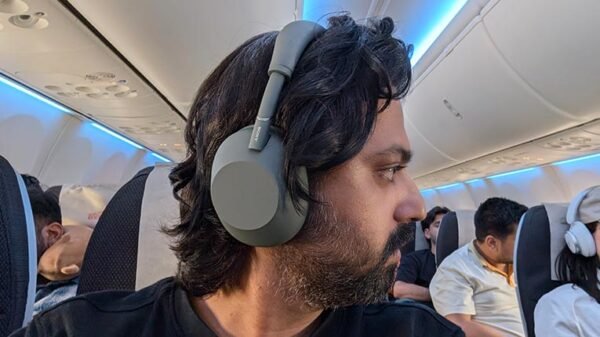
I’ve spent most of my time with the XM6 on flights, which is probably the harshest possible test for a pair of over-ear headphones. You’re stuck wearing them for hours, often while trying to sleep, and any little pressure point eventually becomes very obvious. Thankfully, I never really had that problem with the XM6.
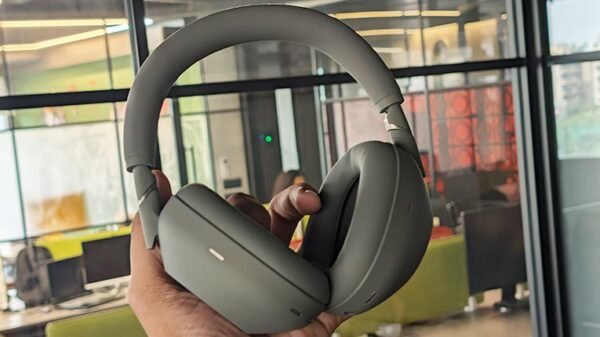
Sony has made some meaningful changes to the design compared to the XM5. The headband has been redesigned with a wider shape and revised cushioning, specifically addressing complaints about pressure on the top of the head during long listening sessions. The earcups themselves are also mounted on a new folding mechanism, which means the XM6 can finally fold properly again rather than having the rather awkward folding arrangement of the XM5.

The earcups use soft memory-foam padding that creates a good seal around the ears, while the overall clamping force is gentle enough that I could wear them for an entire flight without constantly thinking about taking them off. That said, comfort is subjective, and a colleague of mine has found the relatively shallow ear pads less comfortable over very long sessions. For me, though, the fit worked brilliantly.
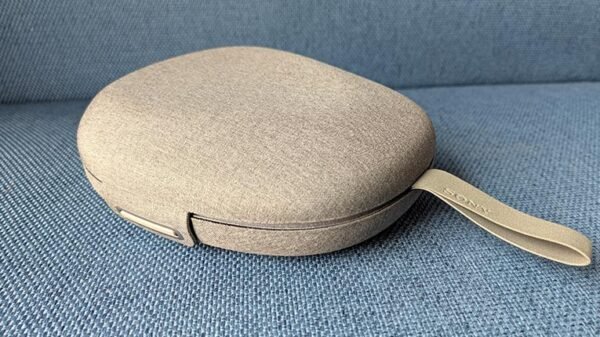
The new folding mechanism also makes the XM6 much easier to travel with. Sony has paired them with a hard carrying case that uses a magnetic closure, and the case itself feels like something designed specifically for people who actually travel with their headphones rather than something thrown in as an afterthought.
Sound Quality
This is where I was probably most curious. Coming from an ATH-M50X at home and AirPods Pro 2 on the move, I wasn’t expecting the XM6 to replace either of them outright. What surprised me was how good a middle ground these headphones occupy.
The XM6 use newly designed 30mm drivers, and the general character is warm, detailed and slightly bass-forward. There is plenty of punch, but this isn’t the sort of bass-heavy tuning where everything else gets buried underneath it. Independent testing has also found low distortion and generally good reproduction accuracy, although the warm tuning does give the sound a slightly fuller character.
And I think that is exactly what makes them so enjoyable. Put on something with a good bassline and the XM6 will happily give you that thump. Switch to vocals, acoustic music or something more layered, and there is enough separation and detail to keep things interesting.
The Sony Sound Connect app is also ridiculously comprehensive. You get a 10-band EQ, presets, DSEE Extreme upscaling, 360 Reality Audio and spatial-audio options, among a frankly absurd number of other settings. Personally, I found myself leaving the EQ fairly close to its default setting. And that, for me, is usually a good sign. I don’t want to spend 20 minutes tuning a pair of headphones before I can enjoy them.
Would I use these as a replacement for my wired M50X for studio monitoring? No. But that isn’t really what they’re designed for. What the XM6 do extremely well is make everyday listening feel considerably more serious without becoming unnecessarily analytical.
Functionality
Now we get to the reason I think the XM6 really justifies its existence: the noise cancellation. It is surreal how good the ANC is. Sony has gone from eight microphones on the XM5 to 12 on the XM6, with four external and two internal microphones on each earcup. These work alongside Sony’s new QN3 noise-cancelling processor, which Sony says is seven times faster than the previous generation’s processor.
And you can actually feel the difference. I noticed it most on flights. There were moments when I would wake up after getting some genuinely good sleep, take the headphones off and suddenly realise just how much noise they had been removing from my environment.
The engine drone comes back. People talking around you suddenly become audible. The cabin suddenly feels much louder. And that was the moment I realised the XM6 weren’t just helping me listen to music. They were creating a little bubble around me.
This is something my AirPods Pro 2 never quite managed to do to the same degree, at least for me. They’re excellent earbuds, and I still love using them, mainly, because the seamless manner in which they transition between different Apple devices, but the combination of over-ear isolation and Sony’s ANC makes the XM6 a completely different experience on a long flight.
The transparency mode is also very good. You just need to put your hand over the right earcup and Quick Attention immediately lowers the music and lets the outside world in, which is incredibly useful when a flight attendant asks you something, or you need to hear an announcement.
There is also Speak-to-Chat, which automatically reduces the music when you start talking, Adaptive Sound Control that can adjust settings based on your activity or location, multipoint Bluetooth for two devices, and wear detection that pauses playback when you remove the headphones.
Call quality is another area Sony has worked on. The 12-microphone array and AI-based beamforming are designed to isolate your voice from background noise, while the XM6 also introduce a dedicated microphone mute function.
The sheer amount of functionality can actually feel a little excessive at first. But the nice thing is that most of it stays out of your way. You can simply put these on, connect them and listen to music. Or, if you’re the sort of person who likes tweaking everything, the Sony app gives you an enormous amount to play with.
Battery Life
Sony claims up to 30 hours of playback with noise cancellation switched on and up to 40 hours with ANC turned off. Charging takes approximately 3.5 hours, and the headphones support quick charging for those inevitable moments when you realise you’ve forgotten to charge them before leaving home.
In real-world testing, the XM6 have also managed to go beyond Sony’s headline figure under certain conditions. For me, the more important point is that battery anxiety simply wasn’t a thing.
I travelled with these, used them on flights, listened to music, watched videos, spent time working with them on and off my head, and still never found myself desperately looking for a charger. When you are travelling, that’s arguably more useful than having some ridiculous 60-hour battery figure that you rarely need.
And if you do run low, a short top-up is enough to get you through a decent chunk of listening. For a pair of headphones that I primarily ended up using while travelling, 30 hours with ANC on is more than enough. I’d much rather have that kind of dependable battery life alongside excellent ANC than chase some enormous number that comes with compromises elsewhere.
Verdict
The slightly embarrassing part of this review is that it took me this long to try the Sony WH-series. I've always had my AirPods Pro 2 for everyday listening and my ATH-M50X when I wanted to sit down and properly listen. The XM6s have managed to find a space somewhere between those two, and, more importantly, they've created a very convincing reason to choose over-ear headphones when I travel.
Now, they do come with a premium price tag of ₹39,990, but the sound is detailed and enjoyable, the comfort worked extremely well for me, the app is packed with features, and the battery easily gets through the kind of travelling I do. But the ANC is the thing I'll remember. There is something almost bizarre about taking these off after a few hours on a plane and suddenly realising how loud the world actually is. That little bubble of silence is incredibly addictive.
The Good
- Excellent ANC
- Exceptional comfort
- Detailed sound
- Travel-friendly design
The Bad
- Shallow ear pads for some
- Premium price
-
Design
-
Sound Quality
-
Functionality
-
Battery Life