


As Tata Passenger Electric Mobility prepares to launch the updated Tata Tiago EV, we caught up with Anand Kulkarni to understand what really goes into evolving one of India’s most important mass-market EVs. In this conversation, Kulkarni talks about the engineering upgrades hidden beneath the surface, the growing expectations of entry-level EV buyers, improvements in battery technology and safety, and how Tata is shaping the future of affordable electric mobility in India.
EX: From an engineering standpoint, what’s the biggest update in the new Tiago EV that customers may not immediately notice?
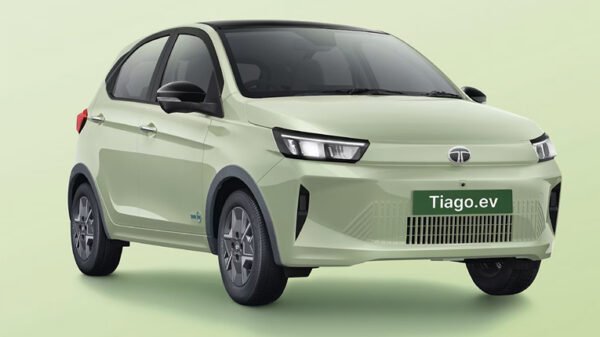
AK: There are quite a few changes. The visible ones are the redesigned front bumper, bonnet, headlamps and tail lamps, along with updates to the seats, dashboard, instrument cluster and infotainment system.
But the more important invisible upgrades are in the battery and powertrain. We’ve tweaked the cell chemistry to support much faster charging. The car can now charge from 20 to 80 percent in around 30 minutes, and you can add nearly 100km of range in about 18 minutes.
We’ve also improved the battery management system, calibration, efficiency parameters and tyre rolling resistance. Altogether, the car is now more efficient and performs better as an EV.
On the safety front, it now gets six airbags and has been engineered with five-star crash capability in mind, though we’ll officially talk about ratings only after certification.
EX: Are buyers today expecting premium technology features even in entry-level hatchbacks?
AK: Absolutely. There will always be different levels of expectations depending on the segment, but some things have now become standard expectations even in entry-level cars.
Customers want a good infotainment system, better HMI, connected car tech, quality materials and improved fit and finish. Preferences around colours, textures and overall cabin feel are evolving quickly, and the new Tiago EV reflects that shift.
EX: While developing the new Tiago EV, what were the biggest packaging or architecture challenges?
AK: There wasn’t any single major roadblock, but we had to significantly upgrade the platform to meet today’s expectations for safety and build quality.
The load paths, structural rigidity and torsional stiffness have all improved substantially. In fact, the stiffness levels are now comparable to what you’d expect from a compact SUV, almost in Nexon territory.
Another big focus was packaging six airbags while ensuring the car remains robust in severe crash scenarios. We also spent a lot of effort validating the updated battery chemistry because it now supports both fast charging and a lifetime warranty for first owners. That warranty is a major confidence booster for EV buyers.
EX: How do you decide which technologies should trickle down into a mass-market EV like the Tiago EV?
AK: It’s heavily based on customer use cases. Different cars serve different purposes, so the feature mix depends on how customers are likely to use the vehicle.
Even for a city-focused EV, buyers still expect strong connectivity features, premium aesthetics and refined controls. Things like powerful air-conditioning also become important because short commutes don’t give the cabin enough time to cool naturally, so faster cooling and better air circulation matter a lot.
At the same time, safety cannot become a differentiator reserved only for expensive cars. Our intent has been to bring strong safety standards even to entry-level vehicles.
EX: Has EV and battery development changed the way Tata approaches future EV platforms?
AK: Definitely. EV technology is evolving continuously, and we’ve evolved rapidly over the last six years ourselves.
We’ve improved battery chemistry, battery sizes and even cell formats. We started with cylindrical cells, moved to prismatic cells and now consciously choose whichever format best suits a particular application.
Fast charging capability has improved significantly, and customer data has helped us confidently introduce lifetime battery warranties across our EV portfolio. The Tiago EV was the only exception earlier, but now even that gets lifetime warranty coverage for first owners.
It’s a process of constant evolution driven by technology trends and customer feedback.
EX: What’s the one piece of technology in the Tiago EV that deserves the most attention?
AK: The battery upgrades, without question. The faster charging capability is a huge usability improvement, but the lifetime warranty is equally important because it directly addresses long-term ownership concerns around battery life and reliability.
That reassurance is probably the single biggest thing we’re offering customers with this update.
The second big highlight is safety. Strong safety standards are no longer limited to premium vehicles — they’re now being democratised for entry-level cars as well.
2 Comments
Pingback: Anand Kulkarni on Bringing the Sierra EV Back to Life
Pingback: Tata Tiago EV: The People's EV?